
What Makes the Bajaj Pulsar NS200 Stand Out?
The Bajaj Pulsar NS200 is a potent 200cc liquid-cooled streetfighter that remains a benchmark for performance in its segment. Featuring a KTM-derived 24.5 PS engine and a perimeter frame, it offers sharp handling and a spirited top-end. With recent 2024-2026 updates including USD forks and a Bluetooth digital console, it delivers a real-world mileage of 32–36 kmpl, making it ideal for young enthusiasts seeking a balanced performance-to-price ratio.
Bajaj Pulsar NS200: Performance, Mileage, Features & Real-World Riding Experience
The Bajaj Pulsar NS200 is more than just a motorcycle in the Indian market; it is the machine that democratized liquid-cooled performance for the masses. Even in 2026, despite a sea of newer rivals, the “Naked Sport” flagship continues to be the default choice for riders who prioritize raw mechanical feedback and high-revving thrills.
By blending a race-derived perimeter frame with modern-day essentials like turn-by-turn navigation and USD forks, Bajaj has ensured the NS200 stays relevant. This deep dive explores whether this iconic streetfighter still justifies your investment in today’s evolving automotive landscape.
1. Why the Bajaj Pulsar NS200 Still Matters in the 200cc Segment
The NS200 has survived over a decade because its core architecture was ahead of its time. While the competition focused on commuter-friendly torque, the NS series introduced a high-tensile perimeter frame and a 6-speed gearbox—features usually reserved for premium European bikes.
In 2026, it serves as the perfect bridge for riders moving up from 125cc-150cc commuters. It doesn’t just offer more speed; it offers a fundamentally different riding dynamic that rewards spirited input. Its market longevity is a testament to its athletic geometry and the sheer reliability of the DTS-i platform.
2. Design & Styling: Athletic Streetfighter Appeal
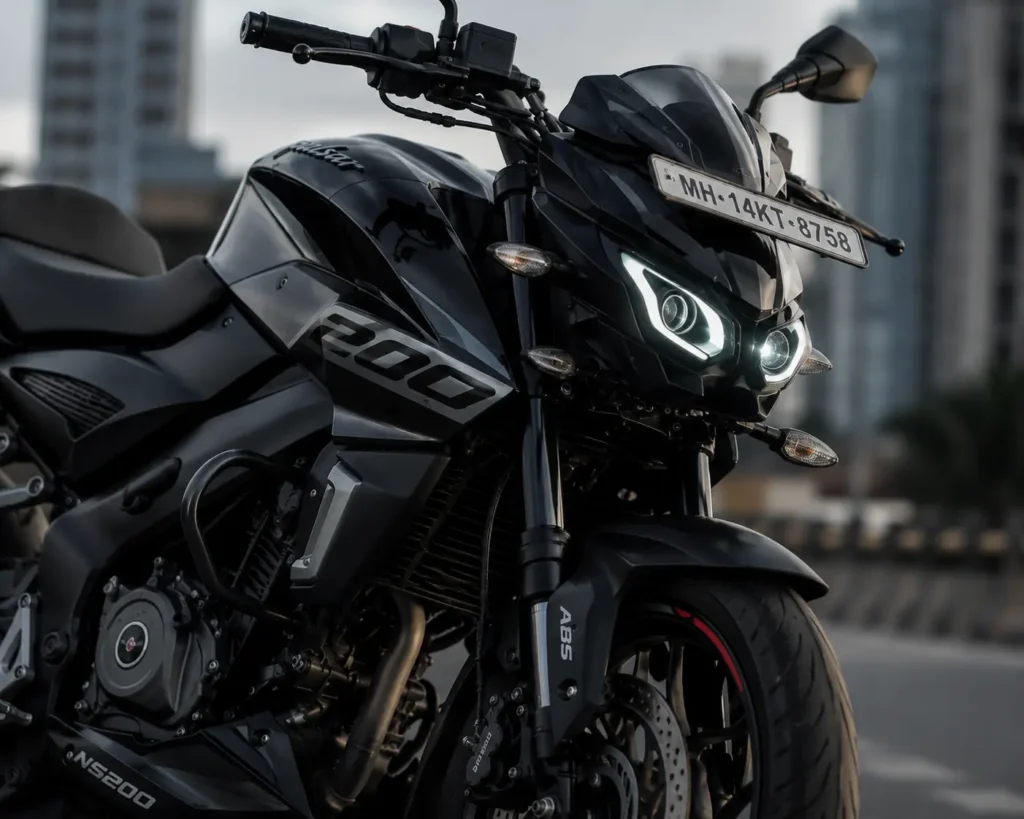
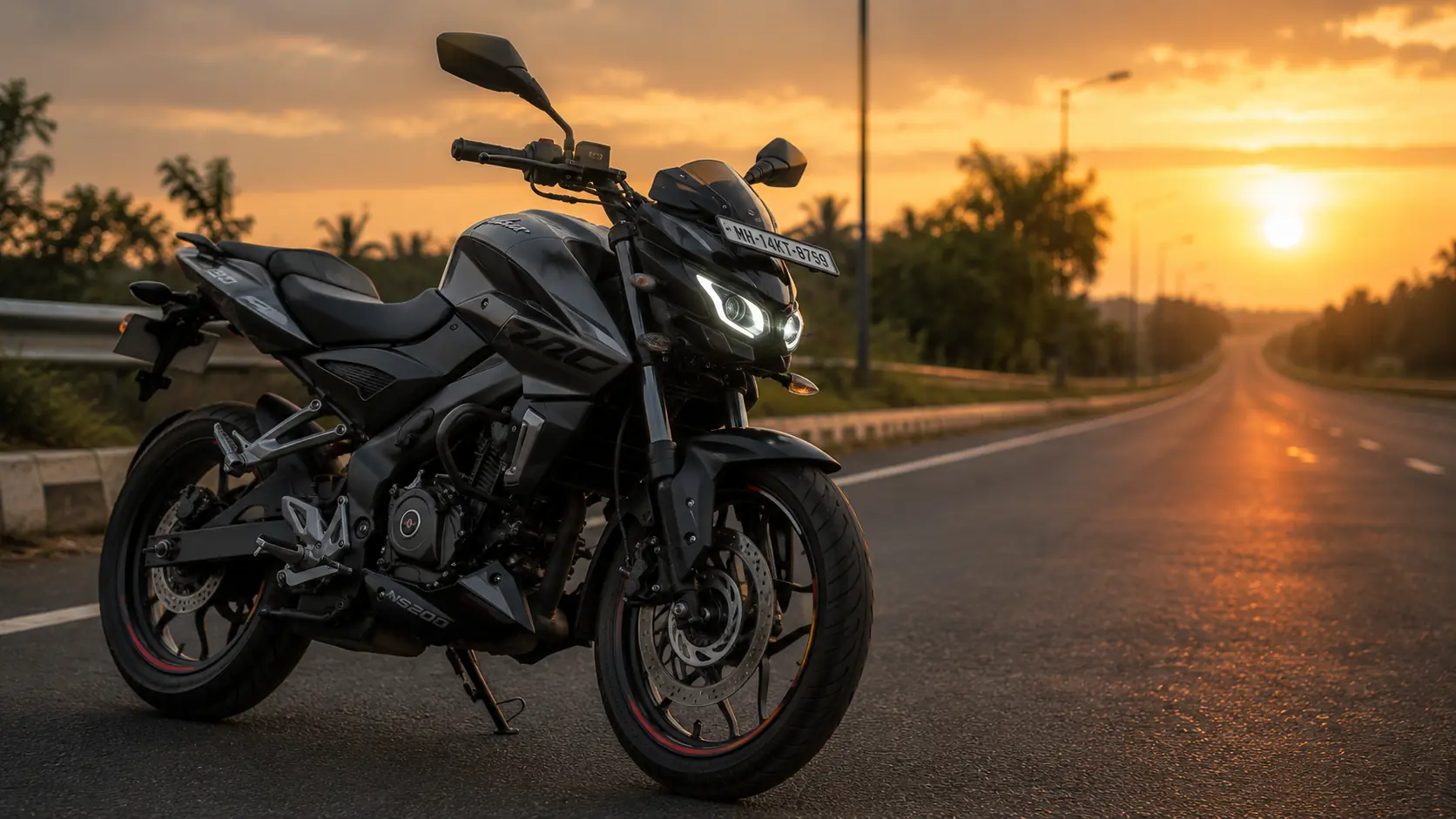
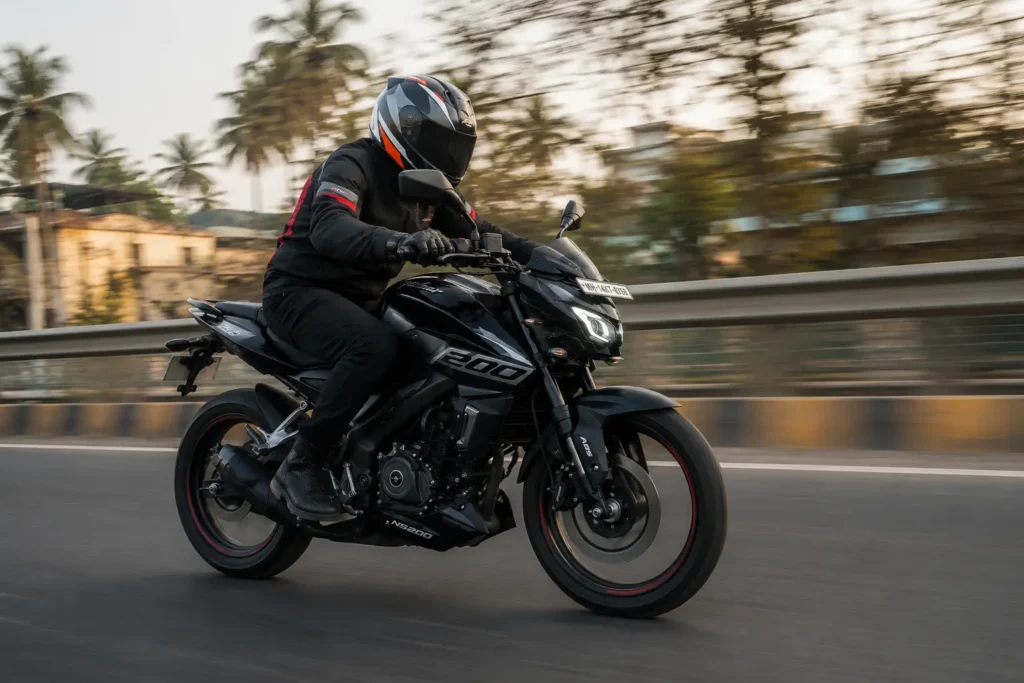
The silhouette of the NS200 remains one of the most recognized on Indian roads. It doesn’t rely on overly complex fairings; instead, it showcases its mechanical heart.
- Muscular Stance: The 12-liter fuel tank with sharp shrouds gives the bike a forward-biased, “ready-to-pounce” look.
- Modern Lighting: Recent updates have finally brought a full-LED headlamp and sleek DRLs, replacing the aging halogen units and significantly improving night visibility.
- Chassis Presence: The exposed perimeter frame and underbelly exhaust contribute to a clean, mass-centralized aesthetic that highlights its athletic intent.
3. Engine, Performance & Real-World Riding Feel
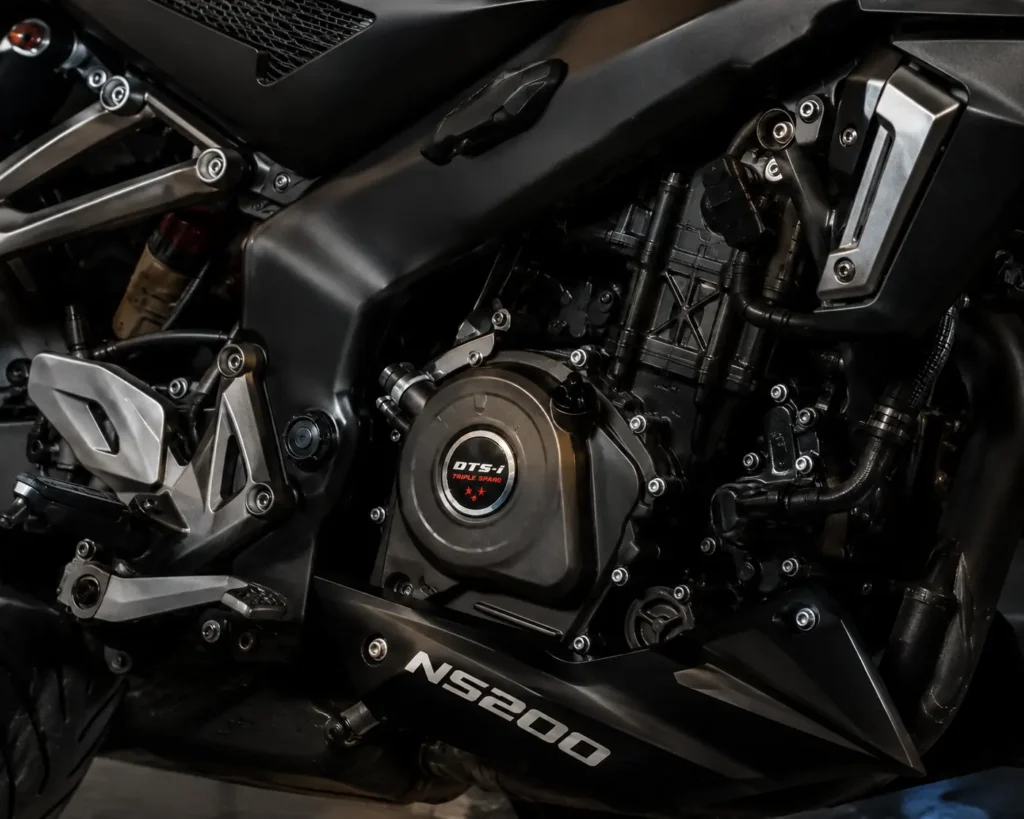
The heart of the NS200 is the 199.5cc, liquid-cooled, 4-valve engine that produces 24.5 PS and 18.74 Nm of torque. It is a rev-happy motor that truly wakes up once the tachometer crosses the 7,000 RPM mark.
Performance Breakdown:
- City Riding: Below 4,000 RPM, the bike is docile and easy to manage. However, it isn’t as punchy at low speeds as the Apache RTR 200 4V. You will find yourself working the 6-speed gearbox to keep it in the powerband during heavy traffic.
- Highway Cruising: This is where the NS200 shines. It can cruise at 90–100 km/h all day without breaking a sweat. The liquid cooling ensures that performance doesn’t fade even during long summer rides.
- Vibrations: While Bajaj has refined the motor over the years, a minor buzz is still felt through the footpegs near the 9,500 RPM redline. It’s never a deal-breaker, but it reminds you of the engine’s frantic nature.
4. Mileage & Daily Practicality in Indian Conditions
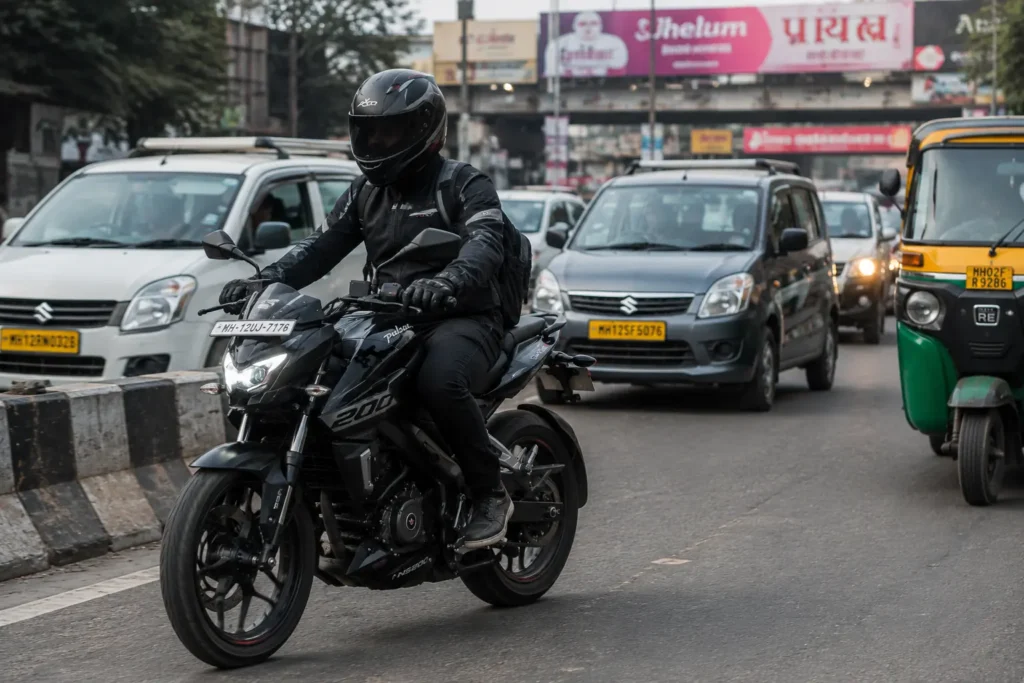
For a performance-oriented bike, the NS200 is surprisingly sensible. Most owners report a real-world mileage of 32–36 kmpl in mixed conditions.
| Riding Condition | Estimated Mileage |
| Heavy City Traffic | 28–30 kmpl |
| Open Highways | 38–42 kmpl |
| Combined Average | 34 kmpl |
Monthly Budget Insight: If you commute roughly 1,000 km a month, expect a fuel bill of around ₹2,800–₹3,200 (assuming fuel at ₹100/L). For the performance on tap, this is highly competitive.
5. Chassis, Suspension & Handling Confidence
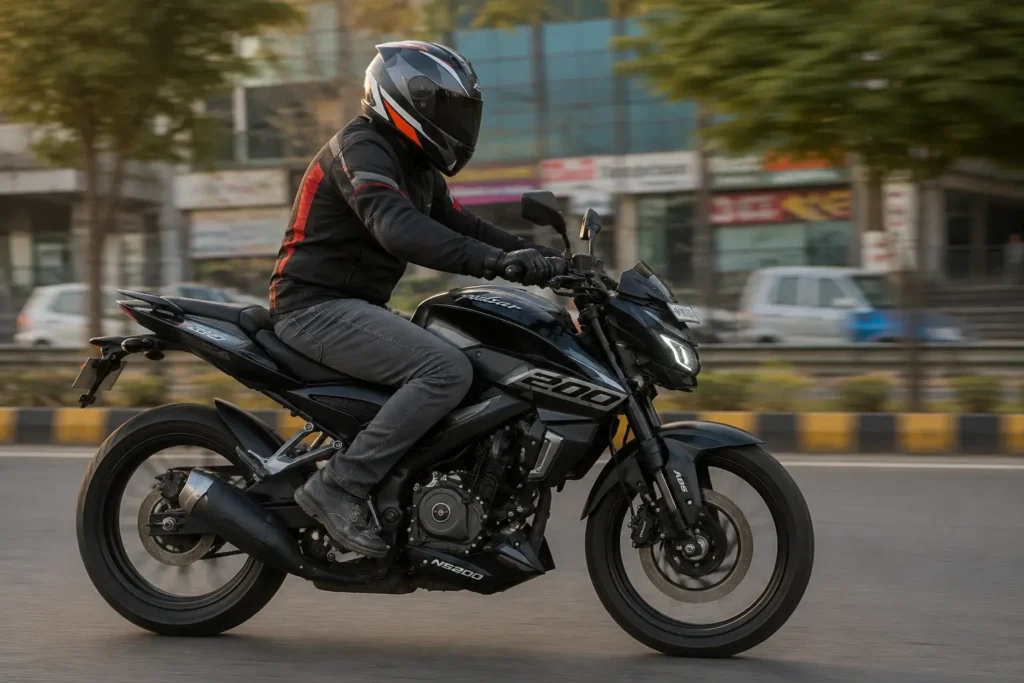
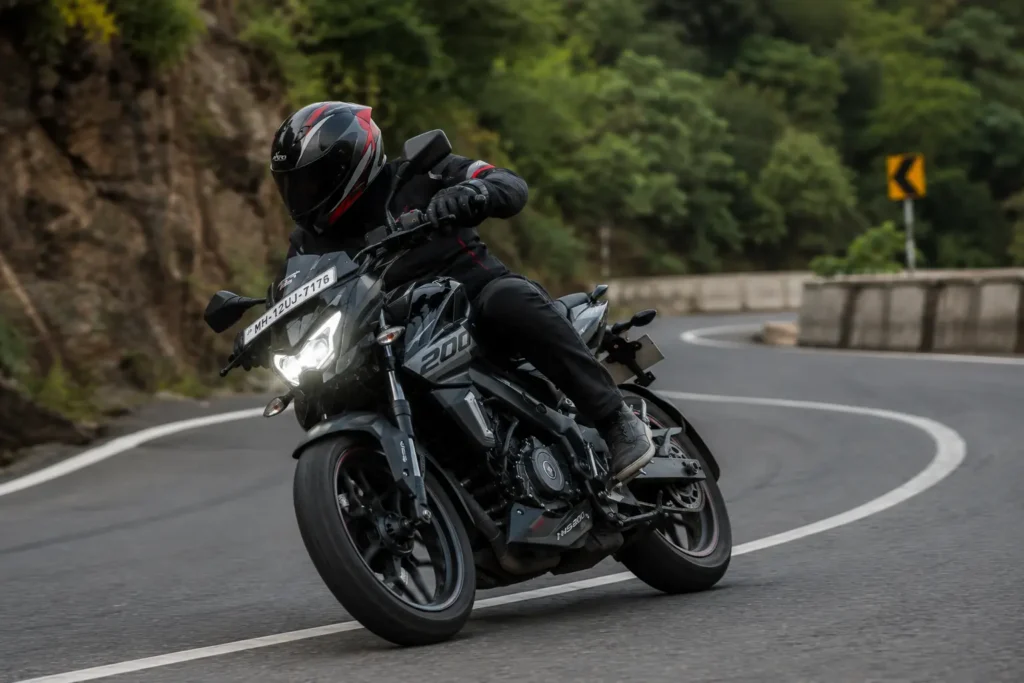
The standout feature of the NS200 remains its Perimeter Frame. This high-rigidity chassis prevents the bike from flexing during mid-corner bumps, making it a favorite for weekend canyon carvers.
- USD Forks: The inclusion of 33mm Upside-Down forks has vastly improved the front-end feel. The bike now feels more planted during hard braking and tip-ins.
- Ride Quality: The suspension is tuned toward the stiffer side. While this is great for handling, you will feel sharp potholes through the seat. It’s a “communicative” ride rather than a plush one.
6. Braking & Safety Features
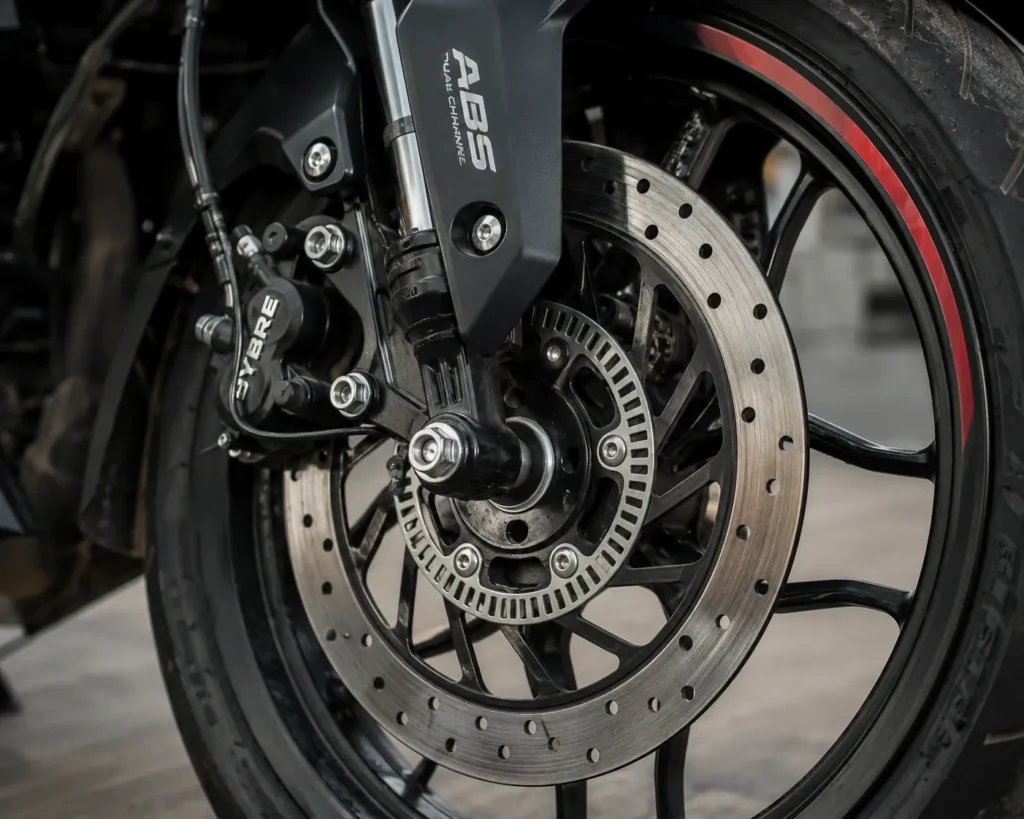
Stopping power is handled by a 300mm front disc and a 230mm rear disc. Recent versions have transitioned to Grimeca calipers, which offer a progressive bite.
- Dual-Channel ABS: Now a standard feature, the ABS is well-calibrated for Indian roads. It doesn’t kick in prematurely on dry tarmac but provides a necessary safety net on wet, oily city surfaces.
- Tire Grip: The 130-section rear tire provides ample confidence, though many enthusiasts still prefer upgrading to stickier compounds for more extreme lean angles.
7. Features & Technology Updates
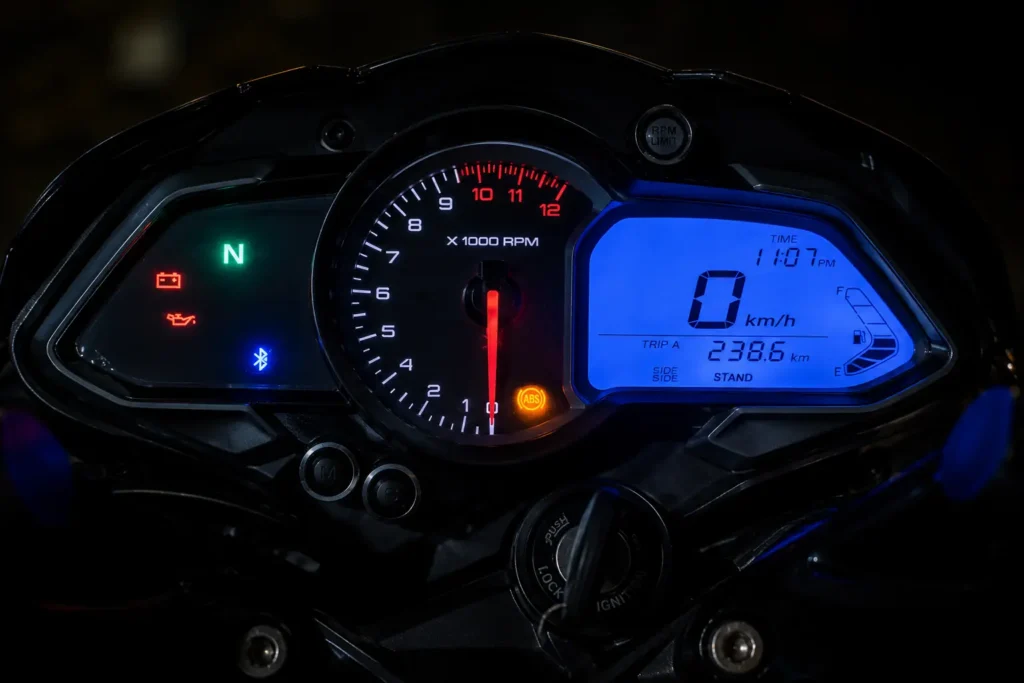
Bajaj has finally modernized the NS200’s cockpit. Gone is the semi-digital unit, replaced by a fully digital LCD console.
- Connectivity: Bluetooth pairing allows for Call/SMS alerts and, more importantly, Turn-by-Turn Navigation.
- Information Overload: The console now displays Distance-to-Empty (DTE), Instantaneous Fuel Economy (IFE), and a much-needed Gear Position Indicator.
- Backlit Switchgear: A signature Pulsar feature that remains both useful and premium-looking during night rides.
Fans of retro styling should also explore the Jawa 42 Bobber cruiser motorcycle.
8. Comfort & Long-Term Riding Experience
The ergonomics are “sporty-upright.” Your feet are slightly rear-set, and you lean forward just enough to feel in control without putting excessive weight on your wrists.
- Seat Comfort: The split-seat setup is wide and well-contoured for the rider. However, the pillion seat is small and perched quite high—it is strictly for short city hops rather than long tours.
- Heat Management: Despite being a high-revving liquid-cooled engine, the heat management is commendable. Even in bumper-to-bumper Lucknow traffic, the radiator fan does a silent, efficient job of keeping hot air away from the rider’s legs.
9. Comparison: NS200 vs KTM Duke 200 vs Apache RTR 200 4V
| Factor | Bajaj Pulsar NS200 | KTM 200 Duke | TVS Apache 200 4V |
| Peak Power | 24.5 PS | 25 PS | 20.8 PS |
| Gearbox | 6-Speed | 6-Speed | 5-Speed |
| Cooling | Liquid | Liquid | Oil |
| Character | Balanced Thrill | Raw & Hooligan | Practical & Techy |
| Value | Highest | Low (Premium) | Moderate |
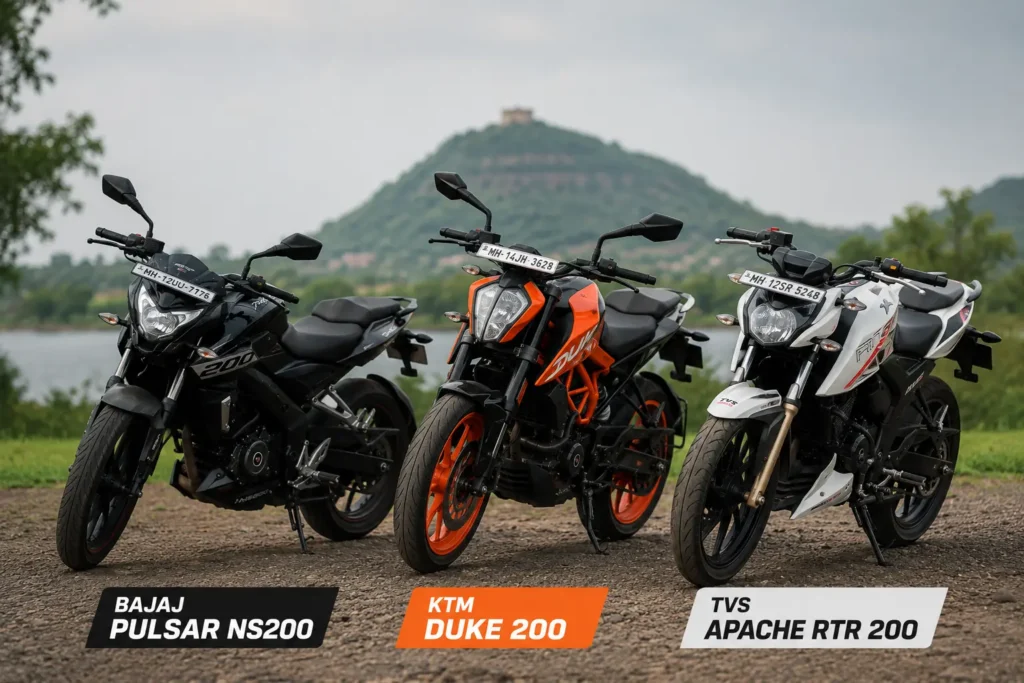
Expert Insight: The Duke 200 is for those who want no compromises in performance. The Apache is for those who want ride modes and adjustable levers. The NS200 is for the rider who wants Duke-level performance at a much more accessible price.
10. Price & Ownership Value in 2026
In 2026, the Bajaj Pulsar NS200 is priced roughly between ₹1.58 lakh and ₹1.70 lakh (ex-showroom) depending on the city.
While the on-road price in metros can touch ₹2 lakh, it still offers a high feature-to-price ratio. Bajaj’s massive service network and the relative affordability of spare parts make it one of the most “pocket-friendly” performance bikes to maintain over 3-5 years.
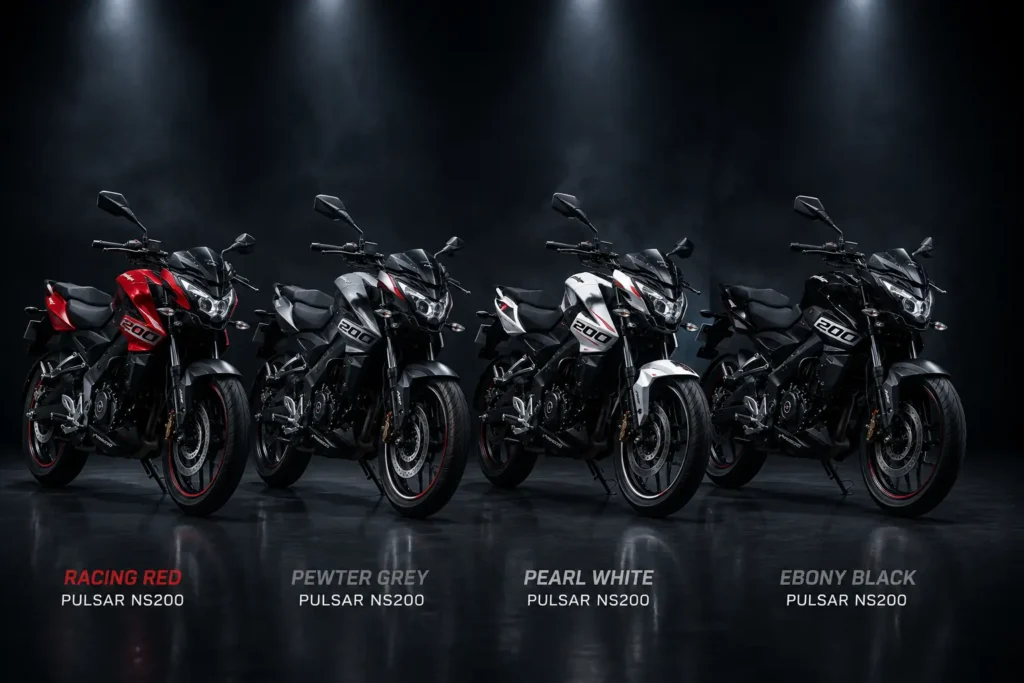
11. Who Should Buy the Bajaj Pulsar NS200?
- The Enthusiast on a Budget: If you want a 6-speed, liquid-cooled bike but find the European brands too expensive.
- The Weekend Tourer: Those who enjoy 300km weekend getaways and need a bike that can hold 100 km/h effortlessly.
- The Upgrader: If you are coming from a 125cc bike and want a “real” taste of performance.
Avoid it if: You primarily ride with a pillion or if you are looking for soft, commuter-like suspension.
Pulsar NS200 Specs Overview
| Component | Specification / Detail |
| Engine | 199.5cc Liquid-Cooled Single |
| Power/Torque | 24.5 PS / 18.7 Nm |
| Top Speed | ~135 km/h (Varies with rider weight) |
| Fuel Tank | 12 Liters |
| Kerb Weight | 158 kg |
| Seat Height | 805 mm |
Common Questions Riders Ask (FAQ)
Is the Bajaj Pulsar NS200 good for beginners?
Yes, but with a caveat. While the power is manageable, the top-heavy nature of the bike and the high seat height (805mm) might be slightly intimidating for very short or brand-new riders.
What is the real mileage of the NS200?
Expect 32–35 kmpl in the city and up to 40 kmpl on the highway if ridden under 80 km/h.
Is the NS200 good for long rides?
It is excellent for solo touring thanks to the liquid cooling and 6th gear. However, the seat is firm, so a gel pad or frequent breaks are recommended.
Does the Pulsar NS200 have heating issues?
No. The liquid cooling system is highly effective. You will feel some warmth in traffic, but it never reaches uncomfortable levels.
Which is better: NS200 or Duke 200?
The Duke 200 offers more premium parts and a sharper “hooligan” feel, but the NS200 offers 90% of that performance for roughly ₹50,000 less.
Should the NS200 Be Your Next Bike?
The Bajaj Pulsar NS200 is a “mechanical” motorcycle in a world of increasingly “electronic” ones. It doesn’t have ride modes or traction control, and that is exactly why enthusiasts love it. It rewards good riding habits and offers a sense of speed that feels visceral.
In 2026, it remains the most sensible way to access high-revving performance without emptying your savings. It is a bike bought with the heart, but justified by the head.
Also Read: Why the New Royal Enfield Classic 350 is Better Than Before
If you are exploring EV options, check out the electric bikes like Ola Roadster.
Helpful Resources for Indian Bike Buyers
- Bharat NCAP Official Website — India’s official crash-testing and vehicle safety rating platform. Includes adult and child occupant scores, crash-test protocols, and tested vehicle lists.
- TransUnion CIBIL — Check your credit score and track your loan eligibility before applying for a car loan.
- SBI Car Loans — View latest interest rates, eligibility criteria, and loan offers from State Bank of India.
- HDFC Bank Car Loans — Explore car loan options, EMIs, and financing plans from HDFC Bank.
- ICICI Bank Car Loans — Compare new and used car loan offers along with repayment options.
- AutomotiveZone Mileage Cost Calculator — Estimate real fuel costs based on your driving mileage.
- AutomotiveZone Monthly Car Expense Calculator — Calculate total monthly car ownership cost including EMI, fuel, and maintenance.
Disclaimer: Prices, mileage, safety ratings, loan rates, and ownership costs are approximate and may vary by location, variant, and market conditions in 2026. Some visuals may be AI-generated for illustration. Please verify final details with authorized dealers before purchase.