
Honda PCX 125 Quick Overview
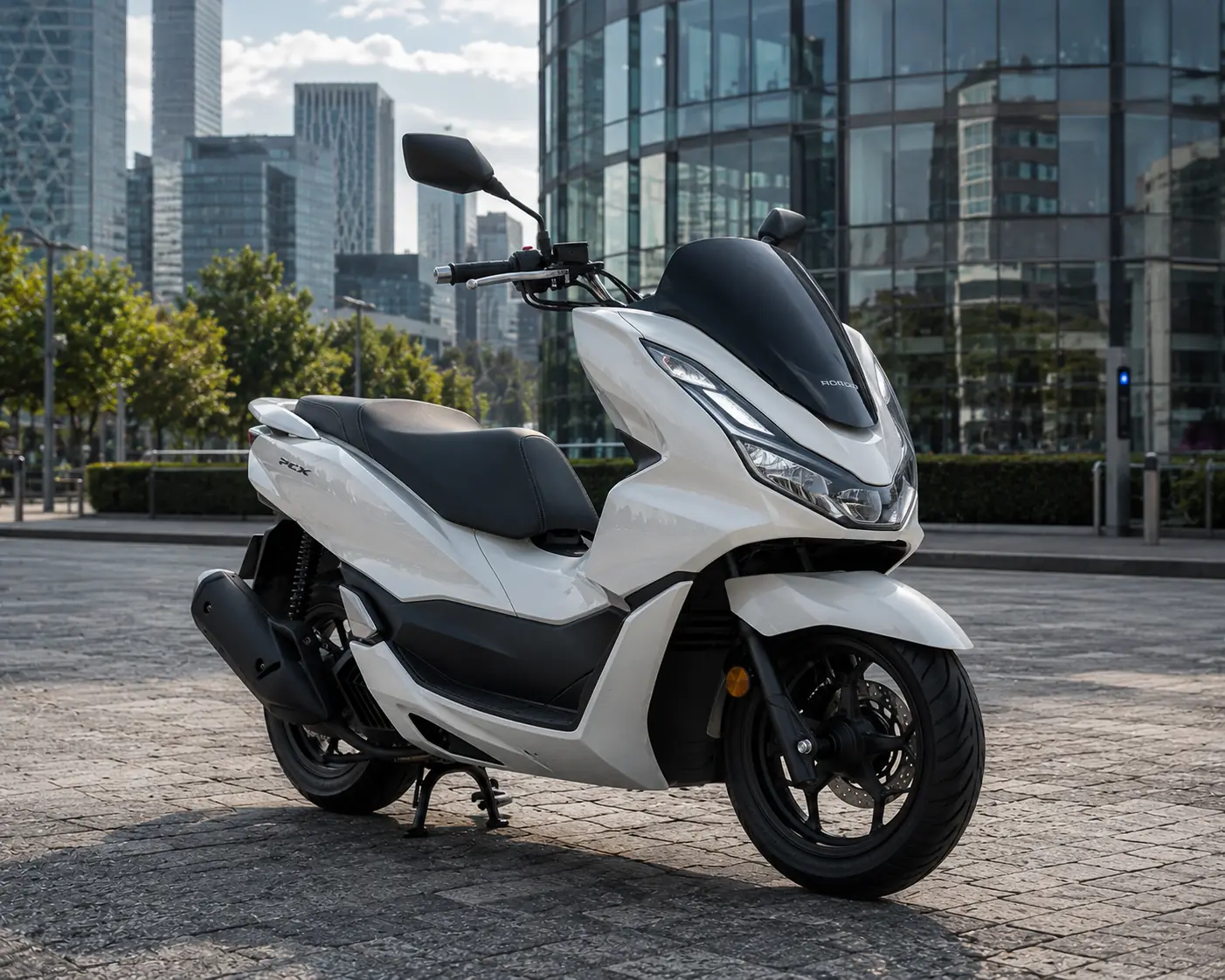
The Honda PCX 125 is a premium, European-style maxi-scooter with an estimated price bracket of ₹85,000 to ₹1.10 Lakh (ex-showroom). Powered by a highly sophisticated 124.9cc liquid-cooled, 4-valve eSP+ engine paired with a seamless CVT automatic gearbox, it produces 11.17 bhp of power and 11.56 Nm of torque. Enhanced by Honda’s programmatic fuel injection (PGM-FI) and automatic Idling Stop system, it delivers a highly predictable real-world city mileage of 40 to 45 kmpl, standing out as a smooth, long-wheelbase luxury commuter.
Honda PCX 125 Guide: Real-World Mileage, eSP+ Liquid-Cooled Tech, Specs & Is It Worth Buying?
Most conventional 125cc family scooters are designed primarily as lightweight, short-distance utility tools. While they excel at quick grocery runs, their compact frames, small wheels, and basic air-cooled engines often cause noticeable high-speed vibrations, minimal wind protection, and limited legroom during extended highway stretches or multi-hour urban commutes.
The Honda PCX 125 completely redefines the compact scooter segment. Moving away from standard flat-floorboard layouts, it adopts a sophisticated, long-wheelbase maxi-scooter architecture. By packaging a high-efficiency, liquid-cooled 4-valve engine inside a windswept aerodynamic chassis, the PCX 125 bridges the gap between everyday scooter convenience and motorcycle-like highway stability.
Why the Honda PCX 125 Commands the Premium Maxi Space
The PCX 125 avoids basic bare-bones scooter templates to prioritize mechanical refinement and high-end stability:
Liquid-Cooled eSP+ Powertrain: Unlike standard air-cooled scooters that lose performance as engine heat builds up in heavy traffic, its liquid-cooled layout ensures uniform temperature control and smooth power delivery.
Maxi-Scooter Ergonomics: Featuring an integrated spine channel, swept-back cruiser handlebars, and an extended floorboard, it allows riders to stretch their legs forward to reduce lower-back strain.
High-Speed Stability: Rolling on a larger 14-inch front wheel layout, its longer wheelbase tracks cleanly through open highway crosswinds far better than small-wheel city scooters.
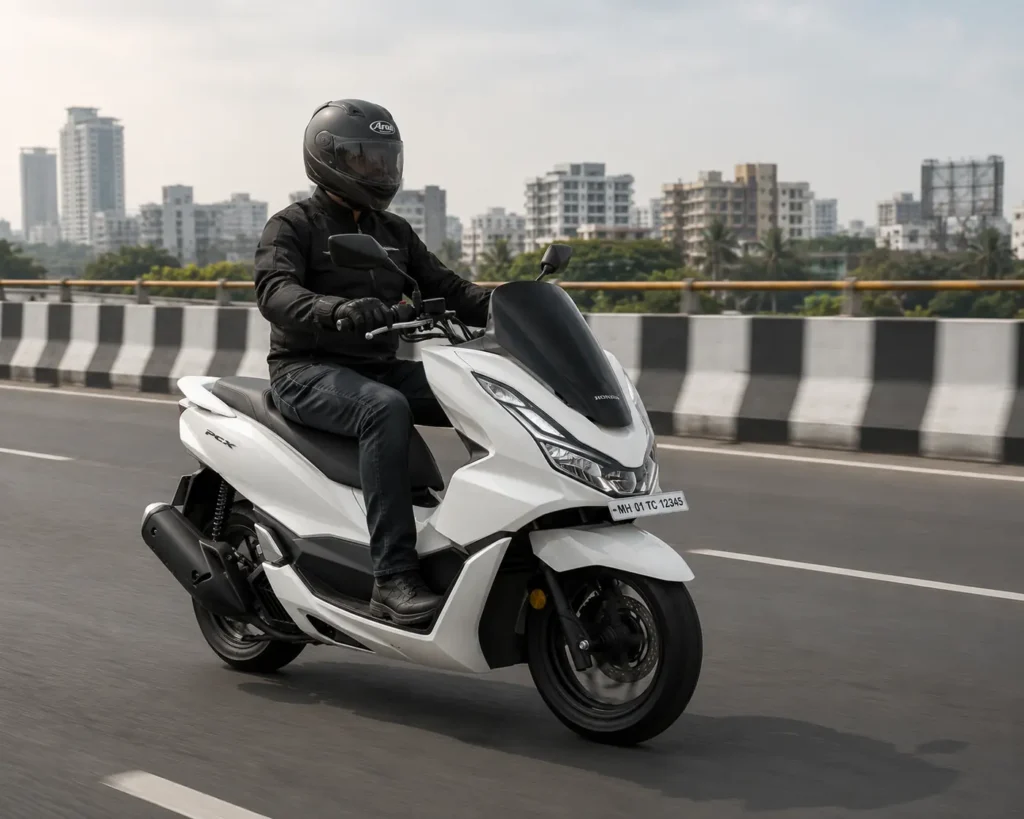
Honda PCX 125 Estimated Price & Global Trim Context
As a premium product line benchmarked against global urban mobility standards, its positioning bridges the gap between premium 125cc scooters and entry-level sports motorcycles.
Estimated India Price Architecture:
| Variant Grade | Powertrain Setup | Key Feature Inclusions | Expected Ex-Showroom Price |
| PCX 125 Standard | 125cc Liquid-Cooled, CVT | Smart Key, Digital Console, Front Disc, CBS | ₹85,000 – ₹1,10,000 |
The Premium Component Value: While standard 125cc commuter scooters sit lower on the price ladder, the PCX 125 justifies its premium positioning by packaging specialized hardware—such as liquid-cooling, a 4-valve cylinder head, all-LED lighting, and a robust motorcycle-style central spine chassis.
Interior Layout, Premium Electronics & Smart Key Tech
The cockpit layout of the PCX 125 replaces simple plastic meters with a sophisticated, automotive-grade digital command interface.
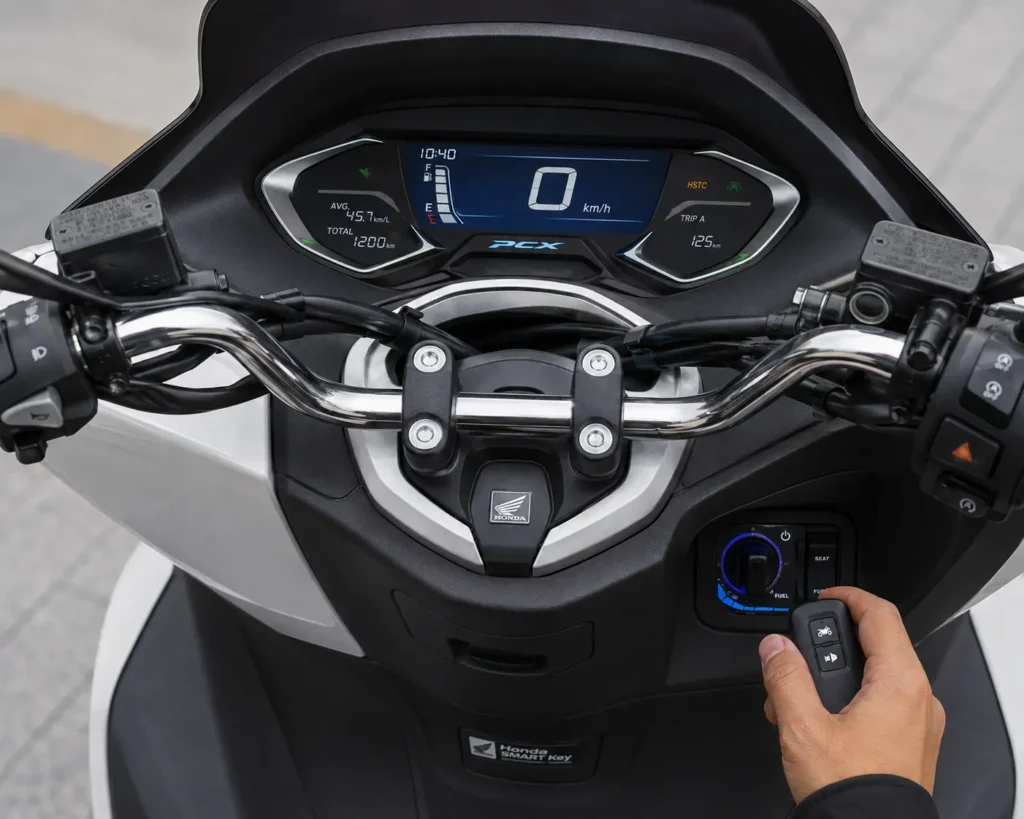
1. The Panoramic Digital instrumentation Panel
The handlebar casing houses a sleek, widescreen inverted LCD digital instrument console. It projects essential riding data with absolute clarity, tracking real-time fuel efficiency, average trip mileage indicators, a digital clock, a coolant temperature gauge, and an oil change service reminder.
2. Honda SMART Key System & Safety Tech
Keyless Ignition Proximity Fob: The PCX drops traditional mechanical ignition slots for a smart key system. Carrying the key fob in your pocket allows you to activate the ignition knob, lock or unlock the steering handle, and pop open the seat or fuel lid automatically via tactile toggle switches.
Honda Selectable Torque Control (HSTC): A segment-exclusive safety addition. This electronic traction control system monitors rear-wheel slip on wet monsoon pavement or loose gravel, automatically modulating engine torque to prevent dangerous slides.
Mechanical Engine Performance & Ride Quality
The powertrain is engineered to deliver a remarkably quiet, vibration-free riding experience with robust mid-range acceleration.
Powertrain Engineering Metrics
Under the body panels sits Honda’s advanced enhanced Smart Power Plus (eSP+) 124.9cc single-cylinder engine:
Peak Power Output: 11.17 bhp (11.3 PS) @ 8,000 rpm.
Peak Torque Output: 11.56 Nm @ 6,500 rpm.
ACG Silent Start System: Completely removes harsh mechanical starter gear noises, using an advanced starter-generator to fire up the engine silently with a light twist of the throttle.
True Real-World Mileage Performance
| Riding Loop Environment | Factory Claimed Baseline | True Real-World Tracking |
| Metropolitan City Traffic | — | 40 to 45 kmpl |
| Open, Steady Highway Cruising | 47.6 kmpl | 45 to 48 kmpl |
Honda PCX 125 Full Technical Specifications
| Technical Parameter | Standard Global Engineering Specifications |
| Engine Architecture | 124.9cc Liquid-Cooled, 4-Stroke, 4-Valve, SOHC Single |
| Fuel Supply Matrix | Programmed Electronic Fuel Injection (PGM-FI) |
| Transmission Type | V-Matic Automatic Belt Drive (CVT) |
| Front Suspension Set | 31mm Telescopic Hydraulic Forks (100mm Stroke) |
| Rear Suspension Set | Twin Aluminum Swingarm Hydraulic Shock Absorbers |
| Front Braking Assembly | 220mm Hydraulic Disc Brake with Combined Caliper |
| Rear Braking Assembly | 130mm Mechanical Leading Trailing Drum Brake |
| Tyre Configuration | 90/90-14 (Front) | 100/90-14 (Rear) Tubeless Radials |
| Seat Height Profile | 761 mm (Highly approachable for shorter riders) |
| Fuel Tank Capacity | 8 Liters (Unlocks a massive ~350 km riding range) |
| Total Unladen Weight | 130 kg (Provides a solid, well-planted highway feel) |
Luxury Packaging: Cavernous Under-Seat Utility
The defining advantage of the maxi-scooter design is its highly optimized structural storage volume:
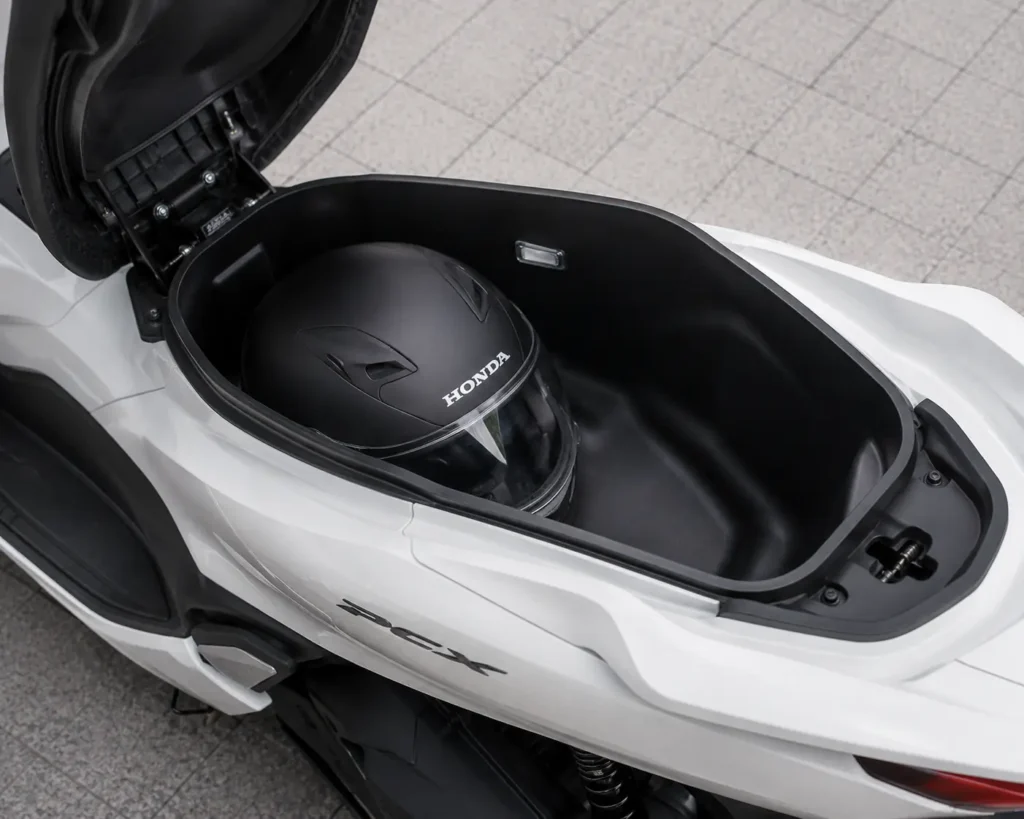
30-Liter Cavernous Boot Floor: Because the fuel tank is repackaged low within the central floor spine rather than beneath the saddle, lifting the seat reveals a massive 30-liter storage compartment. It easily swallows a full-face helmet alongside an executive laptop bag or daily groceries.
Front Apron Utility Pocket: The left side of the front fairing houses a deep, weatherproof glove compartment. It features an integrated USB Type-C charging port, allowing you to keep your smartphone powered safely while tucked out of sight.
PCX 125 Running Cost vs Premium Petrol Commuter Cars
Let’s calculate the monthly operational fuel math for an urban commuter covering a standard distance of 1,200 km per month over a 5-year ownership period.
Scenario A: Honda PCX 125 Maxi-Scooter (43 kmpl Real-World)
Average cost of standard petrol fuel: ₹102 per liter.
Real-world urban city mileage: 43 kmpl.
Fuel needed for 1,200 km: 27.9 Liters.
Monthly Fuel Bill: ~₹2,845 (Approx. ₹2.37 per km).
Scenario B: Traditional Entry-Level Petrol Commuter Car (Manual Hatchback)
Average cost of standard petrol fuel: ₹102 per liter.
Real-world urban city mileage in heavy traffic: 15 km/l.
Fuel required for 1,200 km: 80 Liters.
Monthly Fuel Bill: ~₹8,160 (Approx. ₹6.80 per km).
Honda PCX 125 Pros & Cons
Advantages
Ultra-Refined eSP+ Motor: Liquid-cooled 4-valve engine layout operates in near-vibrationless silence.
Massive 30L Boot Space: Large under-seat storage easily fits a full-face helmet and a laptop bag.
Premium Tech Integration: Features a smart proximity key fob, all-LED lighting, and a crisp LCD screen.
Advanced Traction Control: The HSTC system prevents rear-wheel slips on wet, slippery roads.
Cruiser-Like Riding Comfort: Swept-back handlebars and extended floorboards allow you to recline your legs.
Disadvantages
Lack of a Flat Floorboard: The central spine chassis blocks you from carrying heavy grocery bags or large boxes between your feet.
Premium Pricing Bracket: Carries a higher upfront purchase cost compared to traditional, mass-market 125cc scooters.
Noticeable 130 kg Kerb Weight: Heavier than standard compact scooters, which requires a bit more effort when parking manually in tight spots.
No Mechanical Rear Disc Brake: Relies on a traditional 130mm drum brake setup at the rear wheel.
Who Should Buy the Honda PCX 125?
Recommended For:
Long-Distance Office Commuters: Ideal for professionals facing 30–50 km daily cross-city highway commutes who want motorcycle-like stability with twist-and-go ease.
Tech-Forward Premium Buyers: Perfect for riders who value high-end mechanics like liquid-cooling, keyless fobs, and traction control safety.
Riders Demanding Heavy Storage: Excellent for anyone needing massive, secure under-seat storage to lock away riding gear and electronics cleanly.
Not Recommended For:
Local Neighborhood Grocery Runs: If you require a traditional flat floorboard to carry heavy gas cylinders, water bottles, or large shopping boxes between your knees.
Budget-First Minimalist Car Owners: If you simply want the cheapest possible two-wheeled commuter with low-cost, basic air-cooled replacement parts.
Questions Buyers Commonly Ask about Honda PCX 125
What is the function of the automatic Idling Stop system?
When you come to a standstill at a long traffic signal for more than three seconds, the smart system automatically cuts the engine to save fuel. Once the light turns green, simply twisting the throttle fires the engine back up near-silently via the ACG starter, allowing you to ride away instantly.
Can the central floor spine be used to carry extra luggage bags?
No. The central spine houses the scooter’s rigid frame tubes and the large 8-liter fuel tank. Because it rises up significantly, it prevents you from placing flat luggage blocks between your feet, though you can still carry a backpack over it.
How safe is the scooter against tyre slips during monsoon rains?
The PCX 125 is highly safe, packing Honda Selectable Torque Control (HSTC). If the electronic sensors detect the rear tire spinning faster than the front on wet pavement, the system instantly manages fuel injection to regain traction, keeping the bike stable.
What is the true riding range on a single full tank of fuel?
With a large 8-liter fuel tank capacity and an average real-world urban efficiency of 43 kmpl, you can safely travel approximately 320 to 350 km on a single full tank before needing a refill.
How does it compare to the Suzuki Burgman Street 125?
While the Suzuki Burgman Street 125 offers a highly practical flat floorboard and a lower initial purchase price, the Honda PCX 125 targets a more premium tier by offering a far more advanced liquid-cooled 4-valve engine layout (vs. Suzuki’s air-cooled 2-valve setup), traction control, a proximity smart key, and a larger 14-inch front wheel for superior high-speed stability.
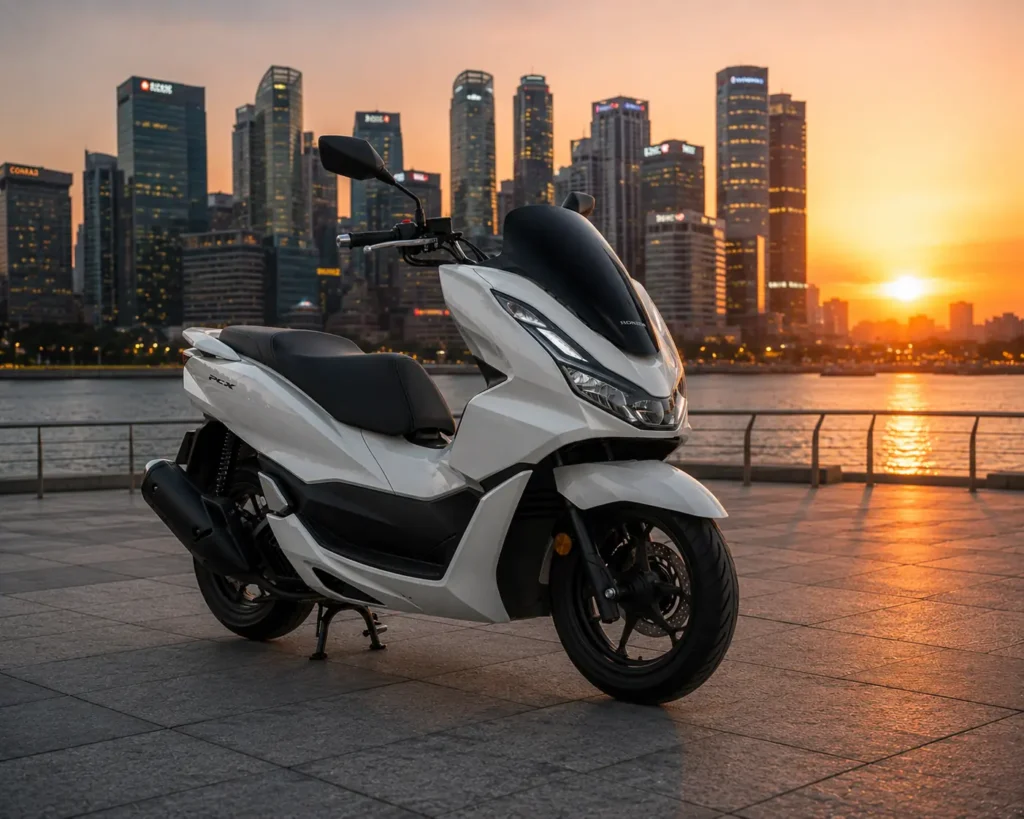
Final Verdict: Is the Honda PCX 125 Worth Buying in 2026?
The Honda PCX 125 represents a highly sophisticated, comfortable, and premium lifestyle investment. It avoids basic visual fairings and low-power commuter scooter setups; instead, it focuses on delivering a commanding global maxi-scooter stance, a smooth liquid-cooled eSP+ engine block, a massive 30-liter under-seat storage bay, and high-end traction control safety.
If you have a daily cross-city commute over highways or flyovers, value an upright cruiser-like riding posture that protects your lower back, and want the absolute convenience of a proximity smart key alongside massive luggage room, the PCX 125 stands out as an exceptional choice. However, if your daily routine requires a traditional flat floorboard to transport heavy household items or you want a minimalist, low-cost commuter, standard family scooters might fit your lifestyle better. Ultimately, let your real-world daily route distances and preference for premium maxi-scooter comfort guide your final choice.
“Running cost matters more than fuel type when daily commuting is involved.”
Helpful Resources for Indian Bike Buyers
Calculate Honda PCX 125 Running Cost
Estimate your monthly petrol expenses, cost per kilometer, and long-term ownership costs for the Honda PCX 125 based on your riding distance, fuel prices, and daily commuting needs.
Calculate Running Cost →- Ministry of Road Transport and Highways (MoRTH): Governs India’s road transport policies, rules, and regulations.
- VAHAN Vehicle Services Portal: Centralized platform for vehicle registration and ownership records in India.
- Automotive Research Association of India (ARAI): Certifies vehicle performance, safety standards, and fuel efficiency data.
- International Centre for Automotive Technology (ICAT): Testing agency for automotive safety, emissions, and homologation approvals.
- ARAI Mileage & Certification Authority: Issues official fuel efficiency and vehicle performance certification reports.
- TransUnion CIBIL — Check your credit score and track your loan eligibility before applying for a car loan.
- AutomotiveZone Mileage Cost Calculator — Estimate real fuel costs based on your driving mileage.
- AutomotiveZone Monthly Car Expense Calculator — Calculate total monthly car ownership cost including EMI, fuel, and maintenance.
- AutomotiveZone Fuel Cost Calculator — Instantly estimate petrol, diesel, or CNG expenses based on mileage, fuel price, and trip distance.
- AutomotiveZone EV vs Petrol Cost Calculator — Compare electric vehicle charging costs with petrol fuel expenses to see long-term savings.
- AutomotiveZone EV Charging Cost Calculator — Calculate home and fast-charging electricity costs for your EV using battery size and electricity tariff.
- AutomotiveZone Car Resale Value Estimator — Estimate your car’s current market resale value based on age, mileage, ownership, and condition.
Disclaimer: Prices, mileage, safety ratings, loan rates, and ownership costs are approximate and may vary by location, variant, and market conditions in 2026. Some visuals may be AI-generated for illustration. Please verify final details with authorized dealers before purchase.