
What You Need to Know (At a Glance)
The Yamaha R15 is a premium entry-level supersport motorcycle powered by a 155cc liquid-cooled engine featuring Variable Valve Actuation (VVA). Known for its track-honed handling and aggressive R1-inspired design, it delivers a real-world mileage of 40–45 kmpl. It is the ideal pick for riders seeking a high-tech, small-capacity sports bike that balances performance with fuel efficiency.
Yamaha R15 Review: Performance, Mileage, Features & Real-World Riding Experience
The Yamaha R15 isn’t just a motorcycle in India; it is a rite of passage for aspiring track riders and college students alike. Since its debut in 2008, the R15 has evolved from a simple sports bike into a sophisticated piece of machinery that punches far above its 155cc weight class.
In 2026, the R15 V4 and the premium R15M continue to dominate the segment. While rivals offer more displacement for the same price, the R15 relies on precision engineering, racing DNA, and high-revving performance to remain the benchmark for entry-level supersports.
1. Why Yamaha R15 Still Dominates the 150cc Sports Bike Segment
The R15 series has stayed relevant by refusing to be “just another commuter.” Yamaha’s focus on the Deltabox frame and the R-Series design language (borrowed from the flagship R1) gives it an aspirational value that displacement alone cannot buy.
In the Indian market, the R15 occupies a unique “sweet spot.” It offers enough performance to keep a seasoned rider engaged while remaining approachable enough for a beginner. Its dominance is rooted in its ability to offer a “big bike” feel without the intimidating weight or high running costs.
2. Design & Styling: Aerodynamics Meets Aggression
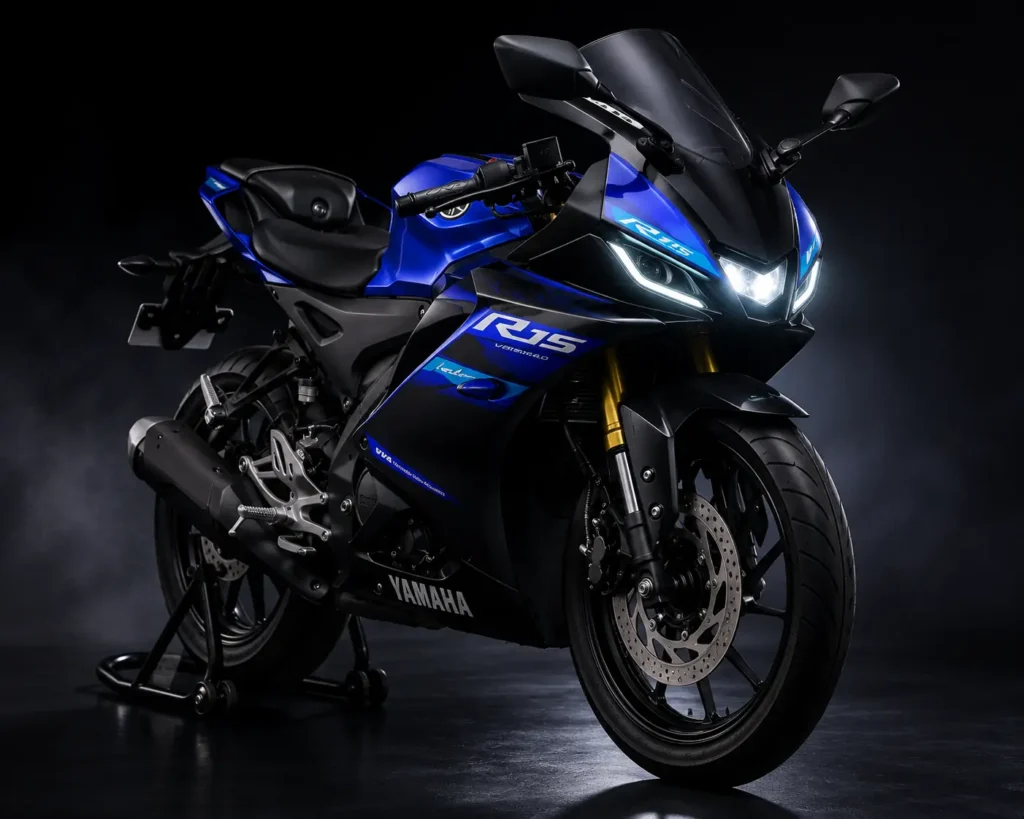
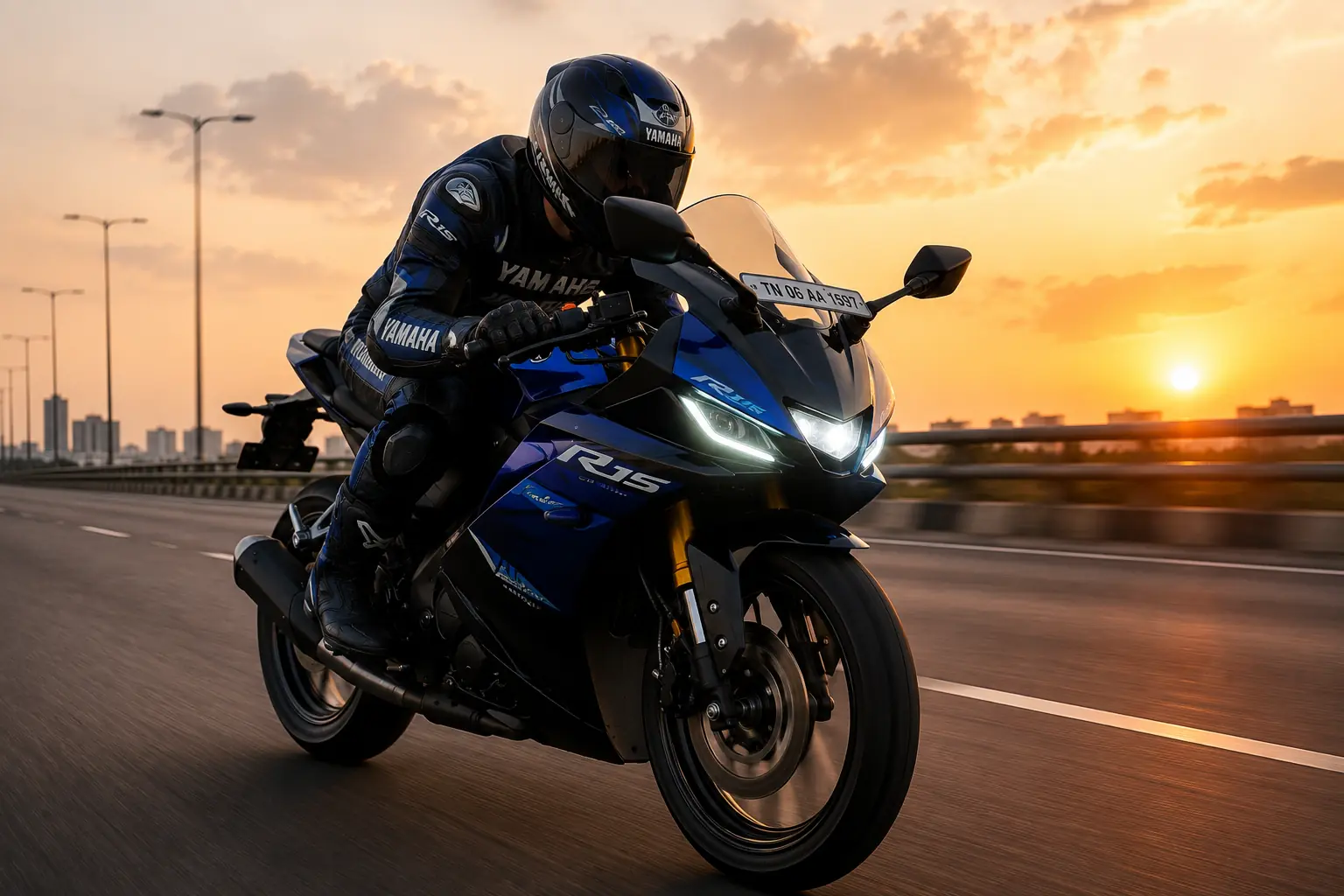
The R15 V4 is arguably the most beautiful small-capacity bike on Indian roads. The design isn’t just about aesthetics; it is deeply functional. The front fairing and the M-style intake duct are designed to reduce drag and optimize airflow to the engine.
- R1-Inspired Face: The Bi-functional LED headlight centered in the air intake gives it an aggressive, predatory look.
- Aerodynamic Fairing: The bodywork helps the bike stay stable at high speeds by managing wind resistance.
- Track-Ready Ergonomics: The low-set clip-on handlebars and rear-set footpegs put you in a full-tuck position, essential for cornering but demanding for long city rides.
3. Engine, Performance & Real Riding Feel
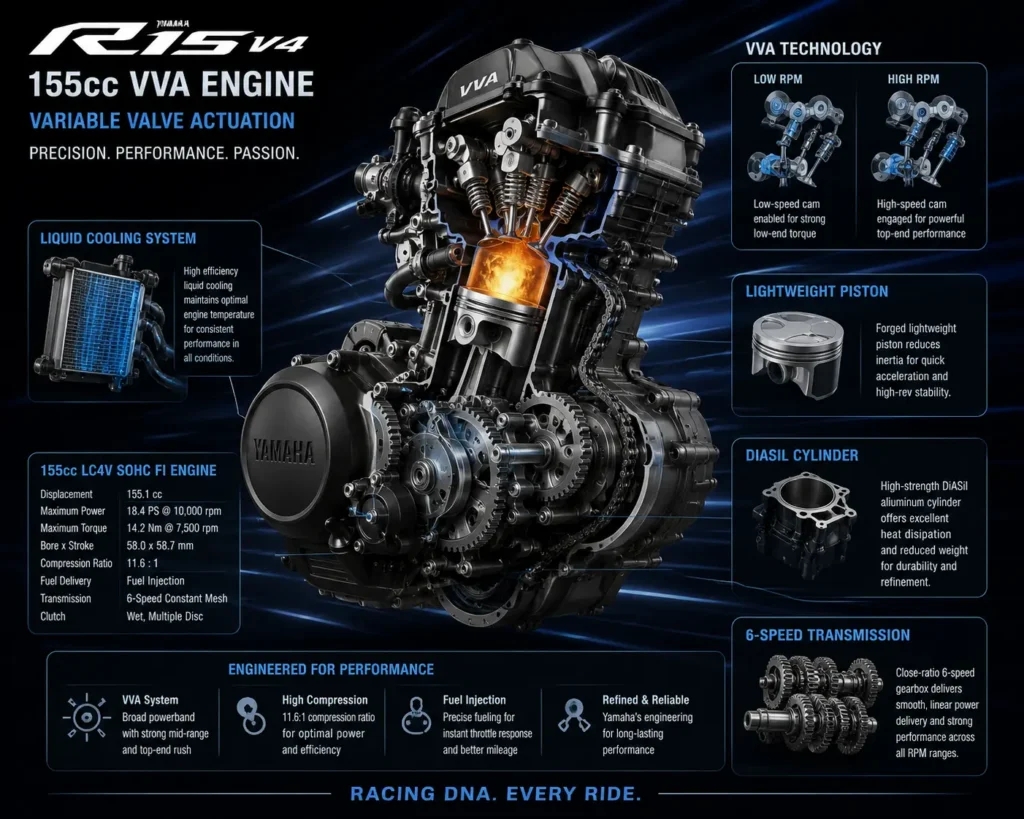
The heart of the R15 is the 155cc, liquid-cooled, SOHC engine. What makes this engine legendary is Variable Valve Actuation (VVA). This technology uses two intake valve cams: one for low-to-midrange torque and another that kicks in above 7,400 RPM for high-end power.
Performance Breakdown:
- The VVA Effect: You get a smooth, linear pull from 2,000 RPM, but as soon as the VVA indicator flashes on the console, the engine gains a second wind, screaming all the way to its 11,000 RPM redline.
- Refinement: Yamaha has mastered engine vibrations. Even at 100 km/h, the pegs and handlebars remain largely buzz-free.
- Overtaking: While it lacks the sheer torque of a 250cc bike, the R15’s light weight (142 kg) allows for quick, flickable overtakes in traffic.
Explore the Bajaj Avenger 400 detailed cruiser review
4. Mileage & Daily Usability in Indian Conditions
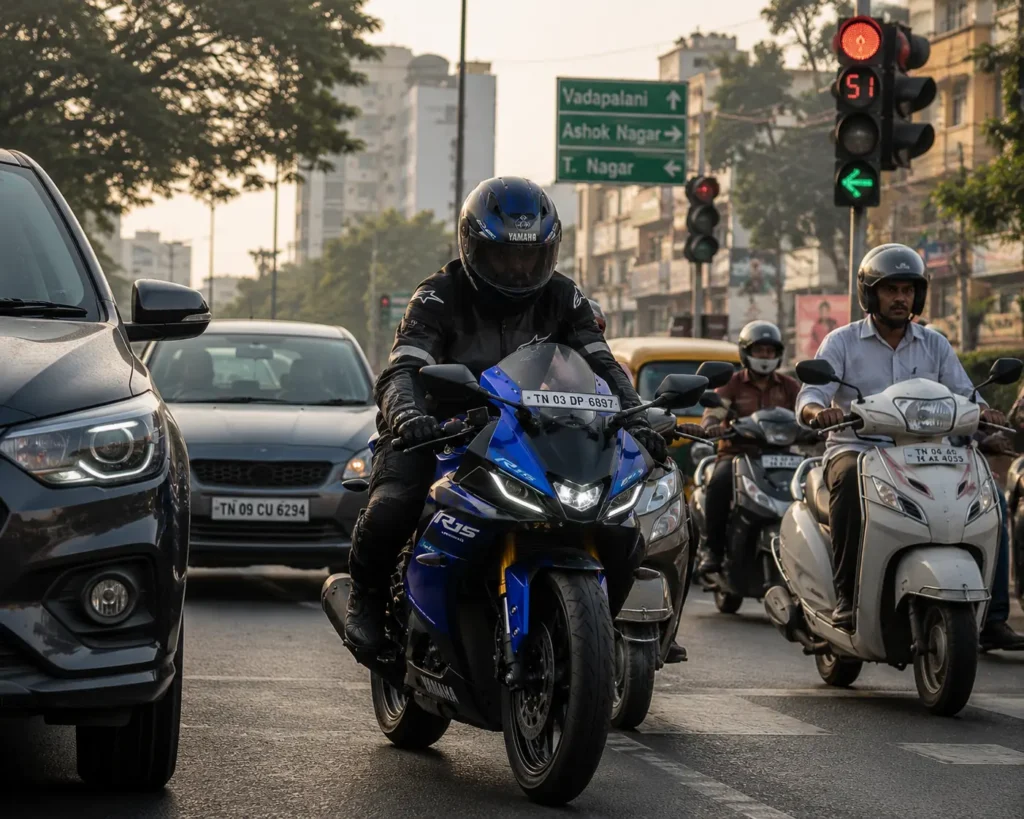
Despite its sporty nature, the R15 is surprisingly kind to your wallet. While brochure claims often stay near 50 kmpl, the real-world mileage is more realistic for Indian conditions.
- City Traffic: 38–42 kmpl.
- Highway Cruising (Steady 80-90 km/h): 45–48 kmpl.
- Fuel Cost: If you commute 20 km daily, you can expect a monthly fuel bill of roughly ₹1,500–₹1,800, making it one of the most efficient performance bikes available.
5. Handling, Suspension & Cornering Confidence
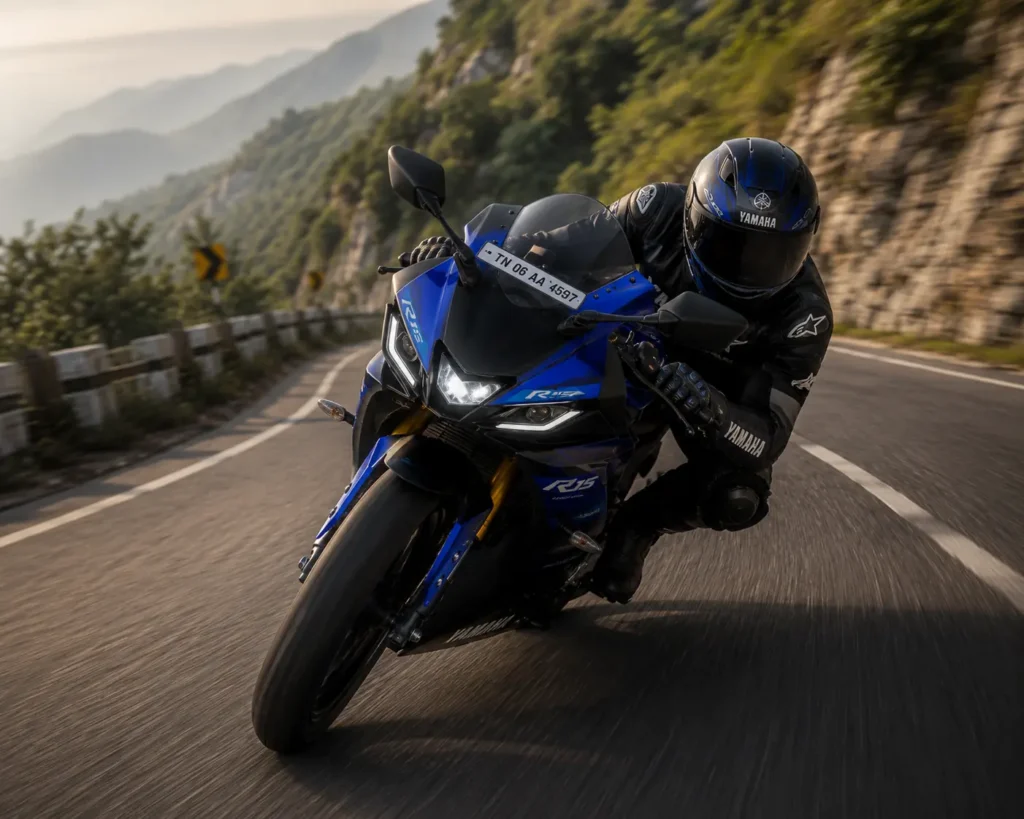
The R15 is widely considered the best-handling bike in its class due to its Deltabox Frame. This frame offers high rigidity, allowing the bike to remain composed during hard cornering and emergency braking.
- USD Forks: The gold-finished Upside-Down forks provide better front-end feedback than traditional telescopic units, especially during aggressive direction changes.
- Tires: The radial rear tire provides a wide contact patch, giving you the confidence to lean deep into corners without the rear end stepping out.
- Braking: The dual-channel ABS is well-calibrated. It isn’t overly intrusive, allowing for a natural braking feel even on wet or dusty Indian roads.
6. Features & Technology (V4 and M Variants)
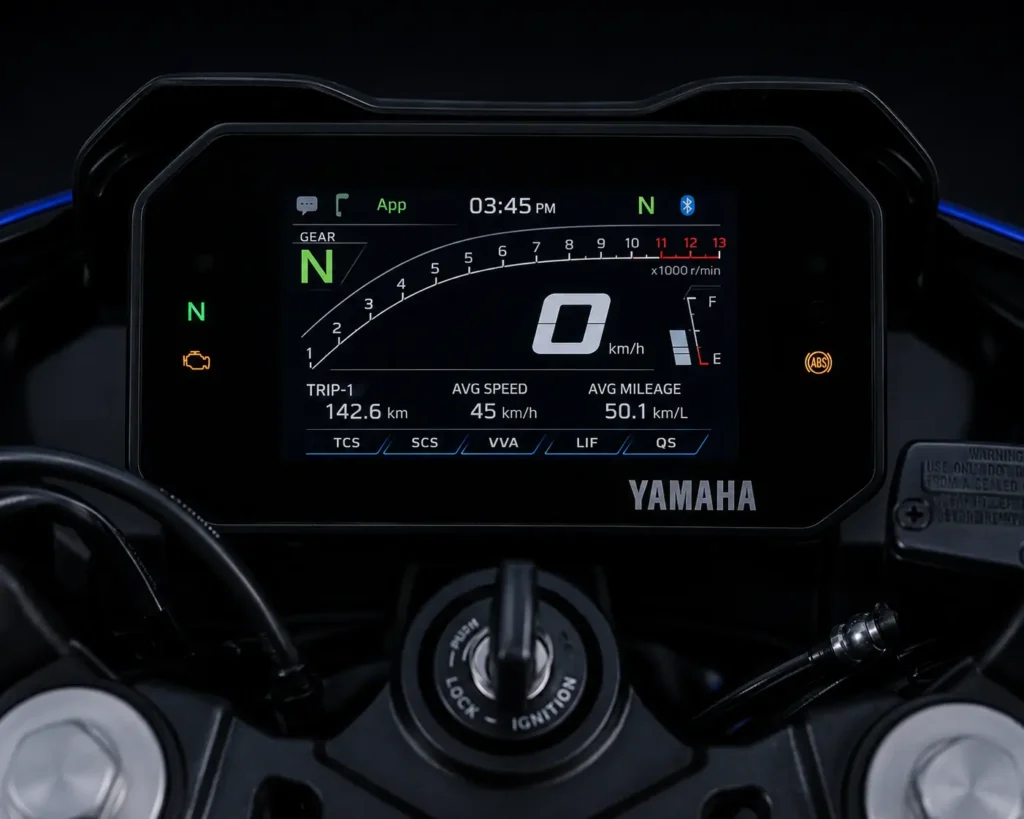
Yamaha has packed the R15 with features that were previously exclusive to 600cc+ motorcycles.
- Traction Control System (TCS): A segment-first. It cuts power if it detects rear-wheel slip on sandy or wet surfaces—a life-saver in Indian monsoon conditions.
- Quick Shifter: Allows for clutchless upshifts. It works best above 5,000 RPM and makes the riding experience feel incredibly professional.
- Bluetooth Connectivity: The Y-Connect app shows call alerts and fuel consumption, though it lacks turn-by-turn navigation, which is a missed opportunity in 2026.
Check out the latest Bajaj Pulsar NS200 feature upgrades
7. Comfort & Practical Riding Experience
Here is the honest truth: The R15 is not a comfortable bike. The aggressive riding posture puts significant weight on your wrists.
- City Traffic: In bumper-to-bumper traffic, you will feel the strain in your lower back and forearms.
- Long Rides: Touring is possible but requires frequent breaks. If you are over 5’10”, you might find the cockpit a bit cramped over long durations.
- Pillion Comfort: The pillion seat is high and small. It is strictly for short urban hops; taking a passenger on a long trip is not recommended.
8. Comparison: Yamaha R15 vs KTM RC 125 vs Pulsar RS200
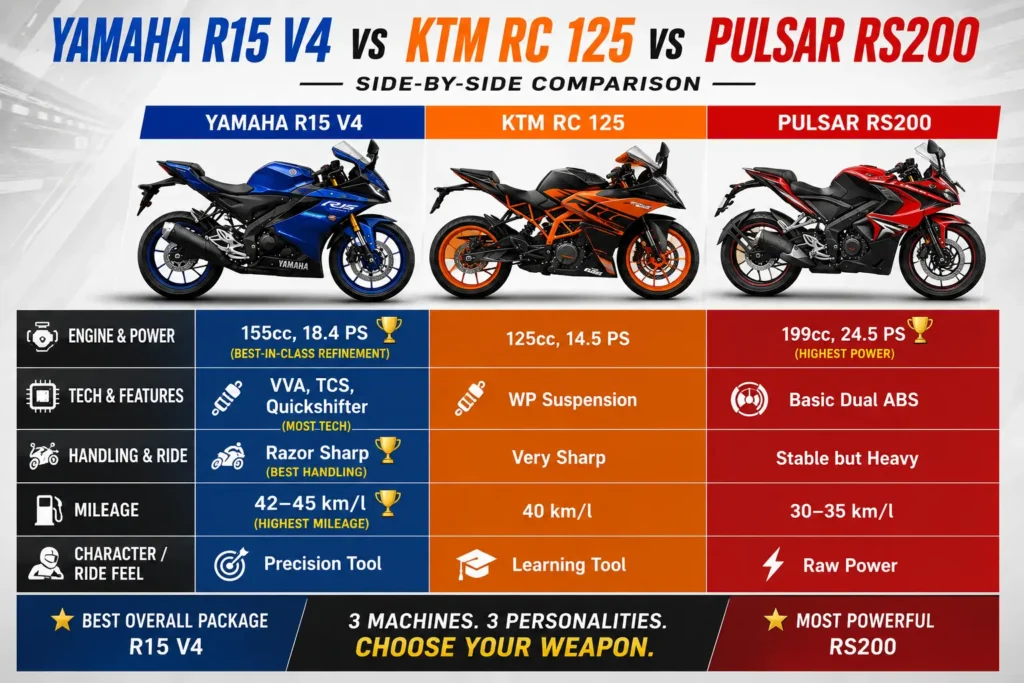
| Factor | Yamaha R15 V4 | KTM RC 125 | Pulsar RS200 |
| Engine | 155cc (18.4 PS) | 125cc (14.5 PS) | 199cc (24.5 PS) |
| Tech | VVA, TCS, Quickshifter | WP Suspension | Basic Dual ABS |
| Handling | Razor Sharp | Very Sharp | Stable but Heavy |
| Mileage | 42–45 kmpl | 40 kmpl | 30–35 kmpl |
| Character | Precision Tool | Learning Tool | Raw Power |
Expert Takeaway: The Pulsar RS200 is faster in a straight line, and the KTM has a more premium chassis feel, but the R15 is the most complete package of tech and efficiency.
9. Yamaha R15 Specifications (V4/M)
| Component | Specification |
| Engine | 155cc, Liquid-cooled, 4-stroke, SOHC, 4-valve |
| Max Power | 18.4 PS @ 10,000 RPM |
| Max Torque | 14.2 Nm @ 7,500 RPM |
| Fuel System | Fuel Injection (VVA) |
| Weight | 142 kg (Kerb) |
| Seat Height | 815 mm |
10. Who Should Buy the Yamaha R15?
- College Riders: If you want the most “head-turning” bike with low running costs.
- Beginner Track Enthusiasts: If you want to learn how to lean and corner properly.
- Highway Enthusiasts: If you enjoy solo weekend rides and prefer high-revving engines.
- Daily Commuters: Only if your commute is short (under 10 km) or if you don’t mind the physical effort of a supersport posture.
Discover why the new TVS Raider is gaining so much attention
What People Ask Before Buying
Is Yamaha R15 good for beginners?
Yes, it is very predictable. However, the aggressive seating takes time to get used to.
What is the real mileage of the Yamaha R15?
In mixed riding conditions, expect a solid 42 kmpl.
Is R15 good for daily commuting?
It is manageable but can be tiring in heavy traffic due to the committed riding position.
Which is better: R15 or KTM RC 125?
The R15 is much faster and offers more features (VVA, TCS) for roughly the same price.
What is the top speed of the Yamaha R15 V4?
The speedometer can see a top speed of roughly 145–150 km/h under ideal conditions.
Final Word for Buyers
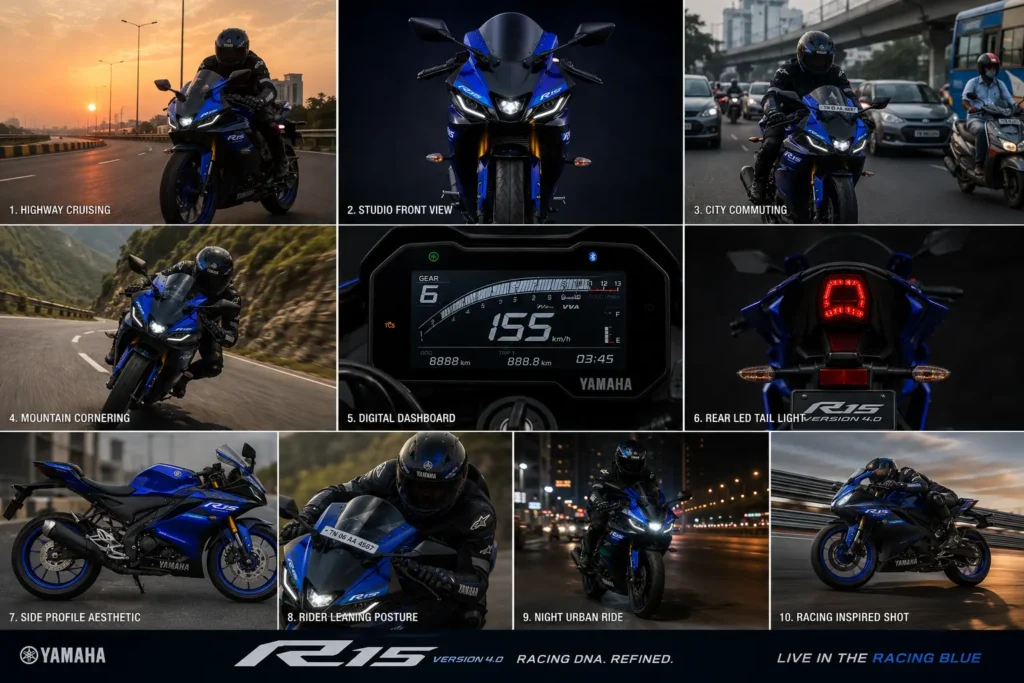
The Yamaha R15 V4 is a masterclass in how to build a small motorcycle. It doesn’t rely on brute force; it relies on finesse.
If you are buying with your heart, the R1-inspired looks and the screaming VVA engine make it an emotional winner. If you are buying with your head, the high resale value and excellent mileage justify the premium price tag.
Avoid it if: You have back/wrist issues or if you frequently ride with a pillion.
Buy it if: You want a bike that makes you feel like a racer every time you leave your driveway.
Helpful Resources for Indian Bike Buyers
- TransUnion CIBIL — Check your credit score and track your loan eligibility before applying for a car loan.
- SBI Car Loans — View latest interest rates, eligibility criteria, and loan offers from State Bank of India.
- HDFC Bank Car Loans — Explore car loan options, EMIs, and financing plans from HDFC Bank.
- ICICI Bank Car Loans — Compare new and used car loan offers along with repayment options.
- AutomotiveZone Mileage Cost Calculator — Estimate real fuel costs based on your driving mileage.
- AutomotiveZone Monthly Car Expense Calculator — Calculate total monthly car ownership cost including EMI, fuel, and maintenance.
Disclaimer: Prices, mileage, safety ratings, loan rates, and ownership costs are approximate and may vary by location, variant, and market conditions in 2026. Some visuals may be AI-generated for illustration. Please verify final details with authorized dealers before purchase.