
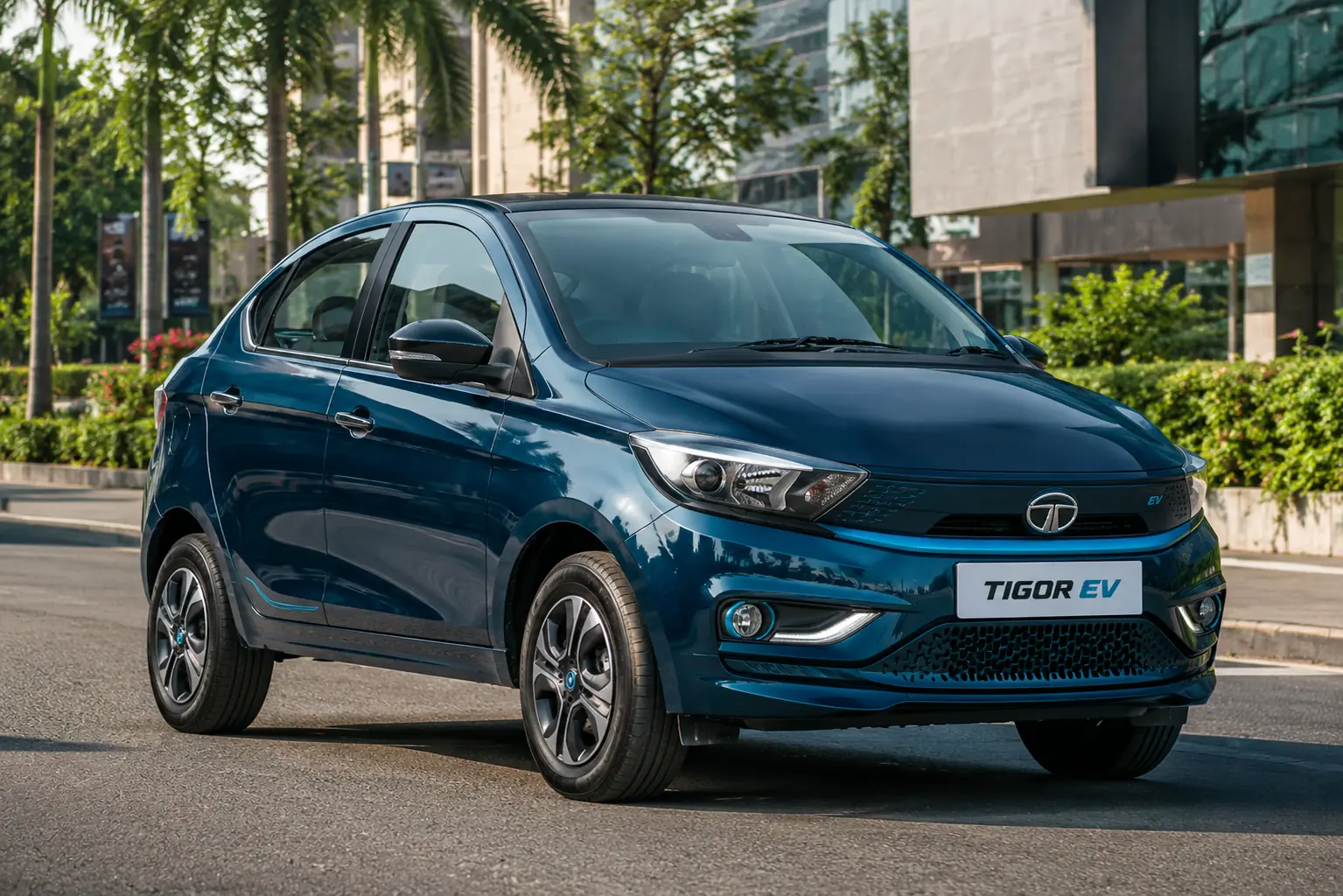

Tata Tigor EV Quick Overview
The 2026 Tata Tigor EV is India’s only sub-4-meter electric compact sedan, priced between ₹12.49 Lakh and ₹13.75 Lakh (ex-showroom). Powered by a standard 26 kWh battery pack using Ziptron architecture, it puts out 73.75 bhp and 170 Nm of torque. It delivers a highly dependable real-world city range of 190 km to 215 km, combining the security of a traditional three-box sedan with exceptionally low running costs.
Tata Tigor EV Price Guide 2026: Real-World Range, Interior, Running Cost & Is It Worth Buying?
While hatchback and crossover configurations dominate the entry-level electric market, a significant group of Indian family car buyers still favor the traditional form factor of a sedan. They look for the distinct security of a separate boot to hide luggage from view, a conventional dashboard layout, and a classic three-box silhouette, while wanting to completely insulate their household budget from high petrol and diesel bills.
The Tata Tigor EV is the only answer to this specific practical demand. Standing alone as India’s most accessible electric sedan, it avoids overly experimental body configurations. Instead, it packages Tata’s proven high-voltage Ziptron architecture inside a mature, family-oriented sub-4-meter sedan frame. In 2026, it offers a highly sensible, stable choice for suburban commuters looking to stabilize their monthly transportation expenses.
Why the Tata Tigor EV Remains a Highly Logical Town Car
The Tigor EV is engineered from the ground up to address daily commuter realities rather than highway track numbers, offering key operational advantages for city buyers:
Proper Three-Box Security: Unlike hatchbacks where luggage sits exposed to the cabin, the separate boot structure provides private, secure storage away from prying eyes.
Approachably Progressive Power: Packing 170 Nm of instant torque, it handles stop-and-go lane changes easily without the lag or vibration of a conventional automatic engine.
Bypassing Urban Fuel Expenses: Running a traditional petrol automatic sedan in heavy city traffic crawls can quickly drain a household budget. The Tigor EV replaces high fuel bills with low-cost charging.
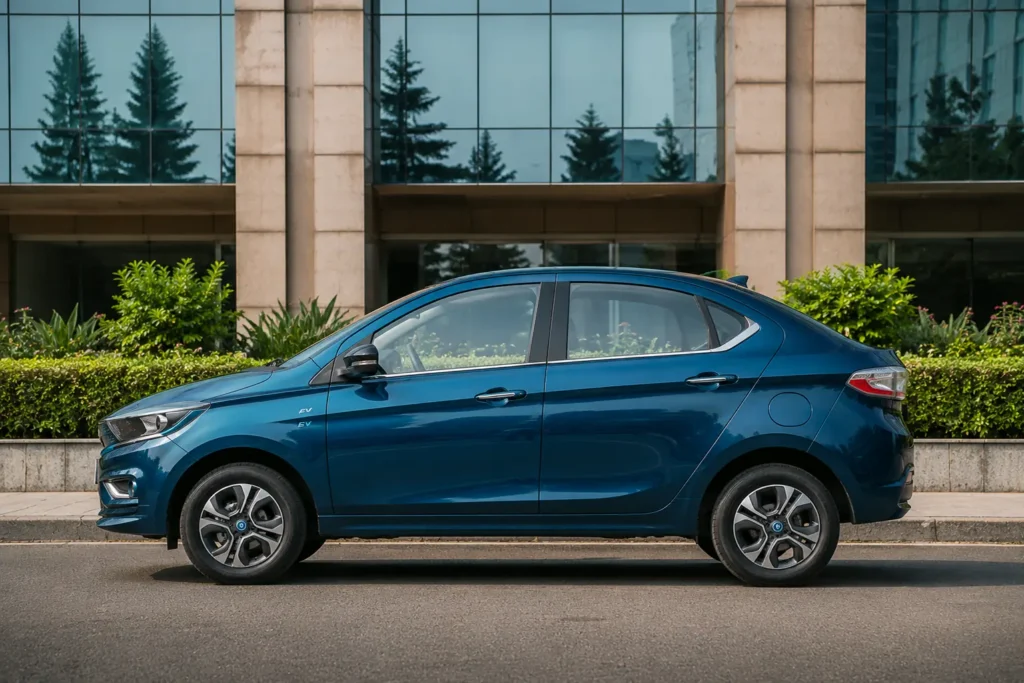
Tata Tigor EV Price List & Variants (2026)
The lineup standardizes a singular, high-capacity 26 kWh ZipTron lithium-ion battery pack across all trim tiers, with pricing scaling based on styling details and cabin conveniences.
| Variant Name | Battery Capacity | Drivetrain Layout | Ex-Showroom Price | Primary Variant Focus |
| XE | 26 kWh | Front-Wheel Drive | ₹12.49 Lakh | Fleet Operators / Strict Minimalist Buyers |
| XT | 26 kWh | Front-Wheel Drive | ₹12.99 Lakh | Budget-Conscious City Commuters |
| XZ Plus | 26 kWh | Front-Wheel Drive | ₹13.49 Lakh | The Value Sweet Spot / Fully Equipped |
| XZ Plus LUX | 26 kWh | Front-Wheel Drive | ₹13.75 Lakh | Flagship / Premium Leatherette Finishes |
Interior Layout, Comfort Features & Cargo Packaging
The cabin layout of the Tigor EV provides an exceptionally familiar, user-friendly workspace that makes transitioning from a petrol car completely seamless.
1. The Familiar Digital Dashboard
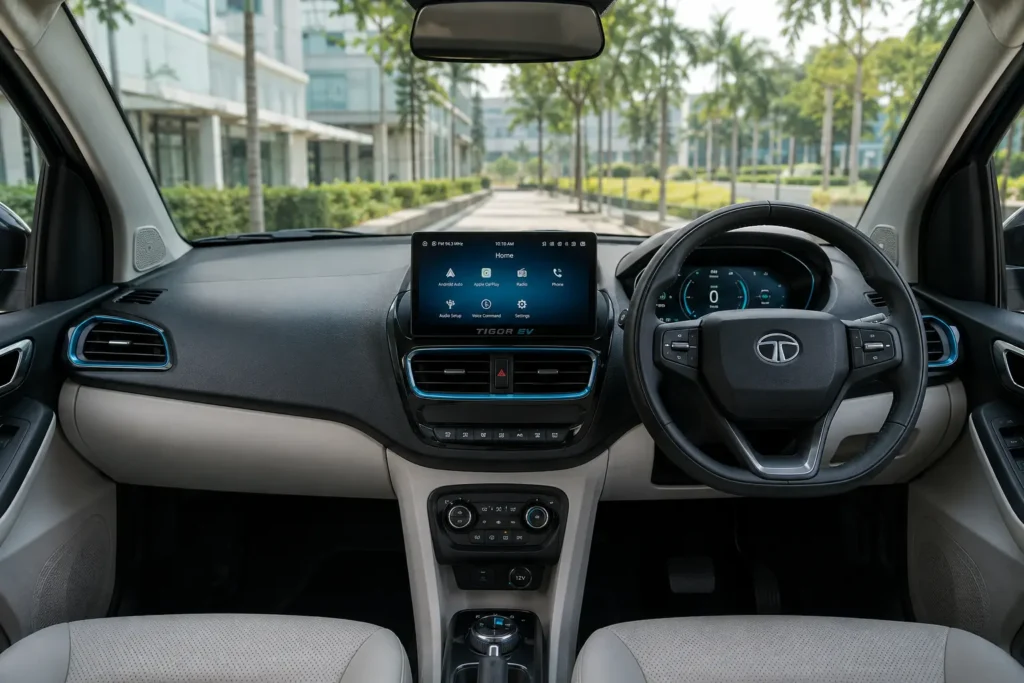
The center of the clean dashboard houses a responsive 7-inch touchscreen infotainment system powered by Harman, supporting seamless Apple CarPlay and Android Auto connectivity. This is paired with a clear digital instrument console that displays your battery status, speed, and real-time regenerative data cleanly. Essential climate functions are managed via straightforward physical toggle keys located right below the media deck.
2. Cabin Quality and Passenger Comfort
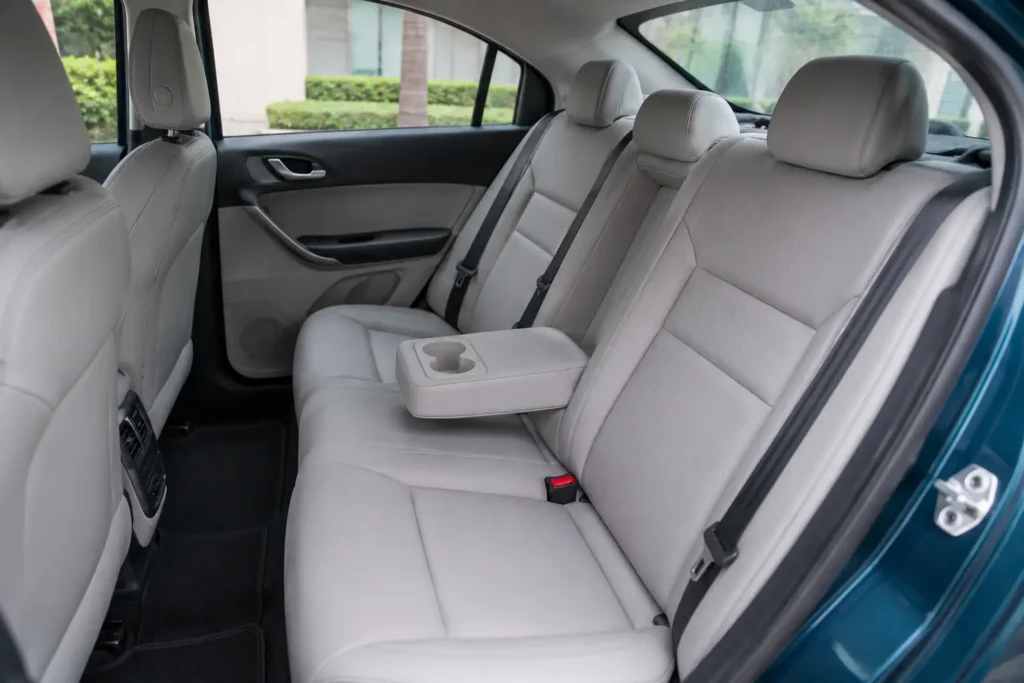
On the higher-spec XZ Plus and Luxury trims, the interior receives a premium visual upgrade with rich leatherette upholstery accented by distinctive blue contrast sports stitching. The front seats provide good shoulder support for daily city commutes. The inclusion of a central rear armrest enhances comfort for passengers sitting in the back.
3. Real Passenger Space and Luggage Practicality
With a natural 2,450 mm wheelbase, legroom and knee room are highly comfortable for a family of four. Because the platform layout cleanly places the battery cells low underneath the floor, rear passengers avoid the high-knee seating posture common in poorly converted EVs.
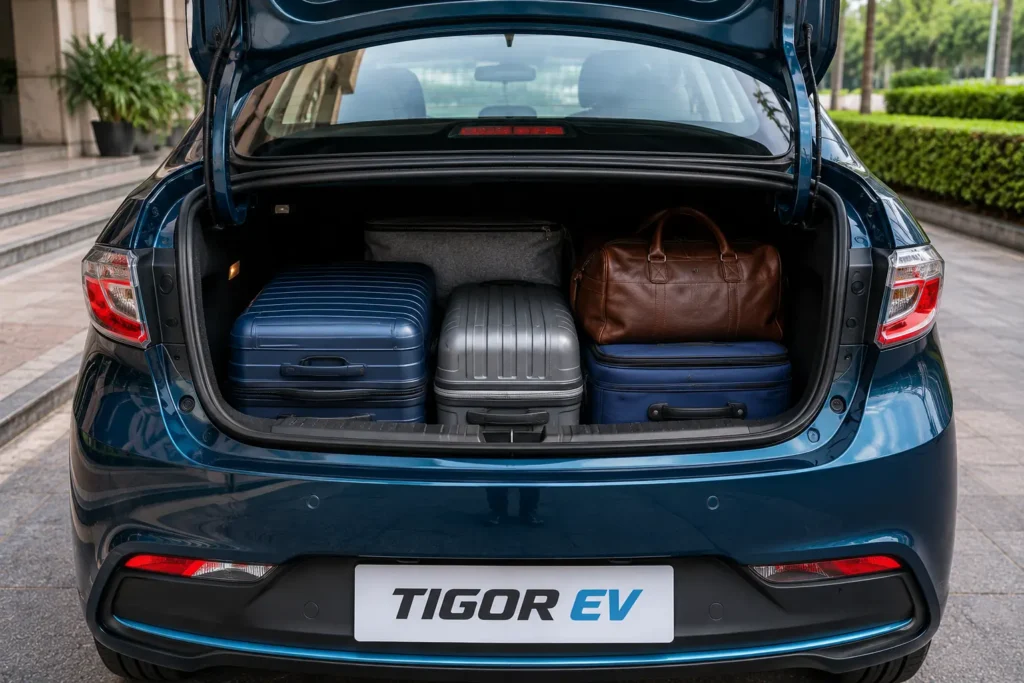
The sedan shape delivers its core advantage at the back: a highly usable 316-liter boot capacity that easily accommodates a medium suitcase alongside multiple soft duffel bags for weekend trips.
Real-World Range & Charging Experience
The difference between laboratory testing tracks and actual Indian traffic conditions requires an honest, data-backed range calculation.
Real Urban Loops vs. Expressway Consumption
While the official ARAI claim stands at 315 km, actual real-world tracking across mixed city routes yields highly consistent indicators:
Metropolitan Traffic Loops: The Tigor EV delivers a highly reliable 190 km to 215 km of real-world city range on a full charge. The power delivery is tuned smoothly to favor linear progressiveness rather than aggressive wheel spins in traffic.
Open Expressway Cruising: Maintaining steady speeds between 80–90 km/h allows the car to run efficiently, providing an actual highway range of around 160 km to 170 km. Continuous AC usage during high summer heat results in a standard 12% efficiency drop.
Charging Infrastructure Timelines
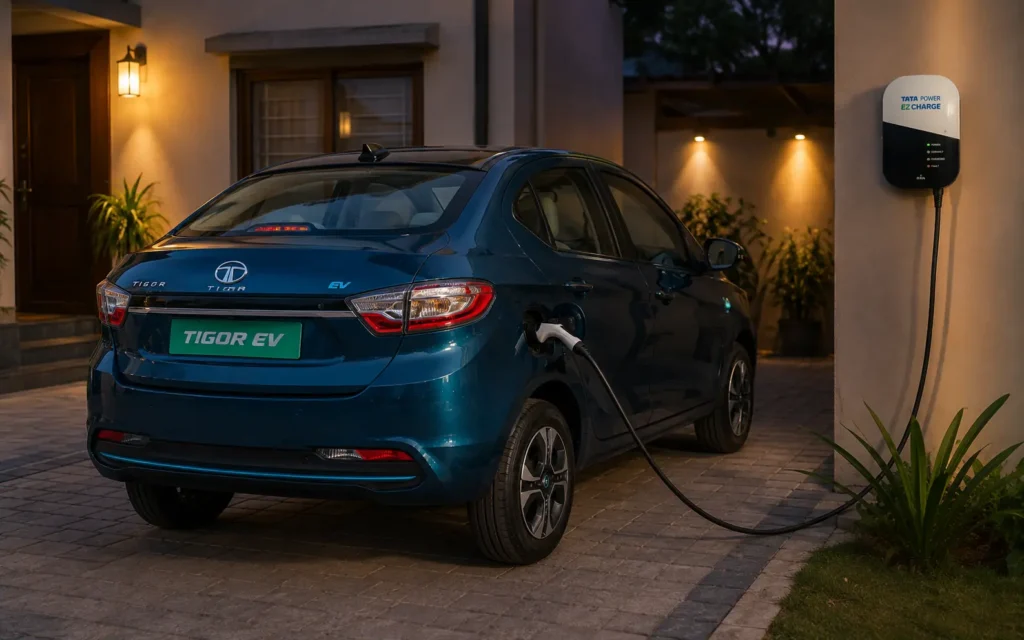
Standard 15A Home Socket Point: Included standard with the car, it plugs directly into any regular home wall socket to charge from 10% to 100% overnight in approximately 9 hours and 30 minutes.
Public DC Fast Charging Support: The Tigor EV connects to standard public DC fast charging terminals via its CCS2 port, replenishing its cells from 10% to 80% in 59 minutes.
Tata Tigor EV Technical Specifications Table
| Technical Parameter | Standard Engineering Specification / Capability |
| Motor Layout | Permanent Magnet Synchronous Motor (Front-Wheel Drive) |
| Peak Power Output | 55 kW (73.75 bhp / 74.7 PS) |
| Peak Torque Output | 170 Nm (Instantaneous) |
| Battery Configuration | 26 kWh Lithium-Ion (Liquid-Cooled, IP67 Certified) |
| Regenerative Braking | 4-Level Adjustments (Level 0 – 1 – 2 – 3) |
| Dimensions (L x W x H) | 3,993 mm x 1,677 mm x 1,532 mm |
| Wheelbase Capacity | 2,450 mm |
| Total Boot Space Room | 316 Liters (Highly Usable Sedan Trunk) |
| Unladen Ground Clearance | 165 mm (Navigates standard speed breakers comfortably) |
Tigor EV Running Cost vs Petrol Automatic Sedans
Let’s calculate the true middle-class household budget math for an urban commuter covering 1,200 km per month over a 5-year ownership tenure.
Scenario A: The Tata Tigor EV (Home AC Charging Setup)
Average domestic electricity tariff: ₹8 per unit (kWh).
Fully topping up the 26 kWh pack takes roughly 29 units of power (allowing for standard minor charging losses), costing ₹232.
Covering 1,200 km requires roughly 6 full home charging cycles.
Monthly Electricity Bill: ~₹1,392 (Approx. ₹1.16 per km).
Scenario B: Traditional Petrol Automatic Compact Sedan
Average cost of standard fuel: ₹102 per liter.
Real-world urban fuel economy in heavy traffic: 12 km/l.
Fuel needed for 1,200 km: 100 Liters.
Monthly Fuel Bill: ₹10,200 (Approx. ₹8.50 per km).
5-Year Cumulative Operational Fuel Cost Savings
[Petrol Compact Sedan: ₹10,200/mo]
=======> 5-Year Total: ₹6.12 Lakh
[Tata Tigor EV Charging: ₹1,392/mo]
==> 5-Year Total: ₹0.83 Lakh
---------------------------------
Net Operational Savings over 5 Years: ₹5.29 Lakh
Maintenance Cost & Long-Term Ownership
By dropping complex mechanical components like turbos, multi-stage fuel injectors, complex timing lines, and automated multi-clutch gearboxes, periodic workshop visits are heavily simplified.
Routine Garage Visits: Annual maintenance checkups focus primarily on basic cabin air filter replacements, suspension lubrication checkups, tire rotations, and full high-voltage software diagnostics. Expect bills to range smoothly between ₹3,000 and ₹4,500.
Battery Durability and Warranty: Tata protects the liquid-cooled, IP67-rated battery pack and electric motor assembly with an extensive 8-year or 1,60,000 km warranty, helping safeguard long-term resale values.
Tata Tigor EV Pros & Cons
Advantages
Secure Sedan Trunk: Separate 316-liter boot provides secure storage away from cabin view.
Incredibly Low Running Costs: Home electricity keeps your monthly driving expenses to roughly ₹1.16 per km.
Highly Intuitive Dashboard: Simple physical climate buttons and clear layouts make driving easy.
Strong Structural Foundation: Built on a platform that holds a reliable 4-Star Global NCAP crash safety validation.
Smooth City Performance: 170 Nm of instant torque handles urban traffic lanes effortlessly.
Disadvantages
Dated Infotainment Screen: The 7-inch touchscreen feels slightly slow to respond compared to newer, larger digital layouts.
Misses Modern Features: Lacks premium upgrades like rear AC vents, adjustable rear headrests, or alloy wheels.
Confined to City Limits: A realistic city range of around 200 km makes it less suited for long, unplanned interstate road trips.
Firm Low-Speed Suspension: The ride is set up slightly firm to manage the added battery weight over sharp potholes.
Who Should Buy the Tata Tigor EV?
Recommended For:
Suburban Daily Commuters: Ideal for professionals facing predictable 40–60 km daily cross-city trips through heavy urban gridlock.
Traditional Sedan Lovers: Buyers who prefer the classic look and secure luggage storage of a sedan layout over entry-level hatchbacks.
First-Time EV Upgraders: Drivers looking for an approachable vehicle with straightforward physical layouts that feel familiar.
Not Recommended For:
One-Car Highway Tourers: If you need a single vehicle to handle regular long-distance family highway trips past 250 km.
Apartment Residents Lacking Private Charging Points: Relying solely on commercial fast chargers reduces daily convenience and increases costs.
Questions Buyers Commonly Ask about Tata Tigor EV
What is the real on-road price of the Tata Tigor EV?
While ex-showroom pricing starts at ₹12.49 Lakh, local registration taxes, insurance, and handling parameters bring final metro on-road numbers to between ₹13.2 Lakh and ₹14.6 Lakh depending on your state’s EV tax incentives.
What is the true real-world range of the Tigor EV?
In typical city traffic with the air conditioning running consistently, you can safely expect a highly dependable 190 km to 215 km of range on a single charge.
Is it safe to drive through waterlogged roads?
Yes. Both the high-voltage electric motor and the under-floor battery enclosure carry a certified IP67 weatherproof rating, keeping them safely sealed against water and dust entry during monsoon street flooding.
Is it expensive to maintain compared to standard sedans?
No, annual periodic service costs are roughly 40% cheaper over five years because the electric platform lacks complex moving mechanical components like engine oil lines and filters.
How long does the battery last before needing replacement?
The advanced lithium-ion cells are engineered to handle over 1,500 full charging cycles, providing a reliable operational lifespan of 8 to 10 years of regular daily service, backed by Tata’s comprehensive 8-year warranty.
Final Verdict: Is the Tata Tigor EV Worth Buying in 2026?
The Tata Tigor EV represents a highly sensible and logical financial decision. It doesn’t try to grab attention with complex radar software or futuristic body shapes; instead, it focuses on delivering a reliable sedan silhouette, comfortable family space, clear user-friendly keys, and highly predictable running costs.
If you have a secure parking space to install an AC home charger and a daily cross-city commute that impacts your monthly budget, the massive fuel savings and effortless torque make it an exceptional investment. However, if your family frequently takes long highway road trips or requires the absolute latest digital screen technology, other body configurations might fit your lifestyle better. Ultimately, let your real monthly driving distance guide your final choice.
“Running cost matters more than fuel type when daily commuting is involved.”
Helpful Resources for Indian EV Car Buyers
- Bharat NCAP Official Website — India’s official crash-testing and vehicle safety rating platform. Includes adult and child occupant scores, crash-test protocols, and tested vehicle lists.
- Global NCAP – Safer Cars for India — Global crash-test program that pushed Indian manufacturers toward safer vehicle structures and occupant protection standards.
- Reserve Bank of India (RBI) — Official source for repo rates, lending rules, and banking regulations in India. (rbi.org.in)
- TransUnion CIBIL — Check your credit score and track your loan eligibility before applying for a car loan.
- AutomotiveZone Mileage Cost Calculator — Estimate real fuel costs based on your driving mileage.
- AutomotiveZone Monthly Car Expense Calculator — Calculate total monthly car ownership cost including EMI, fuel, and maintenance.
- AutomotiveZone Fuel Cost Calculator — Instantly estimate petrol, diesel, or CNG expenses based on mileage, fuel price, and trip distance.
- AutomotiveZone EV vs Petrol Cost Calculator — Compare electric vehicle charging costs with petrol fuel expenses to see long-term savings.
- AutomotiveZone EV Charging Cost Calculator — Calculate home and fast-charging electricity costs for your EV using battery size and electricity tariff.
- AutomotiveZone Car Resale Value Estimator — Estimate your car’s current market resale value based on age, mileage, ownership, and condition.
Disclaimer: Prices, mileage, safety ratings, loan rates, and ownership costs are approximate and may vary by location, variant, and market conditions in 2026. Some visuals may be AI-generated for illustration. Please verify final details with authorized dealers before purchase.
Calculate Tata Tigor EV Charging Cost
Estimate your monthly charging expenses, electricity consumption, and long-term running cost savings with the Tata Tigor EV.
Calculate Tata Tigor EV Charging Cost →