


Kia Seltos HTE vs HTE (O) Quick Overview
The primary difference between the New Kia Seltos HTE and HTE (O) variants lies in the added creature comforts and automatic transmission flexibility. While the base HTE variant starts at ₹10.99 Lakh (ex-showroom) and is restricted to manual transmissions, the one-above-base HTE (O) starts at ₹12.09 Lakh and introduces LED connected taillights, black roof rails, semi-leatherette seats, a 60:40 split rear seat with an armrest, and high-spec automatic options (CVT/TC) packed with premium mechanical updates like an Electronic Parking Brake and Paddle Shifters.
New Kia Seltos HTE vs HTE (O) Variants Compared: Which Value Trim Offers the Smartest Upgrade?
In India’s highly competitive compact SUV market, finding the right variant balance can be a complex calculation. Buyers often lean toward entry-level trims to bypass steep upfront capital costs, but they run the risk of missing out on crucial cabin comforts and transmission tech.
Kia has historically excelled at structuring feature-loaded entry points, and its latest generation of the Seltos is no exception. Built on a fresh global platform and holding a 5-star Bharat NCAP crash safety rating, the lineup starts with the ultra-popular HTE base trim. However, for a step up in price, the one-above-base HTE (O) trim offers a compelling alternative.
If you are trying to decide which trim deserves a spot in your garage, this comprehensive breakdown highlights the key visual, electronic, and mechanical differences.
1. Exterior Design: The Aesthetic Differences
At first glance, both models share the Seltos’ distinctive, muscular silhouette and high-bonnet road stance. However, key trim details set the HTE (O) apart when viewed from the outside:
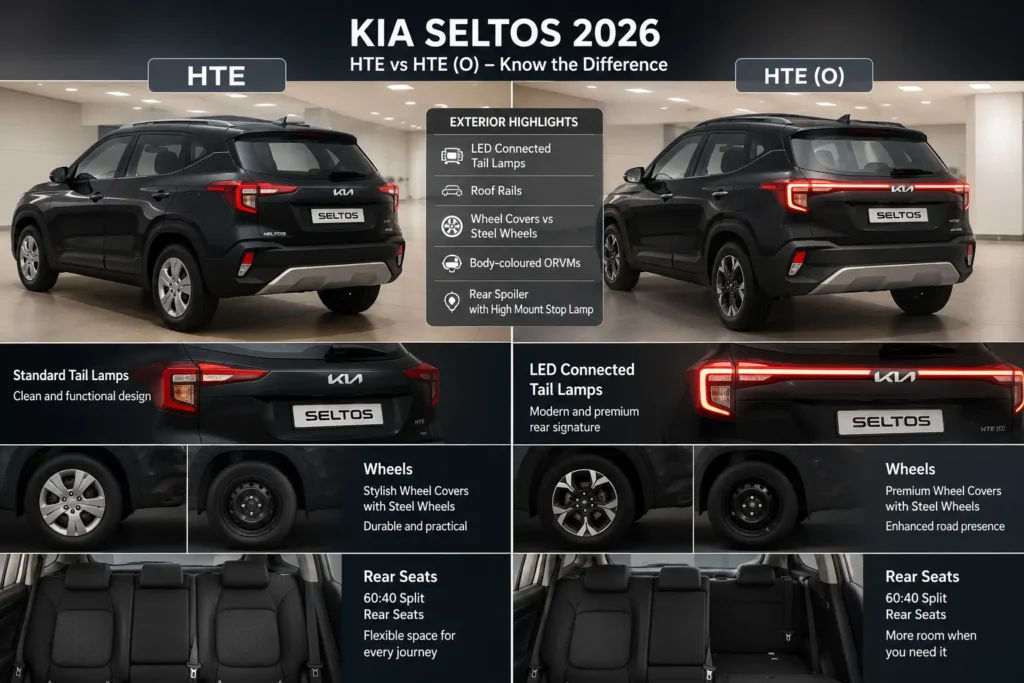
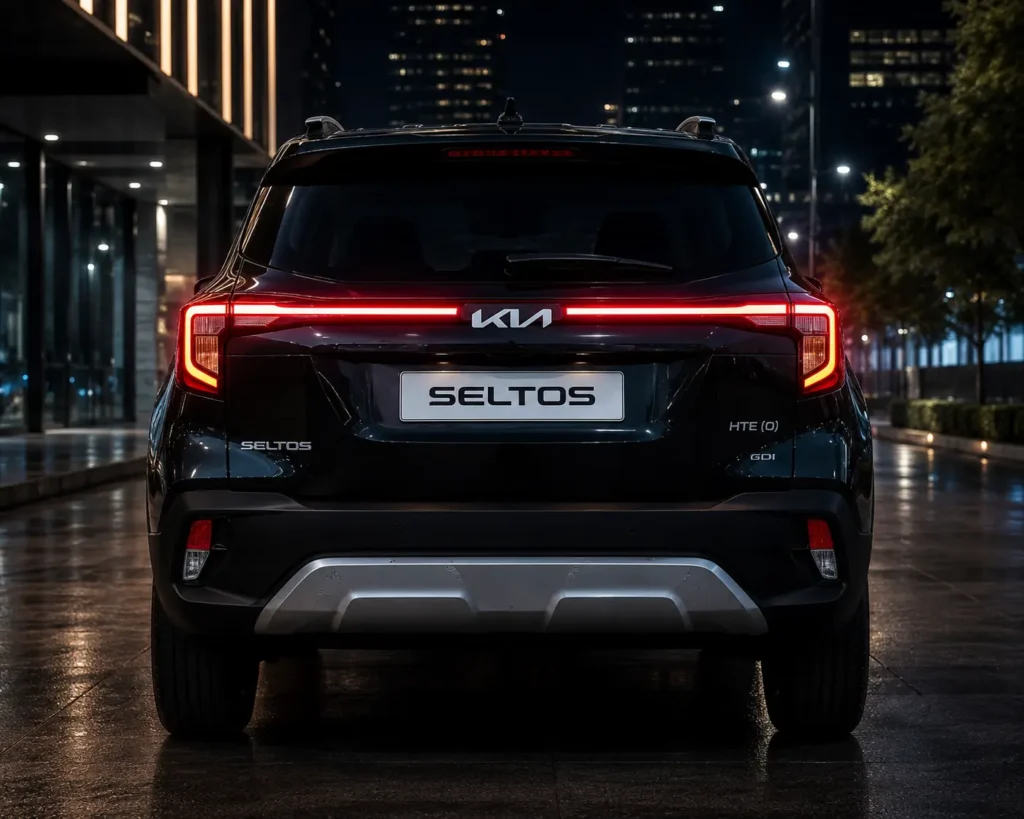
Rear Light Matrix: The standard HTE comes with a sleek LED taillight setup, but the center panel bridging the rear tailgate remains non-illuminated. The HTE (O) introduces full LED connected taillights that light up continuously across the rear layout, mimicking the premium signature look of higher-tier trims.
Roof Integration: The HTE features a completely clean, bare roofline. The HTE (O) adds gloss black roof rails, elevating the vehicle’s visual profile and adding a distinct crossover ruggedness.
Wheel Setup: Both trims ride on practical 16-inch steel wheels wrapped in 205/65 R16 road radial tubeless tires. However, while the HTE uses simple, rugged hubs, the HTE (O) updates to styled, dual-tone wheel covers that closely resemble alloy structures.
2. Cabin Layout, Materials & Comfort Packaging
Inside the cabin is where the HTE (O) truly begins to justify its premium position, trading simple utilitarian textures for a more sophisticated family environment.
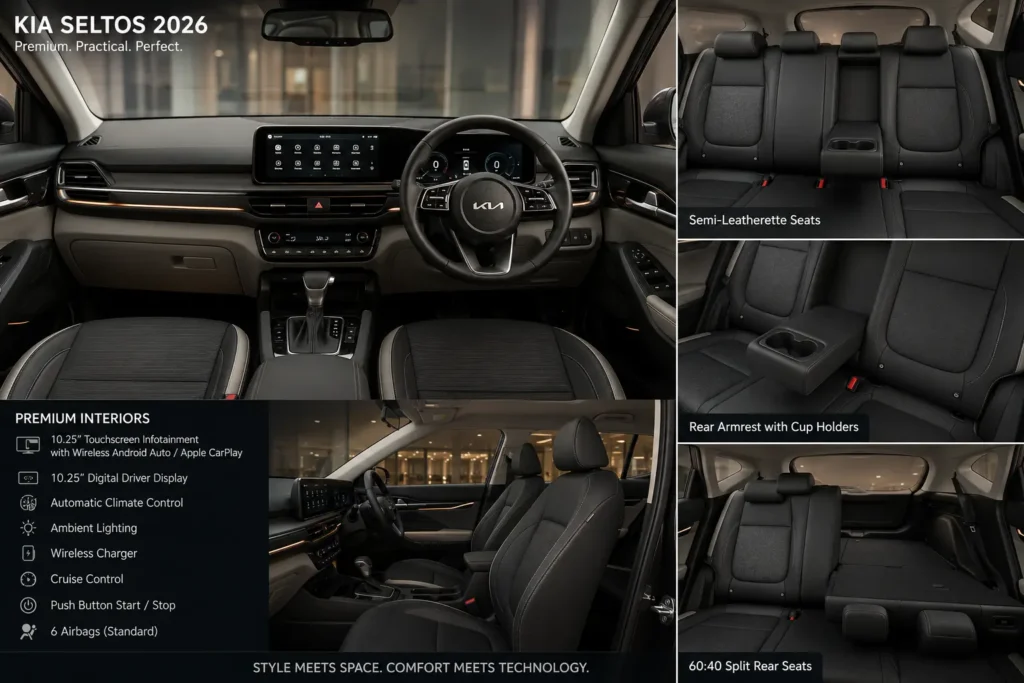
Seat Upholstery: The base HTE uses hard-wearing, dual-tone black and grey fabric seats. The HTE (O) steps up to premium semi-leatherette upholstery, which is far more resistant to stains and significantly easier to clean.
Rear Seat Practicality: The base HTE uses a traditional, single-piece folding rear bench with fixed headrests. The HTE (O) adds a highly versatile 60:40 split rear seat configuration, complete with a fold-down rear center armrest and height-adjustable headrests for all five adult occupants.
Driver Window Function: While both variants offer power windows on all four doors, the HTE (O) adds a one-touch auto up/down utility with anti-pinch safety exclusively for the driver’s side glass pane.
3. Technology, Transmissions & Mechanical Upgrades
While both the HTE and HTE (O) come equipped with an impressive 10.25-inch touchscreen infotainment display running wireless Apple CarPlay and Android Auto coupled with a 6-speaker audio system, choosing the HTE (O) unlocks serious mechanical flexibility.
The Automatic Gearbox Advantage
The base HTE is strictly limited to 6-speed manual transmissions across its petrol and diesel options. Opting for the HTE (O) completely opens up the transmission selection, adding CVT (IVT) Automatic for the naturally aspirated petrol and a 6-speed Torque Converter Automatic for the turbo-diesel line. There is even a 160 PS Turbo-Petrol engine paired with a 6-speed iMT (clutchless manual) option available under the HTE (O) umbrella.
Selecting an automatic transmission on the HTE (O) activates several advanced mechanical features:
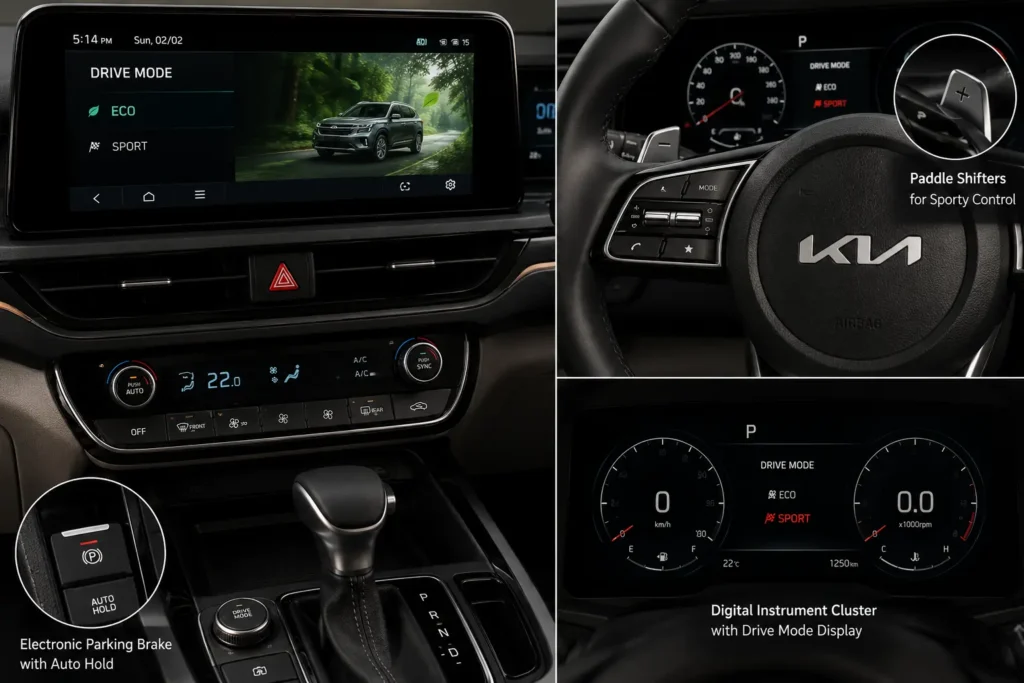
Electronic Parking Brake (EPB): Drops the old manual cable handbrake lever for a sleek dashboard toggle button complete with Auto-Hold assist for effortless stop-and-go bumper traffic.
Multi-Terrain Modes: Adds electronic traction logic profiles (Sand, Mud, Snow) alongside dedicated Drive Modes (Eco, Normal, Sport) to alter throttle responsiveness dynamically.
Paddle Shifters: Includes steering-wheel-mounted paddle selectors to let you hold specific gears manually on winding mountain roads.
4. Full Technical Specification Matrix
| Engineering Parameters | Seltos HTE Entry Baseline | Seltos HTE (O) Step-Up Baseline |
| 1.5L NA Petrol Output | 115 PS / 144 Nm Torque | 115 PS / 144 Nm Torque |
| 1.5L Turbo Diesel Output | 116 PS / 250 Nm Torque | 116 PS / 250 Nm Torque |
| Transmission Availability | 6-Speed Manual Only | 6-MT / CVT Automatic / 6-Speed AT / 6-iMT |
| Mechanical Parking Assist | Manual Pull Handbrake Lever | Electronic Parking Brake with Auto-Hold (AT) |
| Drive & Terrain Mode Tech | Not Available | Eco, Normal, Sport + Sand, Mud, Snow (AT) |
| Paddle Shifters Layout | Not Available | Steering-Wheel-Mounted Paddles (AT) |
| Braking Component Layout | All-Wheel Disc Brakes standard | All-Wheel Disc Brakes standard |
| Dimensions (L x W x H) | 4,460 mm x 1,830 mm x 1,635 mm | 4,460 mm x 1,830 mm x 1,635 mm |
| Boot Floor Capacity | 447 Liters | 447 Liters |
5. Price Architecture & Financial Breakdown
Kia structures its pricing strategy to place the HTE as a highly disruptive entry-point, while the HTE (O) captures buyers willing to pay for added conveniences.
Ex-Showroom Pan-India Price Comparison:
| Engine & Drivetrain Option | Seltos HTE Base Price | Seltos HTE (O) Step-Up Price | Net Financial Premium |
| 1.5L Smartstream Petrol MT | ₹10.99 Lakh | ₹12.09 Lakh | + ₹1.10 Lakh |
| 1.5L CRDi VGT Diesel MT | ₹12.59 Lakh | Variant Scaling | — |
| 1.5L Turbo Petrol iMT | — | ₹12.89 Lakh | Exclusive Trim |
| 1.5L Smartstream Petrol CVT | — | ₹13.39 Lakh | Exclusive Automatic |
On-World Operating Cost Projection (Petrol Loop)
Average cost of standard petrol fuel: ₹102 per liter.
Real-world urban city fuel economy: 13 km/l.
Monthly fuel bill for a standard 1,200 km commuter route: ~₹9,415 (Approx. ₹7.84 per km).
6. Shared Features: What You Don’t Lose on the Base HTE
It is worth noting that the standard HTE is exceptionally well-equipped for a base model. Selecting the standard HTE still secures several high-value features:
A full 6-airbag safety shield alongside Electronic Stability Control (ESC) and Hill-Start Assist.
A crisp semi-digital instrument cluster with a 4.2-inch TFT driver information screen.
Crucial rear-passenger logic, including dedicated rear AC vents and dual USB Type-C fast-charging ports.
Electrically adjustable outside rearview mirrors (ORVMs) and a manual tilt steering adjust setup.

7. Final Verdict: Is the HTE (O) Worth the Upgrade?
Choosing between the two variants comes down to your preferred transmission type and long-term rear-passenger requirements:
Buy the Seltos HTE if:
You are working with a strict budget under ₹13 Lakh on-road, prefer a traditional manual transmission, and plan to customize the car’s exterior aftermarket (such as adding roof rails later). The base HTE remains one of the highest value-for-money entry models in the mid-size SUV class, offering essential infotainment tech and top-tier safety features standard.
Buy the Seltos HTE (O) if:
You prioritize the effortless comfort of an automatic transmission or frequently travel with a full family load. The added cost is well justified by the inclusion of highly practical 60:40 split rear seats, premium semi-leatherette upholstery, and sleek connected LED taillights. For automatic buyers, features like the Electronic Parking Brake, paddle shifters, and multi-terrain modes make the HTE (O) an exceptionally well-rounded, premium value packaging choice.
“Running cost matters more than fuel type when daily commuting is involved.”
Helpful Resources for Indian EV Car Buyers
- Bharat NCAP Official Website — India’s official crash-testing and vehicle safety rating platform. Includes adult and child occupant scores, crash-test protocols, and tested vehicle lists.
- Global NCAP – Safer Cars for India — Global crash-test program that pushed Indian manufacturers toward safer vehicle structures and occupant protection standards.
- Reserve Bank of India (RBI) — Official source for repo rates, lending rules, and banking regulations in India. (rbi.org.in)
- TransUnion CIBIL — Check your credit score and track your loan eligibility before applying for a car loan.
- AutomotiveZone Mileage Cost Calculator — Estimate real fuel costs based on your driving mileage.
- AutomotiveZone Monthly Car Expense Calculator — Calculate total monthly car ownership cost including EMI, fuel, and maintenance.
- AutomotiveZone Fuel Cost Calculator — Instantly estimate petrol, diesel, or CNG expenses based on mileage, fuel price, and trip distance.
- AutomotiveZone EV vs Petrol Cost Calculator — Compare electric vehicle charging costs with petrol fuel expenses to see long-term savings.
- AutomotiveZone EV Charging Cost Calculator — Calculate home and fast-charging electricity costs for your EV using battery size and electricity tariff.
- AutomotiveZone Car Resale Value Estimator — Estimate your car’s current market resale value based on age, mileage, ownership, and condition.
Disclaimer: Prices, mileage, safety ratings, loan rates, and ownership costs are approximate and may vary by location, variant, and market conditions in 2026. Some visuals may be AI-generated for illustration. Please verify final details with authorized dealers before purchase.