
The Petrol vs CNG Cars Real Difference in Short
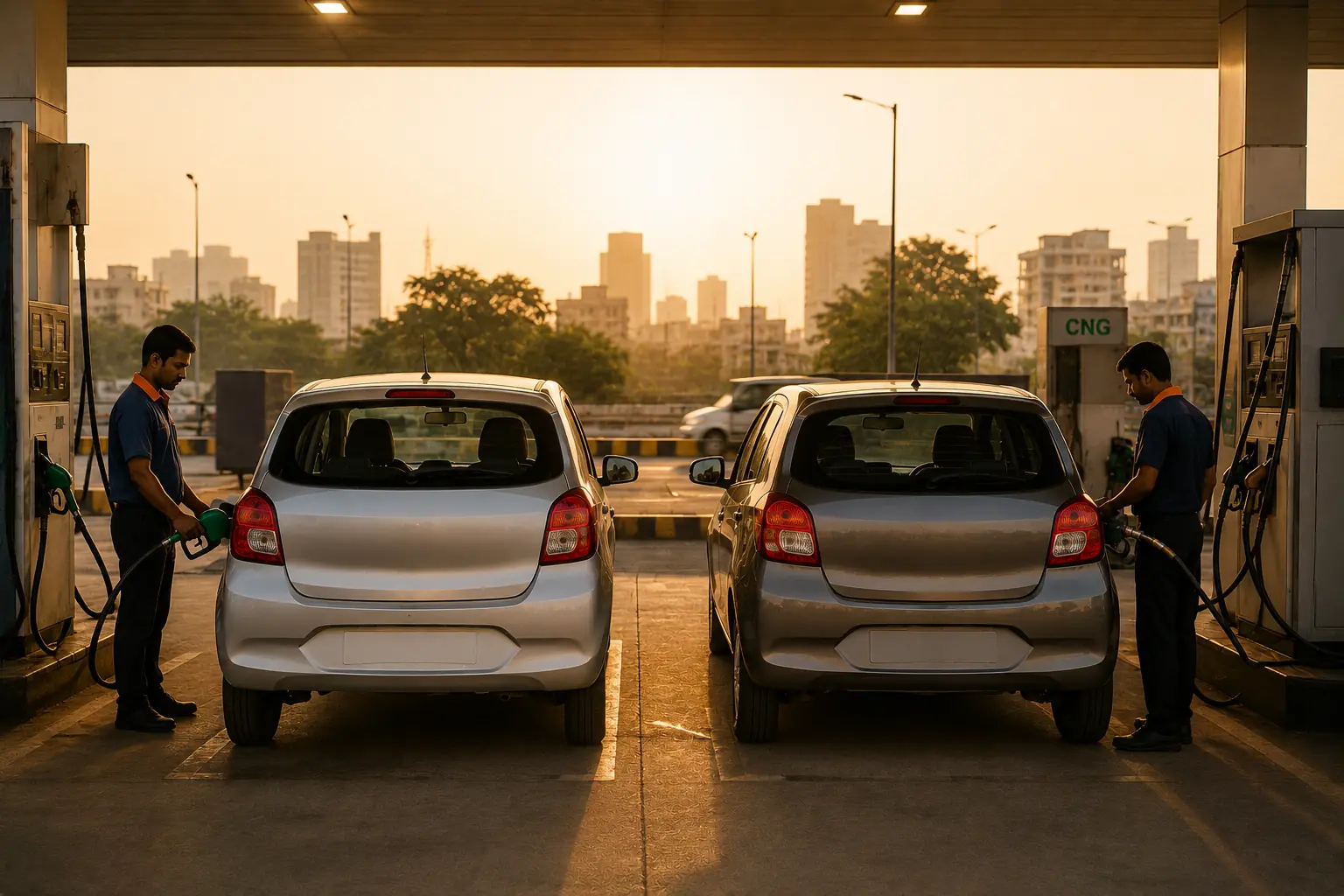
In 2026, CNG cars are significantly cheaper to run, costing approximately ₹2.60–₹3.20 per km, compared to ₹5.50–₹7.00 per km for petrol cars. However, CNG models like the Maruti Alto K10 cost roughly ₹90,000–₹1,00,000 more upfront. For a typical city commuter driving 1,200 km per month, the fuel savings can recover the extra cost in about 3 to 4 years.
Why Fuel Choice Matters More in 2026
If you are standing in a showroom in May 2026, the decision between petrol and CNG isn’t just about “mileage”—it’s a long-term financial strategy. With petrol prices hovering near ₹100–₹110 per litre and high-density urban traffic becoming the norm, the “running cost” of a car can easily surpass its monthly EMI.
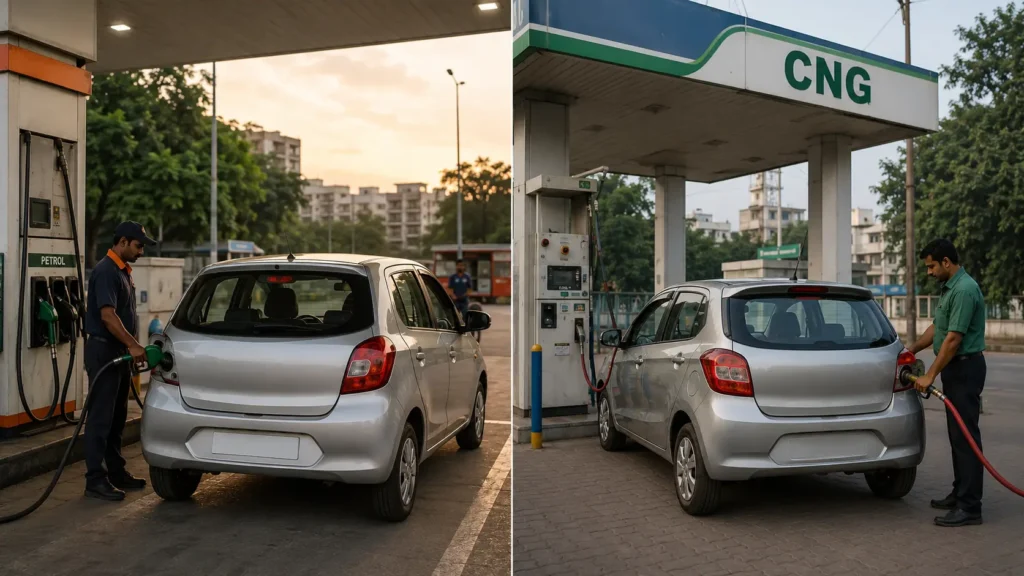
For the middle-class Indian buyer, every rupee saved at the pump is a rupee that can go into savings or household expenses. However, the budget segment (under ₹5 lakh ex-showroom) has shrunk, and choosing the wrong fuel type can lead to either high daily bills (petrol) or an unnecessarily high upfront debt (CNG).
Petrol vs CNG Cars Under ₹5 Lakh: Available Options
In 2026, the list of new cars under ₹5 lakh has dwindled. If you are looking for factory-fitted CNG, your options are almost exclusively from the Maruti Suzuki stable.
- Maruti Suzuki Alto K10: The most popular choice. The petrol variants are well within the ₹5 lakh bracket, while the base CNG variant (LXi S-CNG) sits right at the ceiling.
- Maruti Suzuki S-Presso: Offers a “tall-boy” stance. Like the Alto, the petrol fits the budget easily, but the CNG variant requires a stretch.
- Renault Kwid: Strictly a petrol-only contender in 2026. While it offers SUV-like styling, the lack of a factory CNG option makes it a “luxury” for those with very high daily running.
Price Comparison Table (Ex-Showroom May 2026)
| Car Model | Petrol (Base/Mid) | CNG (Base) | Price Gap |
| Maruti Alto K10 | ₹3.99 Lakh (LXi) | ₹4.82 Lakh (LXi) | ₹83,000 |
| Maruti S-Presso | ₹4.26 Lakh (LXi) | ₹5.12 Lakh (LXi) | ₹86,000 |
| Renault Kwid | ₹4.70 Lakh (RXE) | N/A | – |
Note: On-road prices for CNG models typically cross the ₹5.5 lakh mark due to higher registration and insurance costs.
Running Cost Comparison: Which Saves More Money?
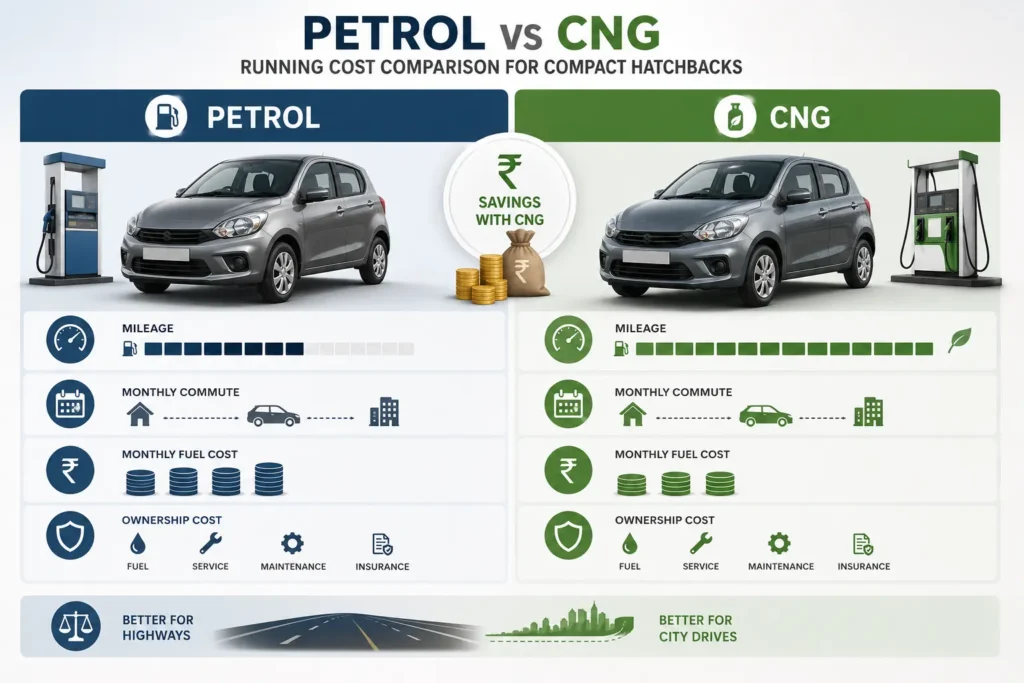
To find out which is cheaper, let’s look at the “Per Kilometer” math. Assuming Petrol is ₹105/L and CNG is ₹80/kg (approximate May 2026 averages).
- Petrol Running Cost: With a real-world city mileage of 15 kmpl, you spend ₹7.00 per km.
- CNG Running Cost: With a real-world city mileage of 25 km/kg, you spend ₹3.20 per km.
The Monthly Impact:
If you drive 1,500 km a month:
- Petrol Bill: ₹10,500
- CNG Bill: ₹4,800
- Monthly Savings: ₹5,700
At this rate, you recover the ₹90,000 premium paid for the CNG car in roughly 16 months. If you drive only 500 km a month, it will take you over 4 years to break even.
Mileage Comparison: Petrol vs CNG (Real-World)

Manufacturers often quote lab-tested figures (ARAI), but Indian traffic tells a different story.
| Fuel Type | City Mileage | Highway Mileage |
| Petrol (Manual) | 14–16 kmpl | 21–22 kmpl |
| Petrol (AMT) | 15–17 kmpl | 20–22 kmpl |
| CNG (Manual) | 22–24 km/kg | 32–34 km/kg |
Insight: Using the AC constantly in peak Indian summers can drop these figures by 10-15%.
Performance & Driving Experience Differences
This is where the “cost-saving” comes at a price.
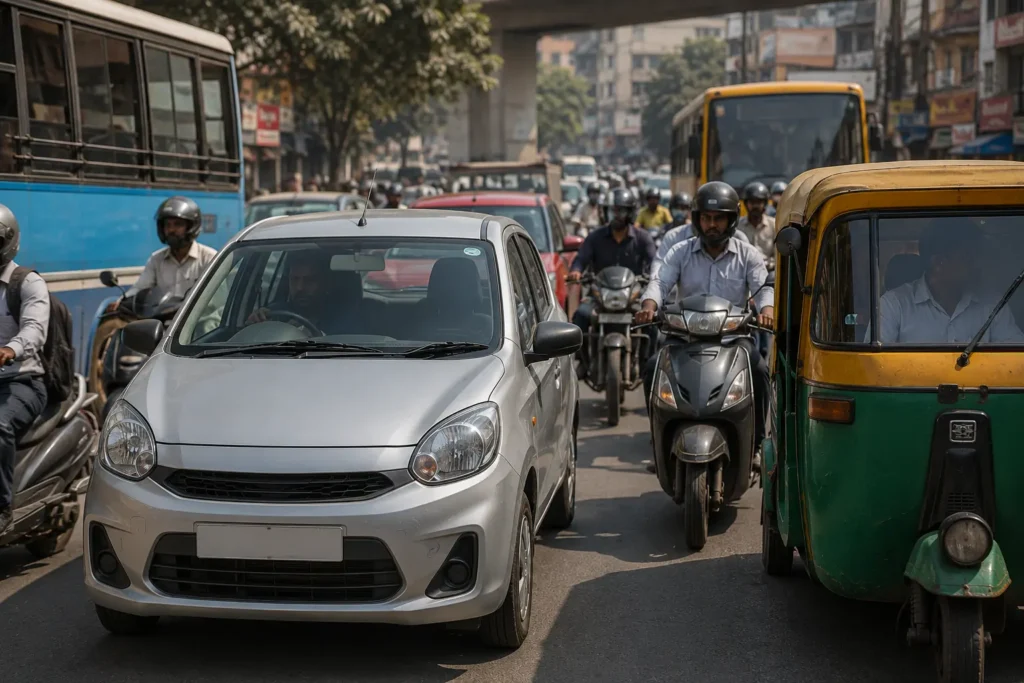
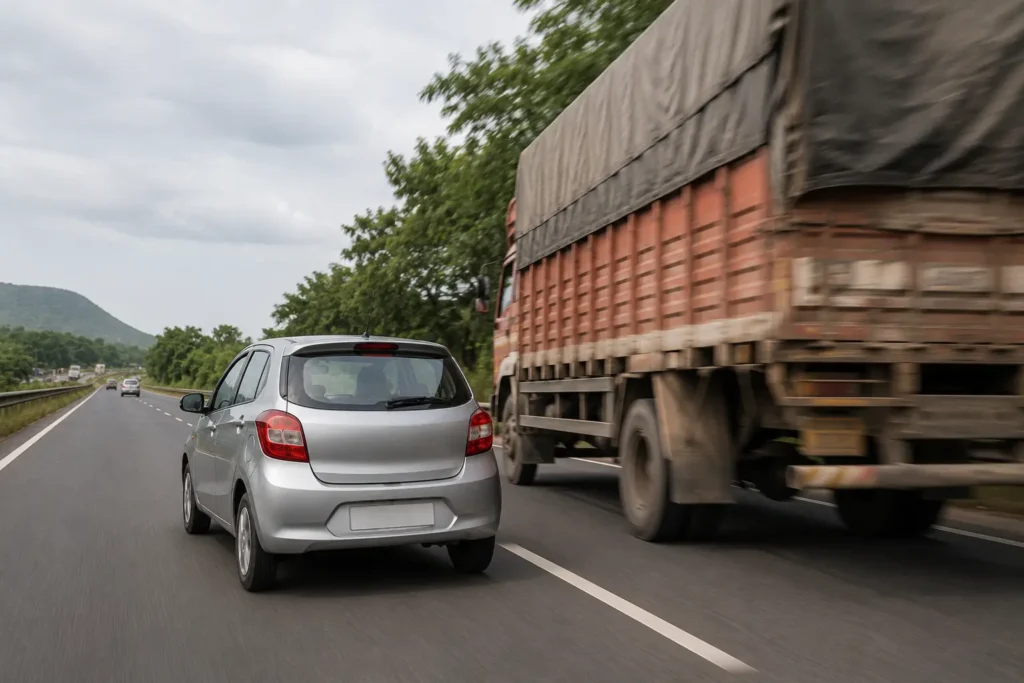
- The Power Lag: In a car like the Alto K10, switching to CNG results in a 10-15% drop in power. You will feel this most when trying to overtake on a highway or climbing a steep flyover with four passengers.
- Engine Refinement: Petrol engines are naturally smoother. CNG can occasionally feel “jerky” at low speeds, though modern factory-fitted kits have significantly reduced this.
- The “Queue” Factor: In cities like Delhi or Lucknow, CNG stations often have long wait times. If you value your time, this “hidden cost” is real.
Maintenance & Long-Term Ownership Cost
“CNG is high maintenance” is a common myth, but it does require more attention.
- Spark Plugs & Filters: CNG burns hotter than petrol. You will need to replace spark plugs and air filters more frequently (every 10,000–15,000 km).
- Cylinder Testing: Every 3 years, you are legally required to get your CNG cylinder hydro-tested. This costs roughly ₹3,000–₹5,000.
- Suspension Wear: The 60kg cylinder in the back puts constant load on the rear suspension. Over 5 years, you might see slightly higher wear on the shock absorbers.
Related: True Total Cost of Car Ownership in India
Boot Space & Practicality Compromises
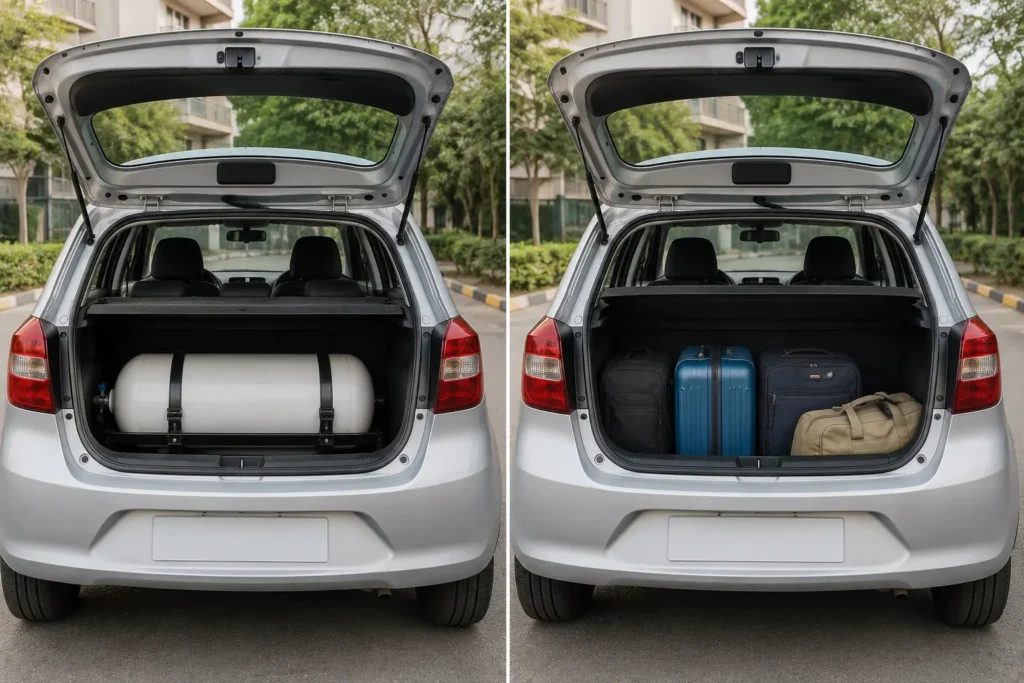
For a family man, this is the dealbreaker.
In an entry-level hatchback like the Alto, the CNG tank takes up almost 80% of the boot space. You can barely fit two laptop bags, let alone a suitcase for a trip. If your family frequently travels with luggage, the petrol variant (or a used car from a higher segment) is the only logical choice.
Which Makes More Sense for Different Buyers?

- Daily Office Commuters (High Mileage): CNG. If you drive 40km+ daily, the fuel savings are too massive to ignore.
- Occasional/Weekend Drivers: Petrol. You save ₹1 Lakh upfront and avoid the hassle of CNG queues and boot space loss.
- First-Time Buyers: Petrol. It’s easier to drive (no power lag) and simpler to maintain while you learn the ropes of car ownership.
- Small Families (with luggage needs): Petrol. The “boot-less” reality of a small CNG car makes grocery runs and airport trips a nightmare.
Pros & Cons of Petrol Cars
Advantages
- Full boot space available for luggage.
- Smoother, more refined driving experience.
- Lowest initial purchase price.
Disadvantages
- High monthly fuel bills (the “second EMI”).
- Lower resale value in high-mileage markets.
Pros & Cons of CNG Cars
Advantages
- Extremely low running cost (nearly 50% cheaper than petrol).
- Environmentally friendlier (lower CO2 emissions).
- Strongest resale value for city commuters.
Disadvantages
- Almost zero boot space in small cars.
- Long refueling queues in some cities.
- Noticeable power drop under full load.
Key Questions Buyers Commonly Ask
Is CNG cheaper than petrol in India?
Yes, in terms of running cost per km. However, it is more expensive to buy initially.
Is Alto K10 CNG worth buying?
Only if your monthly running exceeds 800–1,000 km. For lower usage, stick to the petrol variant to save on initial costs.
Are CNG cars safe?
Factory-fitted CNG cars are very safe. They come with leak detection sensors and high-quality high-pressure lines that aftermarket kits often lack.
Which has lower maintenance?
Petrol cars have slightly lower maintenance costs because they don’t require periodic cylinder testing or frequent spark plug changes.
Final Decision: What Should You Actually Buy?
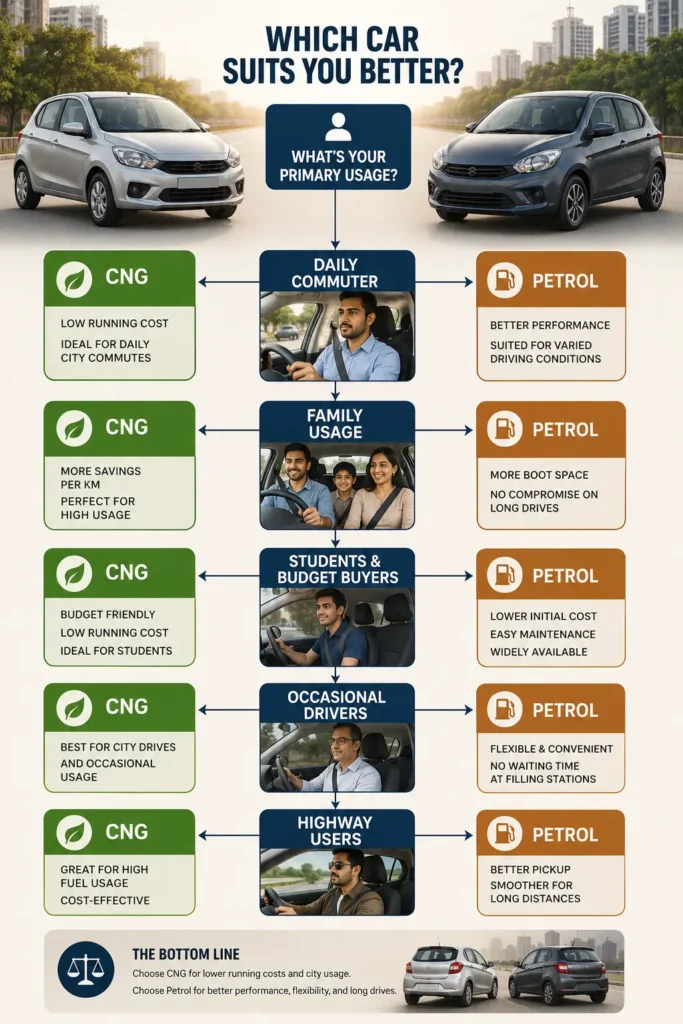
The choice isn’t between two fuels; it’s between Time and Money.
If you are a heavy city user who wants the lowest possible monthly bills, CNG is your winner. It will hurt your wallet at the time of purchase, but it will heal it every single month thereafter.
However, if you are a budget-conscious family that needs space for bags and prefers a smooth, hassle-free driving experience for weekend trips, Petrol remains the most practical choice under ₹5 lakh. In 2026, don’t buy a CNG car just because it’s a trend; buy it only if your odometer demands it.
Ownership Reality: Before you sign the cheque, check your nearest CNG station at 6 PM. If the queue is 30 minutes long, that’s 30 minutes of your life you’ll lose every few days to save ₹200. Is your time worth more?
Helpful Resources for Indian Car Buyers
- Bharat NCAP Official Website — India’s official crash-testing and vehicle safety rating platform. Includes adult and child occupant scores, crash-test protocols, and tested vehicle lists.
- Global NCAP – Safer Cars for India — Global crash-test program that pushed Indian manufacturers toward safer vehicle structures and occupant protection standards.
- Reserve Bank of India (RBI) — Official source for repo rates, lending rules, and banking regulations in India. (rbi.org.in)
- TransUnion CIBIL — Check your credit score and track your loan eligibility before applying for a car loan.
- SBI Car Loans — View latest interest rates, eligibility criteria, and loan offers from State Bank of India.
- HDFC Bank Car Loans — Explore car loan options, EMIs, and financing plans from HDFC Bank.
- ICICI Bank Car Loans — Compare new and used car loan offers along with repayment options.
- Policybazaar Car Insurance — Compare insurance plans, premiums, and add-on coverage options in one place.
- Acko Car Insurance — Get quick online quotes and renewal estimates for car insurance.
- AutomotiveZone Mileage Cost Calculator — Estimate real fuel costs based on your driving mileage.
- AutomotiveZone Monthly Car Expense Calculator — Calculate total monthly car ownership cost including EMI, fuel, and maintenance.
Disclaimer: Prices, mileage, safety ratings, loan rates, and ownership costs are approximate and may vary by location, variant, and market conditions in 2026. Some visuals may be AI-generated for illustration. Please verify final details with authorized dealers before purchase.