

Mahindra BE 6 Overview
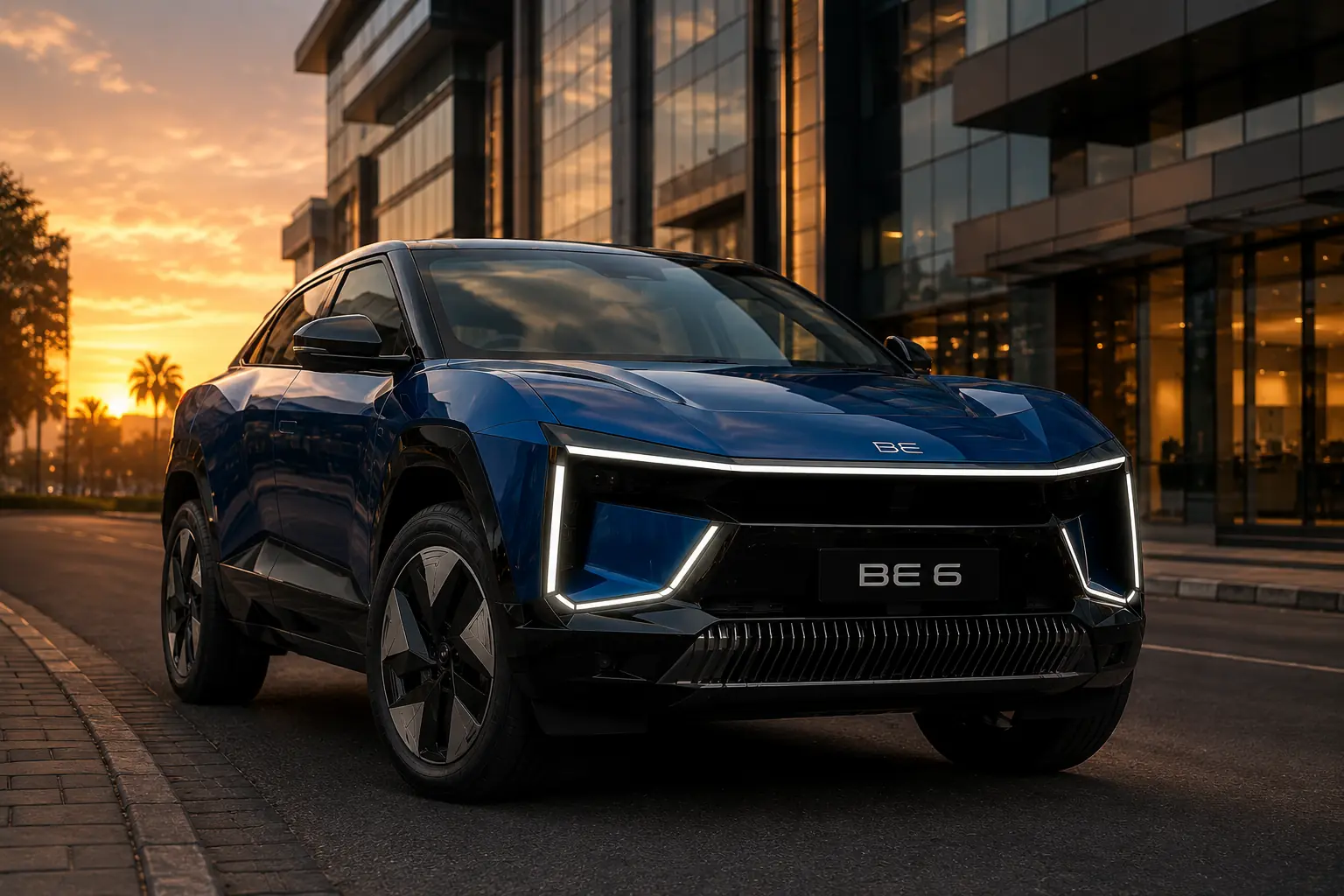
The 2026 Mahindra BE 6 is an all-electric coupe-SUV priced between ₹18.90 Lakh and ₹28.49 Lakh (ex-showroom). Built on the dedicated INGLO platform, it offers 59 kWh and 79 kWh battery options, delivering a real-world city range of 400 km to 510 km. Its high-performance rear-wheel-drive (RWD) setup targets tech-focused middle-class families ready to switch from conventional SUVs.
Mahindra BE 6 Price Guide 2026: Real-World Range, Running Cost, Features & Is It Worth Buying?
For years, the Indian electric SUV market was primarily a playground for converted internal combustion engine (ICE) cars. Mahindra has changed that narrative with its Born Electric (BE) lineup, built from the ground up strictly as electric vehicles.
The Mahindra BE 6 is the spearhead of this new era. It drops traditional, upright boxy proportions in favor of an aerodynamic coupe-SUV stance. In 2026, it stands out as an option for Indian families looking to transition away from high petrol and diesel bills into a dedicated, high-performance electric architecture under ₹25 Lakh.
Why the Mahindra BE 6 Is Generating Buzz in India
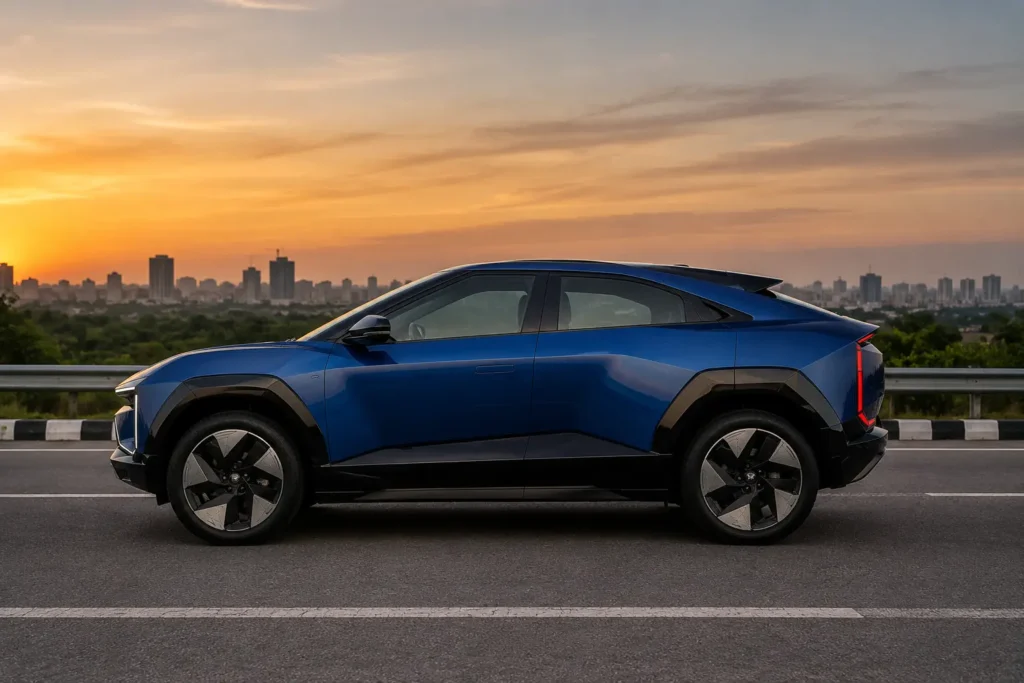
When an established SUV manufacturer like Mahindra shifts to a dedicated EV platform (the INGLO architecture), the driving dynamics change fundamentally.
- Insulation From Fuel Volatility: Urban commuters traveling 40–60 km daily face heavy operational costs with petrol or diesel mid-size SUVs. The BE 6 aims to drastically reduce that daily drain.
- Massive Road Presence: Measuring 4,371 mm in length and sporting a wide 1,907 mm track, it matches the size of a Hyundai Creta but carries an aggressive, futuristic concept-car stance that draws eyes in traffic.
- Rear-Wheel Drive (RWD) Dynamics: By pushing the electric power to the rear axle, Mahindra delivers an athletic driving experience that handles both chaotic city filtering and high-speed expressways effortlessly.
Mahindra BE 6 Price List & Variants (2026)
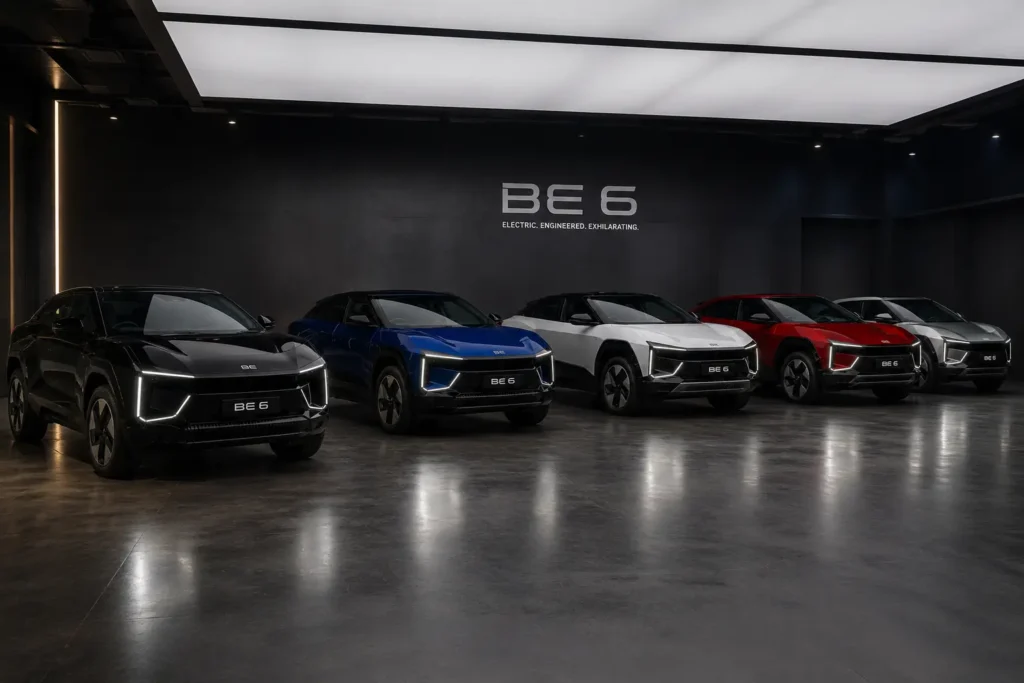
The variant hierarchy is split mainly by tech packages and two distinct Lithium-Iron-Phosphate (LFP) cell configurations: a 59 kWh pack and a long-range 79 kWh pack.
| Variant Name | Battery Capacity | Motor Power | Avg. Ex-Showroom Price | Primary Buyer Target |
| Pack One | 59 kWh | 228 bhp | ₹18.90 Lakh | Value-focused Urban Commuters |
| Pack One Above | 59 kWh | 228 bhp | ₹20.50 Lakh | Balanced Mid-Trim Households |
| Pack Two (59) | 59 kWh | 228 bhp | ₹21.90 Lakh | Tech-First City Drivers |
| Pack Two (79) | 79 kWh | 282 bhp | ₹23.50 Lakh | High-Frequency Intercity Travelers |
| Formula E Edition (FE2) | 79 kWh | 282 bhp | ₹23.69 Lakh | Motorsport Lovers / Enthusiasts |
| Pack Three Select | 59 kWh | 228 bhp | ₹24.50 Lakh | Top-Tier Tech / High Urban Budget |
| Pack Three (79) | 79 kWh | 282 bhp | ₹26.90 Lakh | Flagship Long-Range Buyers |
| Batman Edition | 79 kWh | 282 bhp | ₹28.49 Lakh | Collectors / Limited Style Statement |
Note: Models can also be configured with upgraded 7.2 kW or 11.2 kW AC wall chargers for an additional ₹50,000 to ₹75,000 upfront premium.
Mahindra BE 6 Variant Breakdown
1. Pack One & Pack One Above (The Accessible Trims)
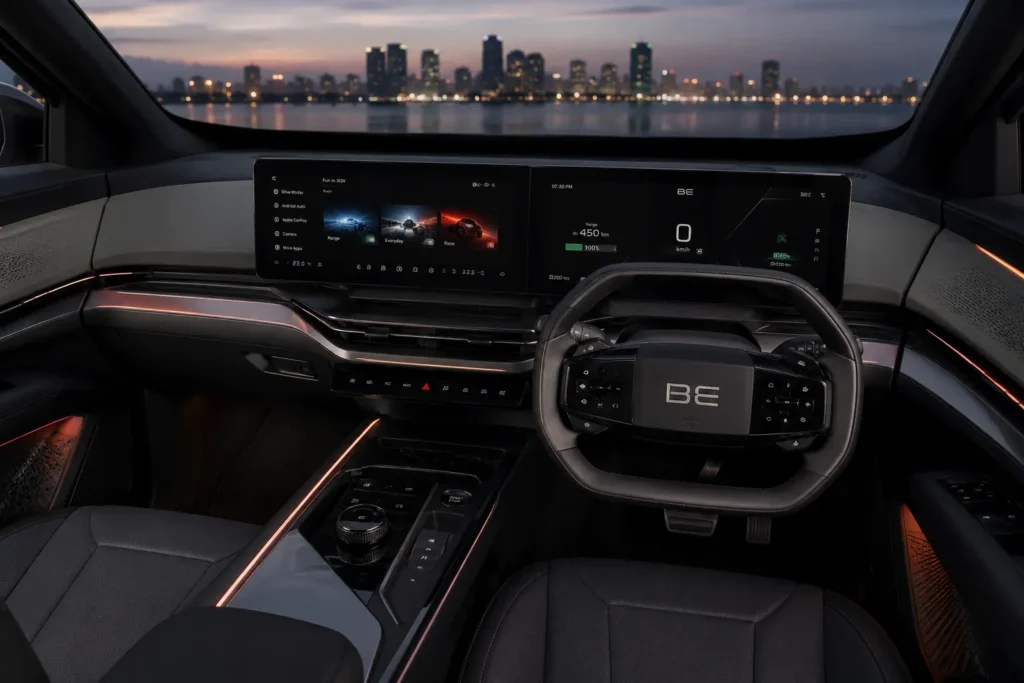
Priced between ₹18.90 Lakh and ₹20.50 Lakh, the entry trims offer a generous equipment list, including twin 12.3-inch floating screens (infotainment + instrumentation), wireless smartphone connectivity, full LED projector lamps, and a robust safety baseline.
2. Pack Two (The Value Sweet Spot)
Retailing at ₹21.90 Lakh (59 kWh) and ₹23.50 Lakh (79 kWh), this trim strikes the best balance for most families. It adds a premium sound system, semi-active intelligent dampers to absorb harsh potholes, and Level 2 ADAS (Advanced Driver Assistance Systems).
3. Pack Three & Special Editions (The Flagships)
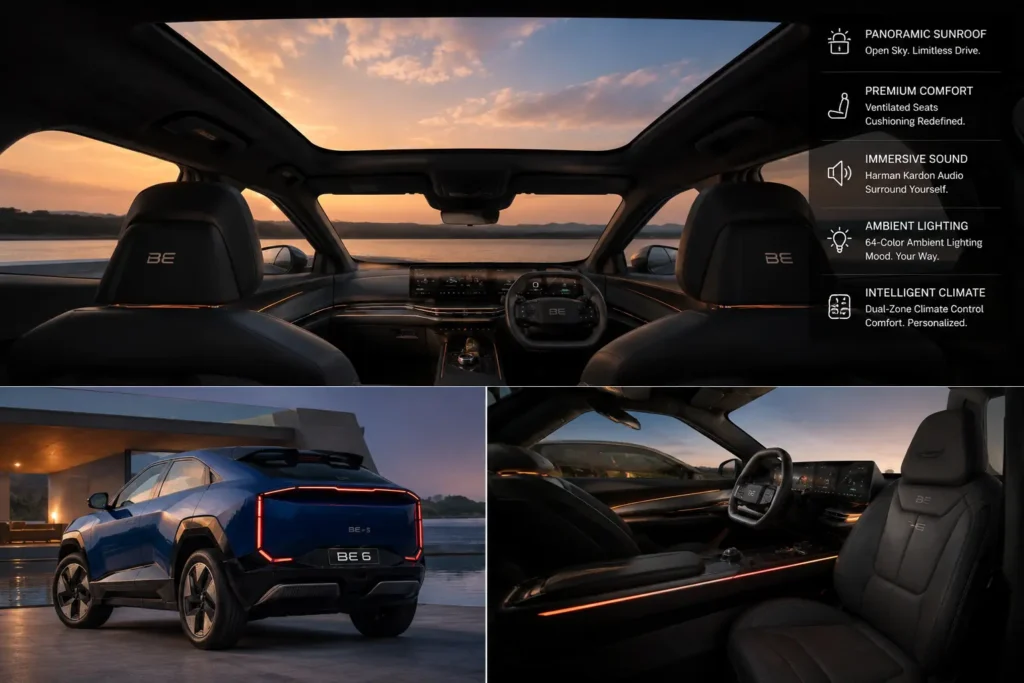
Topping off between ₹24.50 Lakh and ₹28.49 Lakh, these models feature a panoramic sunroof, ventilated front electric seats, hands-free powered tailgate, and the larger 282 bhp motor that darts from 0 to 100 km/h in an impressive 6.7 seconds.
Mahindra BE 6 Specifications Table
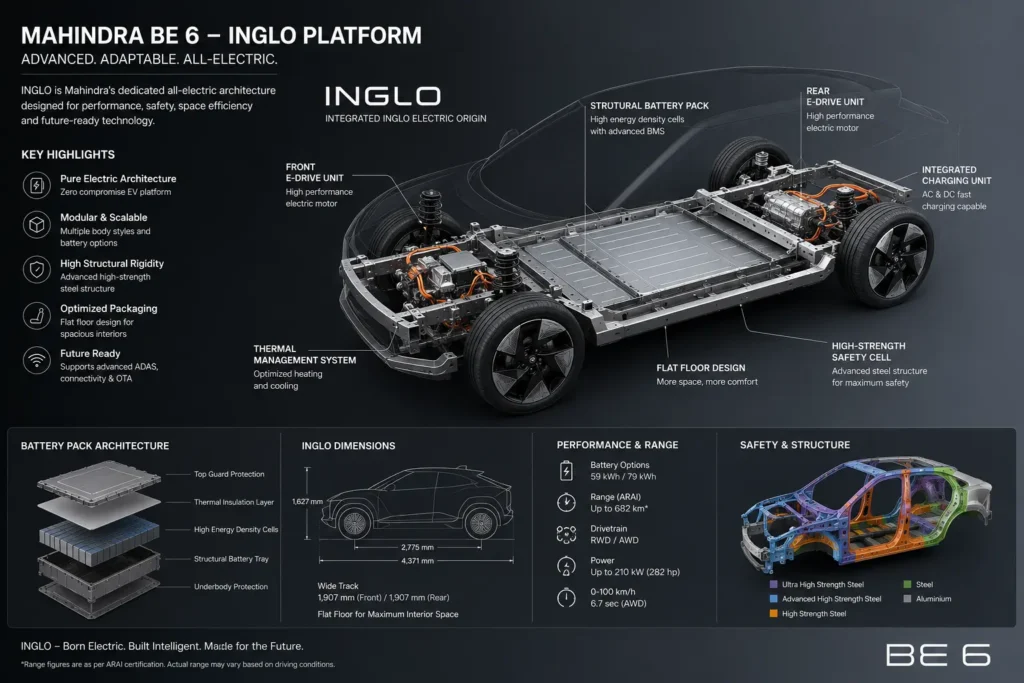
| Technical Parameter | 59 kWh Battery Variant | 79 kWh Battery Variant |
| Powertrain Motor | Rear-Wheel Drive (Single PMSM) | Rear-Wheel Drive (Single PMSM) |
| Peak Power / Torque | 228 bhp / 380 Nm | 282 bhp / 380 Nm |
| MIDC Claimed Range | 557 km | 683 km |
| Real-World Range | ~400 – 415 km | ~500 – 520 km |
| DC Fast Charging Speed | 20 Mins (10-80% via 140kW DC) | 20 Mins (10-80% via 180kW DC) |
| Unladen Ground Clearance | 207 mm | 207 mm |
| Boot Space Volume | 455 Liters | 455 Liters |
| Bharat NCAP Rating | 5 Stars (Proven Floor Architecture) | 5 Stars (Proven Floor Architecture) |
Real-World Range & Charging Experience
Laboratory estimates are helpful for comparisons, but real-world range is determined by traffic, speed, and climate.
Managing Urban Creep and Highway Drops
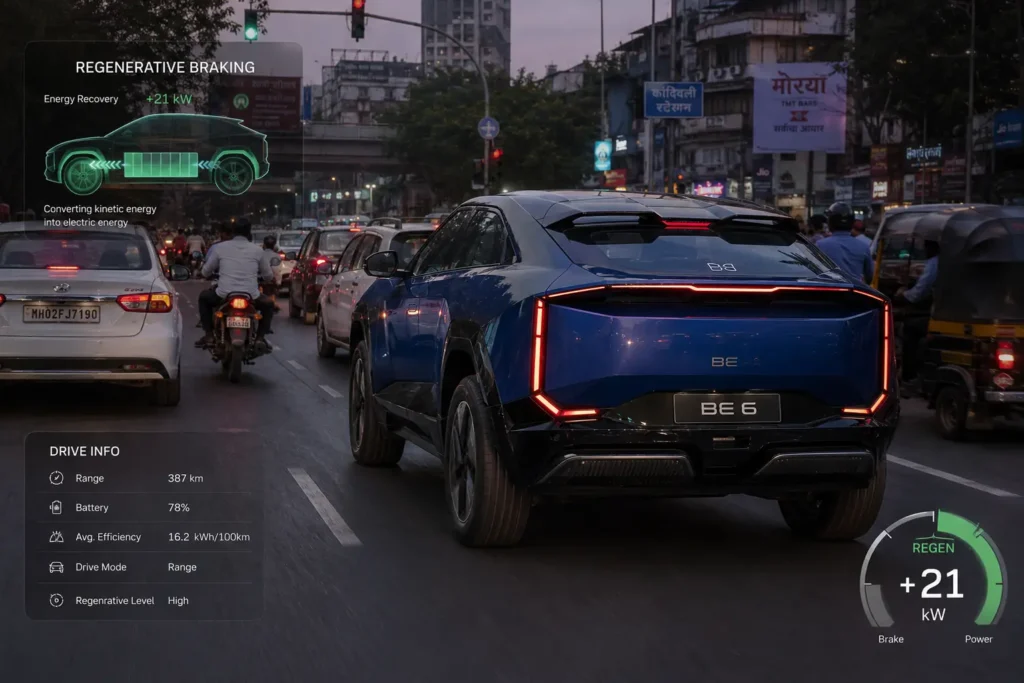
The 79 kWh version delivers a highly dependable 510 km real-world city range. In tight stop-and-go traffic, the 4-level adjustable regenerative braking maps clean deceleration cycles, returning substantial energy to the pack.
However, the sloping coupe-SUV roofline handles highway crosswinds well, but continuous cruising past 100 km/h creates heavy aerodynamic resistance. Expect highway range on the 79 kWh pack to settle closer to 400 km. In peak summer conditions, cabin thermal pre-cooling and battery air cooling demands trigger a standard 12% consumption drop.
Charging Infrastructure Reality
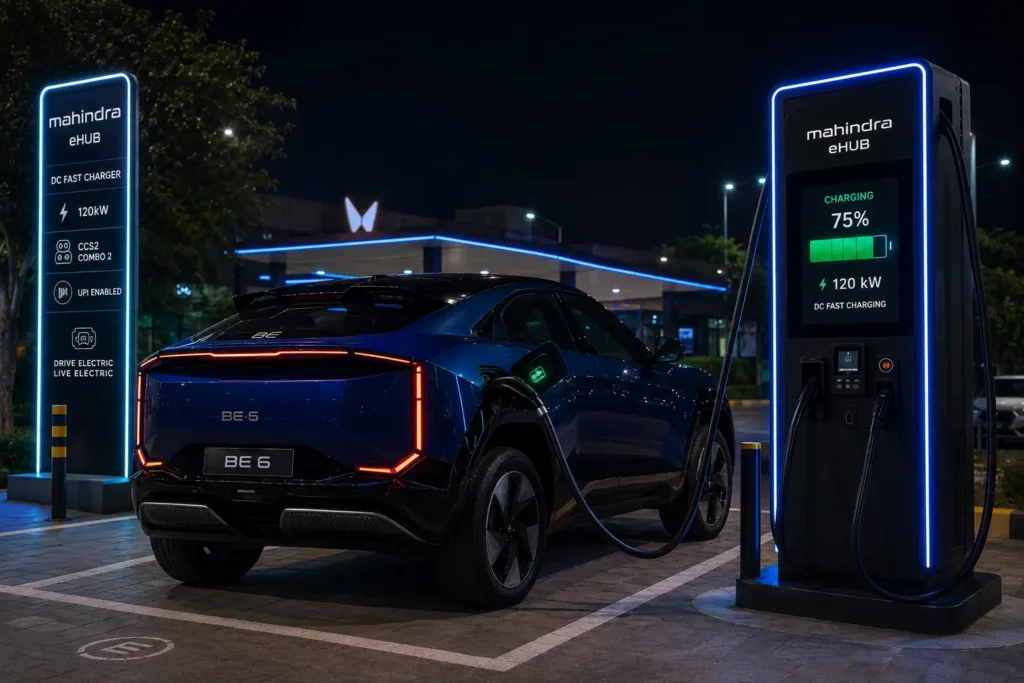
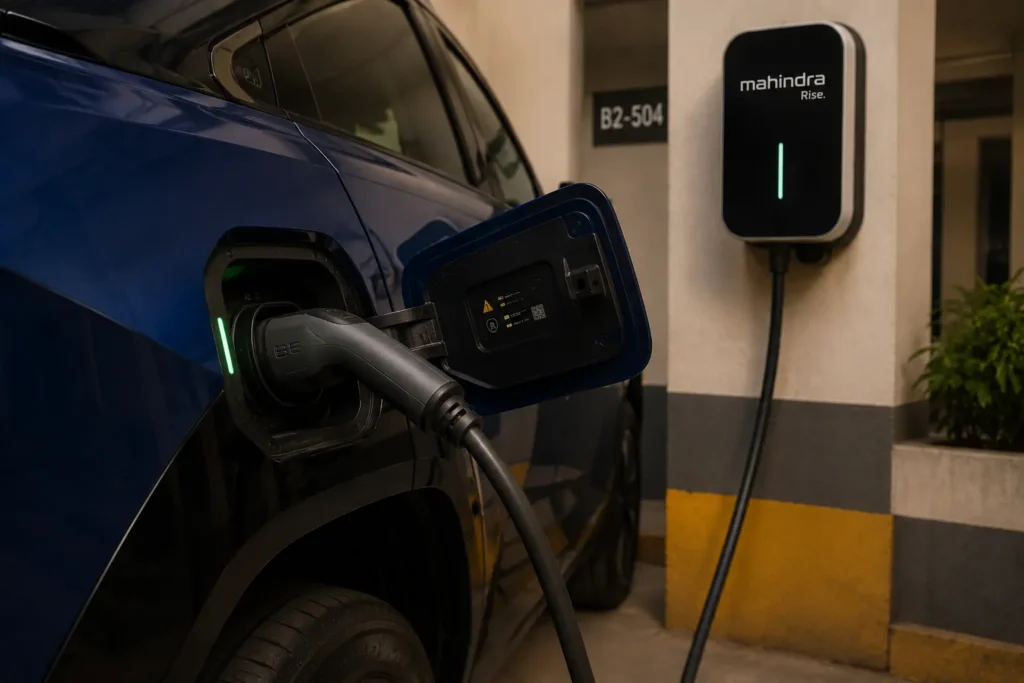
The BE 6 supports high-capacity charging architecture. If hooked up to a commercial 150kW+ DC station, you can top up from 20% to 80% in just 20 minutes. For home usage, the standard 7.2 kW AC home box requires about 8.5 hours for a complete overnight replenishment. Setting up these home charging boxes in standard apartments still requires clear documentation and permission from local residential housing societies.
Mahindra BE 6 Running Cost vs Petrol SUVs
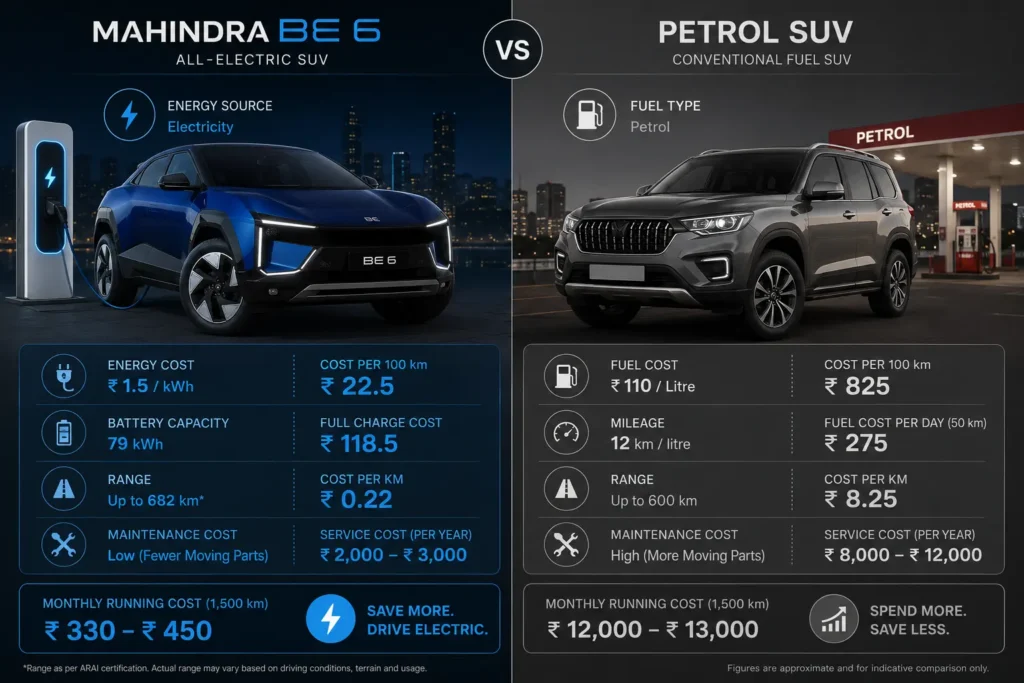
Let’s look at the financial numbers for a family covering 1,200 km per month over a 5-year ownership tenure.
The BE 6 Electric Math (79 kWh Pack)
- Average urban domestic power tariff: ₹8 per unit (kWh).
- A full charge requires roughly 83 units (incorporating standard transmission drops), costing ~₹664.
- Covering 1,200 km requires roughly 2.5 full home charging cycles.
- Monthly Power Cost: ~₹1,660 (Approx. ₹1.38 per km).
The Petrol Mid-Size SUV Comparison
- Average cost of fuel: ₹102 per liter.
- Real-world urban fuel economy for a petrol automatic SUV: 11 km/l.
- Fuel required for 1,200 km: 109 Liters.
- Monthly Fuel Cost: ₹11,118 (Approx. ₹9.26 per km).
5-Year Cumulative Savings Outlook
[Petrol SUV Fuel Cost: ₹11,118/mo]
=======> 5-Year Total: ₹6.67 Lakh
[BE 6 Power Cost:     ₹1,660/mo]
==> 5-Year Total: ₹1.00 Lakh
----------------------------------------------------------------------
Net Financial Savings over 5 Years: ₹5.67 Lakh
This operations gap of ₹5.67 Lakh helps high-mileage users completely offset the initial premium paid over a standard petrol or diesel automated vehicle within 3 years of daily service.
Maintenance Cost & Long-Term Ownership
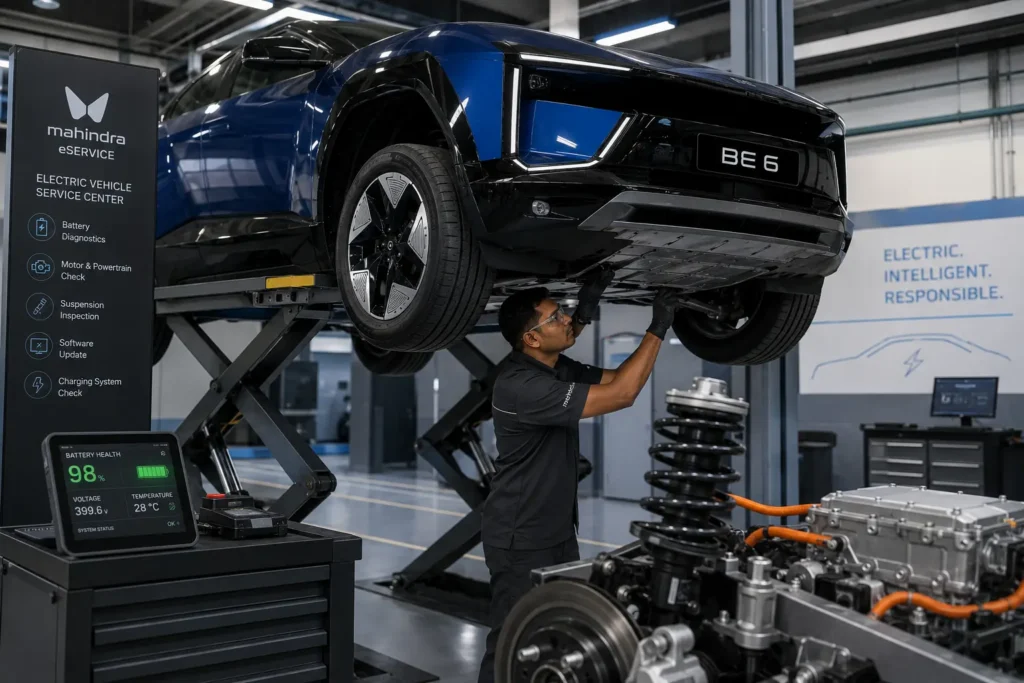
Without pistons, spark plugs, engine oil cycles, or multi-speed gearboxes, periodic workshop visits are heavily simplified.
- Routine Servicing Outgo: Annual checkups target suspension lubrication, cabin air filter swaps, diagnostic scans, and brake line fluid evaluations. Bills generally stabilize between ₹3,500 and ₹5,500.
- Component Lifespan: Because regenerative slowing bears a heavy portion of daily deceleration duties, physical brake pad assemblies regularly survive past 55,000 km.
- Battery Safety Architecture: Mahindra relies on structurally stable LFP cell configurations and provides a lifetime warranty safety layout on select upper-tier packages. The cells are engineered to maintain a strong state-of-health even after 8–10 years of typical operation.
Related: Maruti Suzuki e Vitara Price Guide
Mahindra BE 6 Pros & Cons
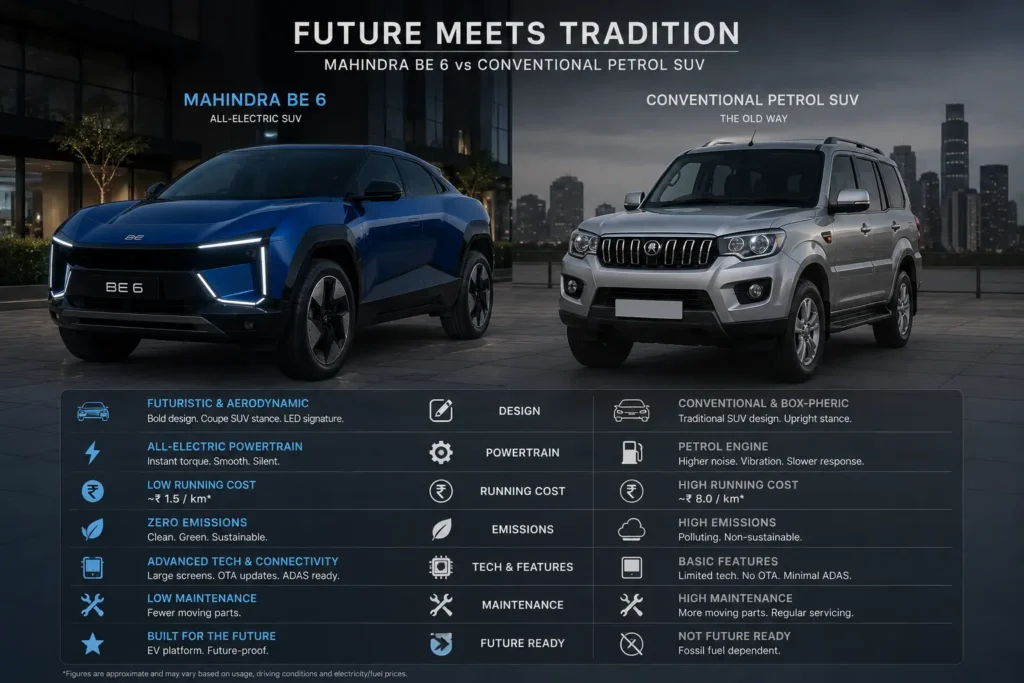
Advantages of Mahindra BE 6
- Striking Aesthetics: Coupe-SUV profile provides excellent road presence.
- Very Low Running Costs: Home power lowers per-kilometer running costs to nearly ₹1.38.
- High Riding Clearance: 207mm unladen clearance easily handles large speed breakers and waterlogged roads.
- Spirited Performance: Rear-wheel drive paired with up to 282 bhp ensures immediate overtaking power.
- Advanced Cabin Features: Generous cabin electronics, featuring built-in ChatGPT voice interaction systems.
Disadvantages of Mahindra BE 6
- Polarizing Design Language: The sharp styling can spark debate among conservative family members.
- Rear Cabin Headroom Limits: The sloping coupe roofline drops vertical head space for passengers over 6 feet tall.
- Rear Outward Visibility: The sleek rear glass design narrows the view out of the center rearview mirror, making the 360-degree camera system essential.
- Firm Ride Quality: The suspension is tuned toward the firmer side to maintain stability at highway speeds.
Mahindra BE 6 vs Petrol SUVs: The Strategic Choice
Your final decision should match your real-world usage patterns, rather than just vehicle specifications.
- The Urban Commuter Case: If your routine involves a 40–60 km daily cross-city trip through heavy town traffic, the BE 6 is highly practical. It removes gear-shift fatigue and lowers your monthly operational expenses.
- The Rare Long-Distance Case: If your household requires a single vehicle for spontaneous 600 km interstate highway journeys into areas with limited charging stations, a standard petrol SUV remains the simpler option for now.
Who Should Buy the Mahindra BE 6?
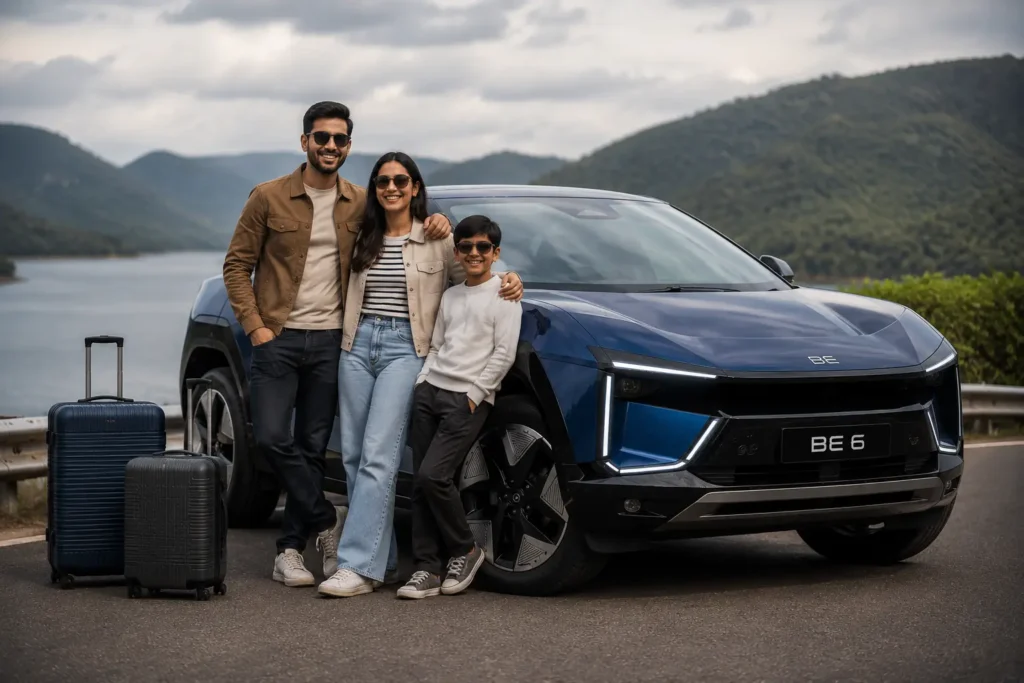
Recommended For:
- High-Mileage Tech Enthusiasts: Commuters covering over 1,000 km monthly who appreciate responsive rear-wheel drive dynamics and premium screen layouts.
- Modern Nuclear Families: Buyers who want a unique look and plenty of tech features for city driving and weekend trips.
- Chauffeur-Driven Owners: The flat rear floor structure provides excellent legroom for rear-seat passengers.
Not Recommended For:
- Traditional Large Families: If you frequently carry three taller adults in the rear seat, the sloping roofline might feel a bit tight.
- On-Street Public Parking Users: If your residential setup cannot support a dedicated, metered home charging station.
Questions Buyers Commonly Ask
What is the real starting price of the Mahindra BE 6 in India?
The base Pack One (59 kWh) variant starts at ₹18.90 Lakh ex-showroom. Final on-road prices depend on state-level road tax structures and local registration fees.
What is the real-world range of the Mahindra BE 6?
The 59 kWh battery variant gives about 400 km in the city, while the larger 79 kWh variant delivers a dependable 500–510 km under normal city driving conditions.
Can the Mahindra BE 6 be charged via a standard wall outlet at home?
Yes. Every model connects to a standard domestic 15A three-pin power point, though installing the included 7.2 kW wall box is highly recommended for faster overnight charging.
Is it expensive to maintain compared to an XUV700?
No. Scheduled annual services are roughly 45% cheaper over five years because the electric powertrain has far fewer moving mechanical components.
How long does the battery pack last?
The LFP blade battery chemistry is engineered to handle over 2,000 charge cycles, providing a reliable lifespan of 10 to 12 years before any noticeable range drop occurs.
Final Verdict: Is the Mahindra BE 6 Worth Buying?
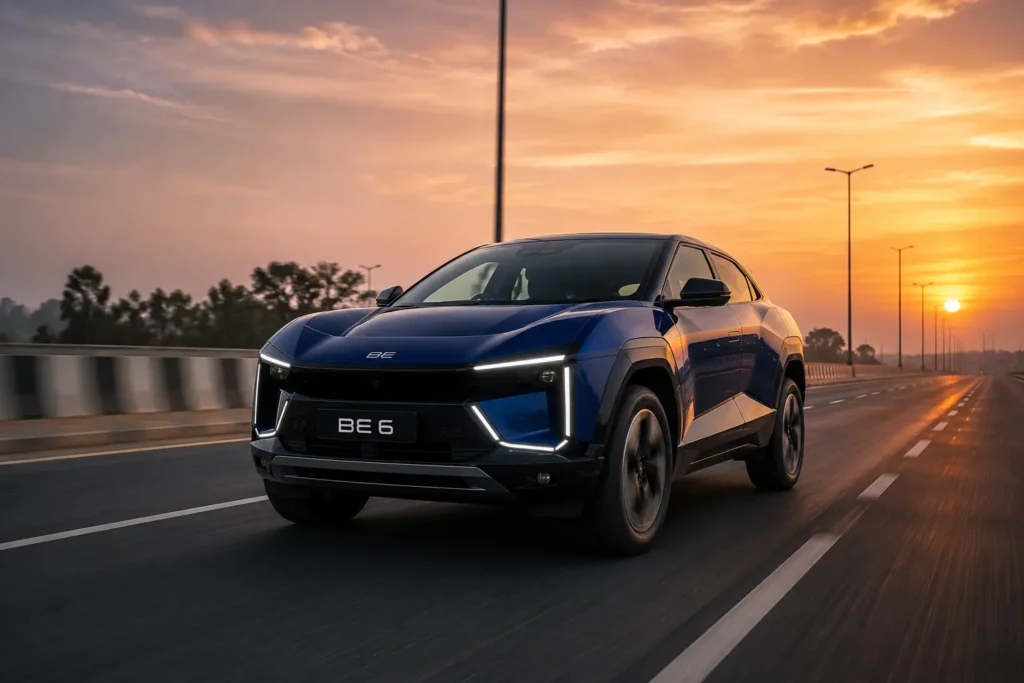
The Mahindra BE 6 is a purpose-built electric crossover that offers a great blend of performance and eye-catching style. By utilizing a dedicated EV platform rather than converting an old ICE design, Mahindra has maximized real cabin legroom, battery safety, and high-speed stability.
If you have a dedicated parking space to set up a home charger and your monthly commute regular clears 1,000 kilometers, the BE 6 is a highly practical, reliable, and engaging choice that will significantly cut your monthly fuel bills. However, if your family values maximum rear headroom and a traditional, conservative SUV design, you might want to look at more conventional options. Ultimately, your real monthly mileage should guide your final choice.
Helpful Resources for Indian EV Car Buyers
- Bharat NCAP Official Website — India’s official crash-testing and vehicle safety rating platform. Includes adult and child occupant scores, crash-test protocols, and tested vehicle lists.
- Global NCAP – Safer Cars for India — Global crash-test program that pushed Indian manufacturers toward safer vehicle structures and occupant protection standards.
- Reserve Bank of India (RBI) — Official source for repo rates, lending rules, and banking regulations in India. (rbi.org.in)
- TransUnion CIBIL — Check your credit score and track your loan eligibility before applying for a car loan.
- SBI Car Loans — View latest interest rates, eligibility criteria, and loan offers from State Bank of India.
- HDFC Bank Car Loans — Explore car loan options, EMIs, and financing plans from HDFC Bank.
- ICICI Bank Car Loans — Compare new and used car loan offers along with repayment options.
- Policybazaar Car Insurance — Compare insurance plans, premiums, and add-on coverage options in one place.
- Acko Car Insurance — Get quick online quotes and renewal estimates for car insurance.
- AutomotiveZone Mileage Cost Calculator — Estimate real fuel costs based on your driving mileage.
- AutomotiveZone Monthly Car Expense Calculator — Calculate total monthly car ownership cost including EMI, fuel, and maintenance.
- AutomotiveZone Fuel Cost Calculator — Instantly estimate petrol, diesel, or CNG expenses based on mileage, fuel price, and trip distance.
- AutomotiveZone EV vs Petrol Cost Calculator — Compare electric vehicle charging costs with petrol fuel expenses to see long-term savings.
- AutomotiveZone EV Charging Cost Calculator — Calculate home and fast-charging electricity costs for your EV using battery size and electricity tariff.
- AutomotiveZone Car Resale Value Estimator — Estimate your car’s current market resale value based on age, mileage, ownership, and condition.
Disclaimer: Prices, mileage, safety ratings, loan rates, and ownership costs are approximate and may vary by location, variant, and market conditions in 2026. Some visuals may be AI-generated for illustration. Please verify final details with authorized dealers before purchase.