
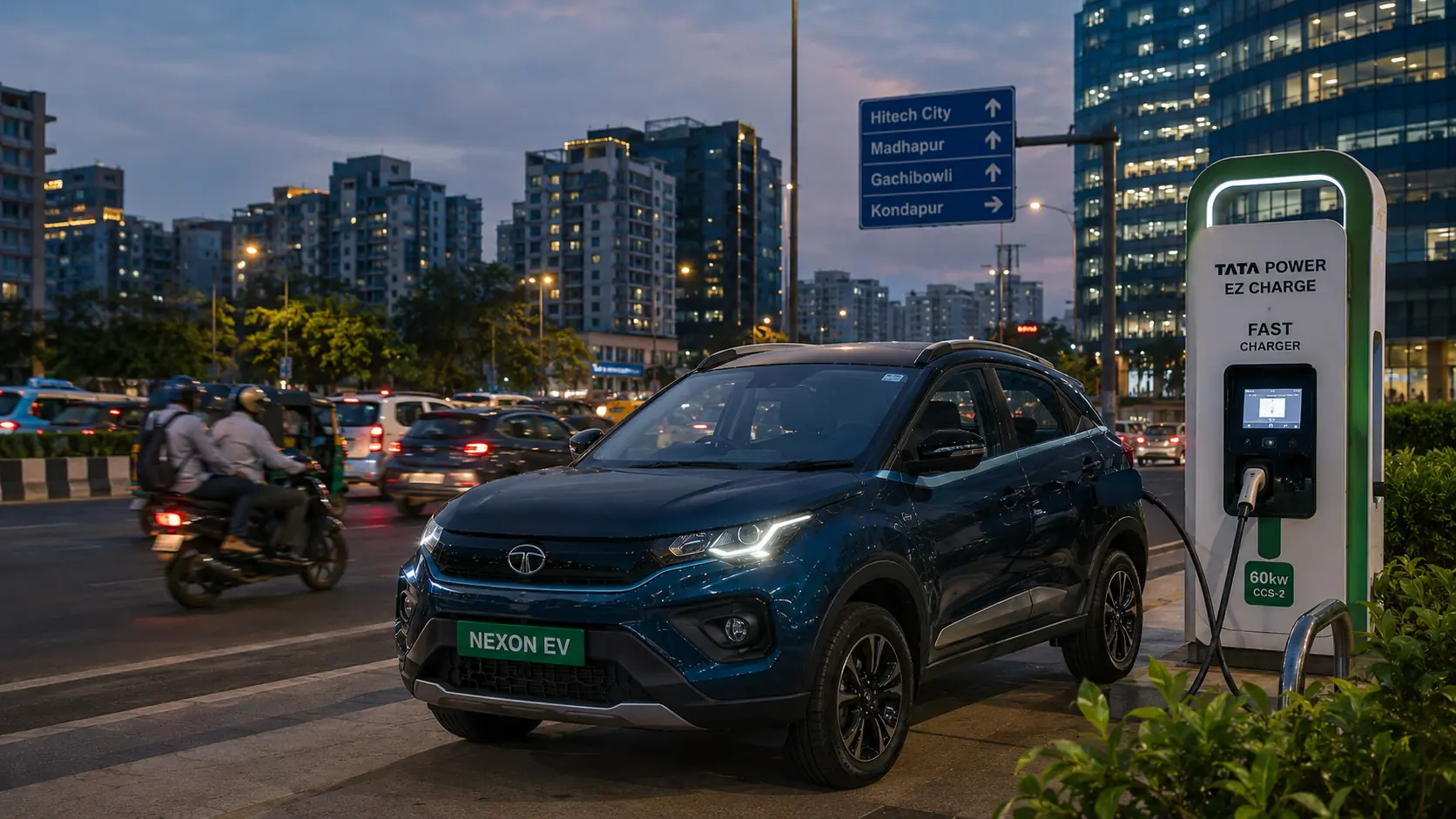

Tata Nexon EV at a Glance
The Tata Nexon EV is priced between ₹12.49 Lakh and ₹17.49 Lakh (ex-showroom) for 2026. Available in 30 kWh (Medium Range) and 45 kWh (Long Range) battery options, it delivers a real-world city range of 190 km to 320 km. Its low running cost of ₹1.33 per km offers substantial financial savings over petrol alternatives for daily commuters.
Tata Nexon EV Price Guide 2026: Real-World Range, Running Cost & Is It Worth Buying?
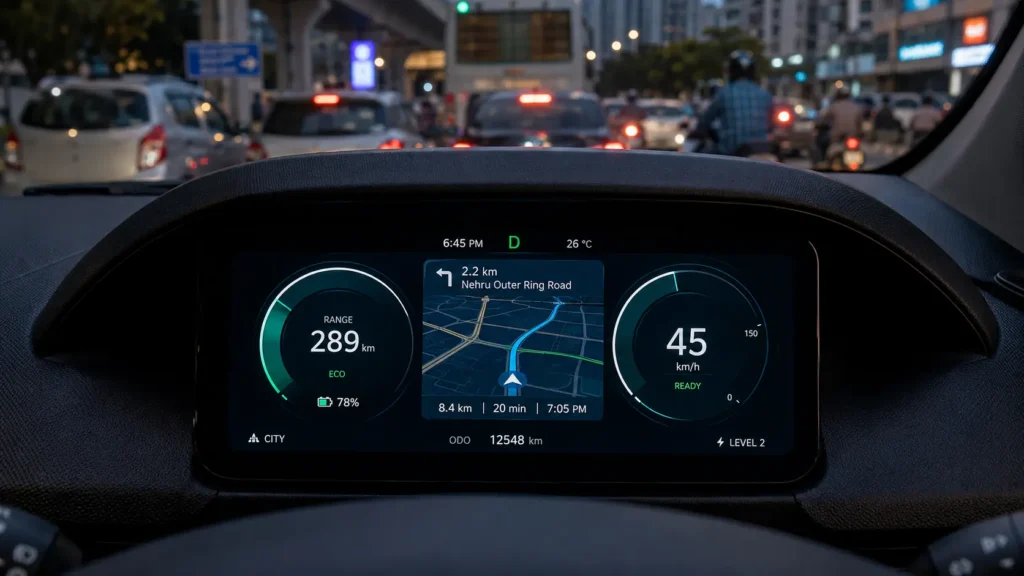
Choosing a compact SUV used to be a straight choice between petrol and diesel. However, with fuel prices staying consistently high across India, electric vehicles have firmly entered the mainstream family conversation.
The Tata Nexon EV has been the anchor of this shift, serving as the default choice for middle-class households stepping into electric mobility. In 2026, the updated line-up brings refined battery choices and smarter technology packages to maintain its competitive edge in the compact electric SUV India market.
Why Tata Nexon EV Is Popular in India
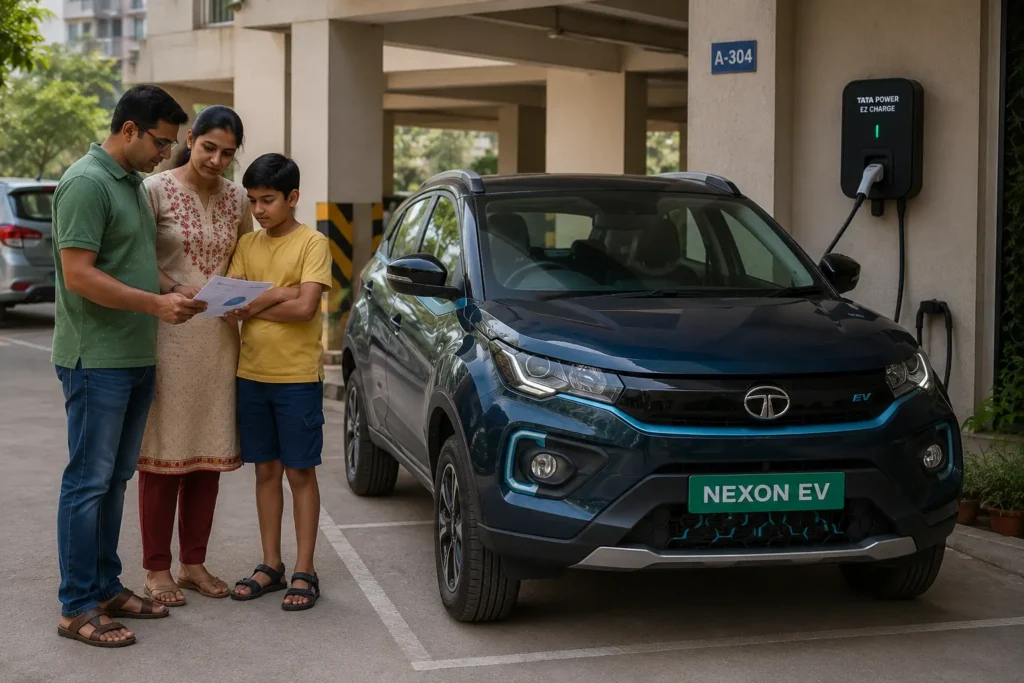
The high market share of the Nexon EV isn’t an accident. Tata Motors utilized an existing 5-star crash-rated platform, minimizing development times and passing the cost advantages onto the car buyer.
- Fuel Price Inflation: With standard fuels costing over ₹100 per liter in metros, traditional combustion running costs are a heavy recurring burden for daily drivers.
- The SUV Form Factor: High ground clearance, a commanding view, and a cabin large enough for an Indian family make it highly practical for urban environments.
- Subsidies and Incentives: Continued state road tax waivers and lower institutional registration fees keep the initial on-road price manageable compared to internal combustion equivalents.
Tata Nexon EV Price List & Variants (2026)
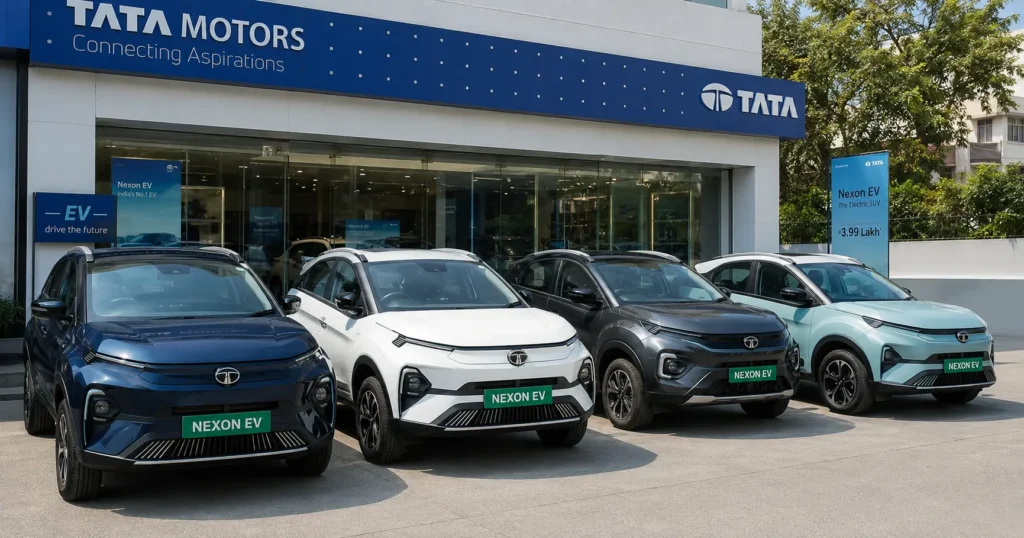
The portfolio divides into two battery configurations: the Medium Range (MR) with a 30 kWh pack and the updated Long Range (45) with a high-density 45 kWh pack.
| Variant Name | Battery Capacity | Claimed MIDC Range | Ex-Showroom Price |
| Creative Plus MR | 30 kWh | 275 km | ₹12.49 Lakh |
| Fearless MR | 30 kWh | 275 km | ₹13.29 Lakh |
| Fearless Plus MR | 30 kWh | 275 km | ₹13.79 Lakh |
| Creative 45 | 45 kWh | 489 km | ₹13.99 Lakh |
| Fearless Plus S MR | 30 kWh | 275 km | ₹14.29 Lakh |
| Empowered MR | 30 kWh | 275 km | ₹14.79 Lakh |
| Fearless 45 | 45 kWh | 489 km | ₹14.99 Lakh |
| Empowered LR / 45 | 45 kWh | 489 km | ₹15.99 Lakh |
| Empowered Plus 45 | 45 kWh | 489 km | ₹16.99 Lakh |
| Empowered Plus A 45 | 45 kWh | 489 km | ₹17.49 Lakh |
Tata Nexon EV Variant Breakdown
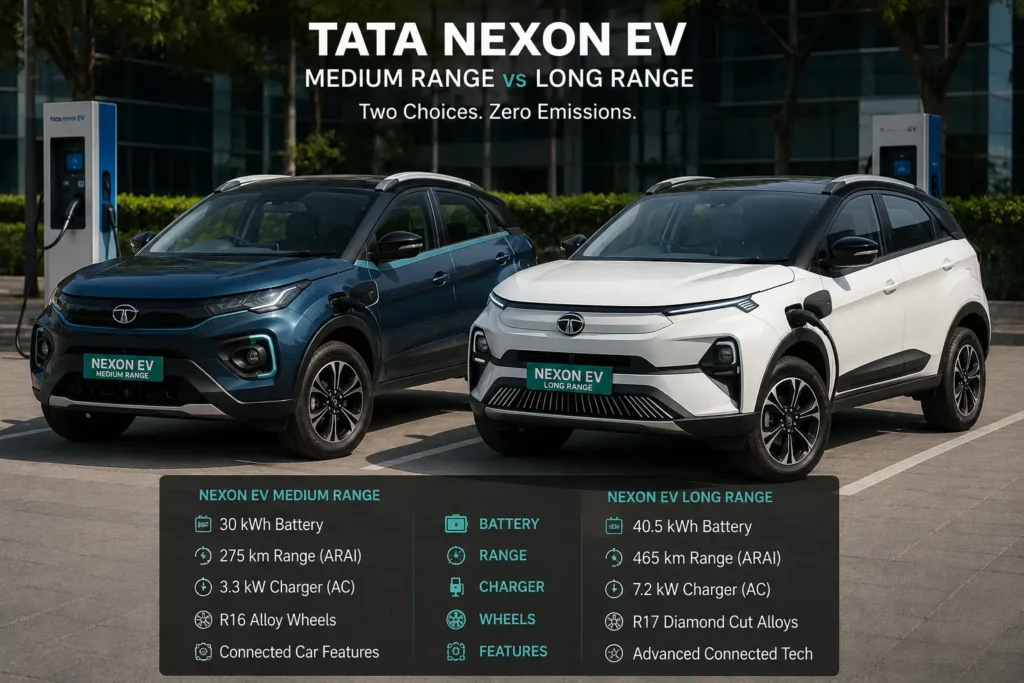
Navigating the 13 variants requires looking past the cosmetic changes to focus on your core driving distance.
The Budget Entry: Creative Plus MR
Starting at ₹12.49 Lakh, this trim offers essential safety gear like 6 airbags, electronic stability control, and a basic touch interface. It is highly practical if your driving is strictly inside city limits.
The Value Sweet Spot: Creative 45 & Fearless 45
Priced between ₹13.99 Lakh and ₹14.99 Lakh, these mid-tier variants pair the larger 45 kWh battery with functional conveniences like automatic climate control, cruise control, and rear AC vents. They offer the best balance of highway capability and sensible pricing.
The High-Tech Trims: Empowered Plus A 45
Sitting at ₹17.49 Lakh, the top-tier variants add high-end electronics like Level 2 ADAS (Advanced Driver Assistance Systems), ventilated front seats, a 360-degree camera network, and a panoramic sunroof layout.
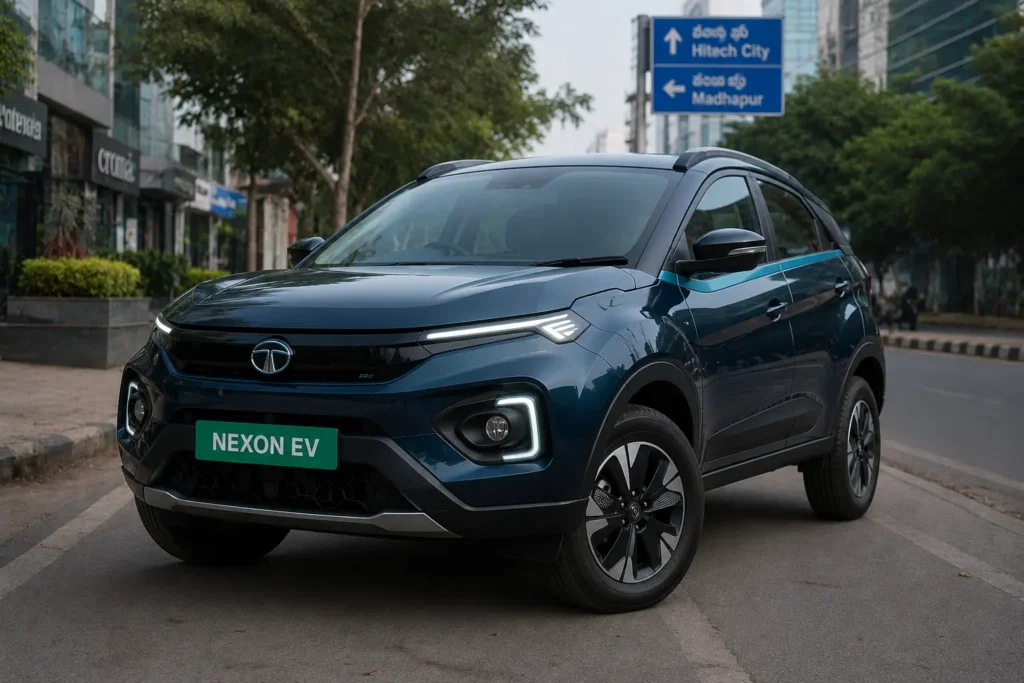
Tata Nexon EV Specifications Table
| Technical Specification | Medium Range (MR) | Long Range (45) |
| Battery Pack Type | 30 kWh Lithium-Ion | 45 kWh Lithium-Ion |
| Claimed MIDC Range | 275 km | 489 km |
| Real-World Range | 190 – 210 km | 300 – 320 km |
| Peak Power Output | 127 bhp | 142 bhp |
| Peak Torque Output | 215 Nm | 215 Nm |
| DC Fast Charging (10-80%) | 56 minutes (50 kW) | 40 minutes (60 kW) |
| Boot Space Volume | 350 Liters | 350 Liters |
Real-World Range & Charging Experience

The gap between lab-tested range and Indian road reality remains a major consideration for first-time buyers.
City Efficiency vs. Highway Realities
In urban stop-and-go traffic, the vehicle performs efficiently. Regenerative braking reclaims energy smoothly, enabling the 45 kWh model to easily clear 310 km in standard town traffic.
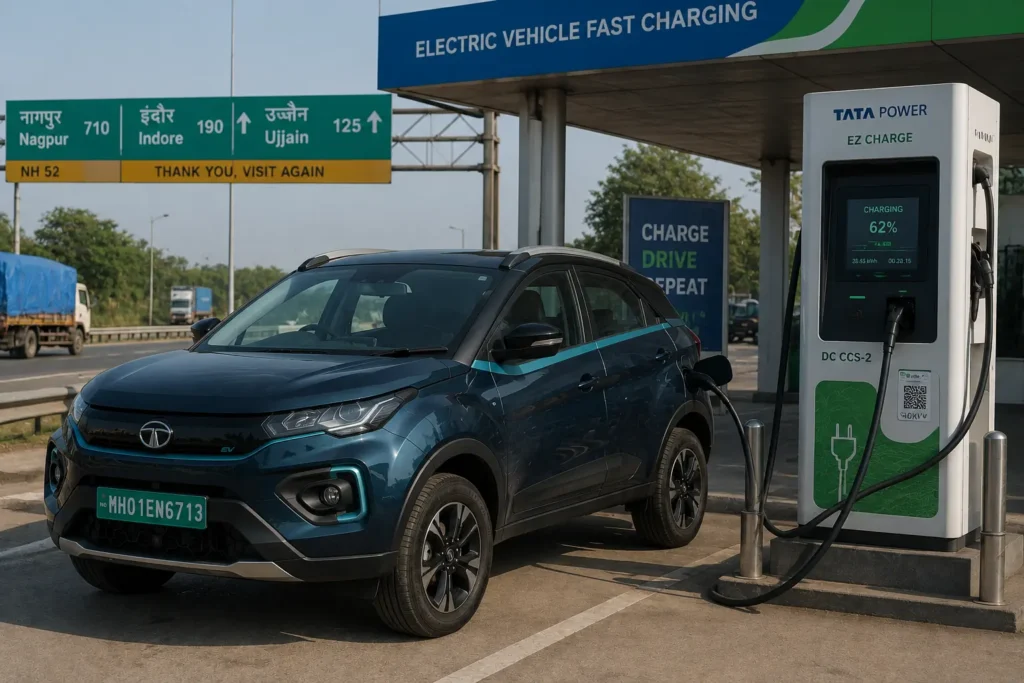
However, highway driving alters this performance. Maintaining speeds around 100 km/h on open expressways creates continuous high aerodynamic drag, dropping the real range of the 45 kWh pack to about 250–260 km.
Environmental and Infrastructure Load
High summer temperatures in plains like Lucknow or Delhi require significant power from the battery cooling management. Running the AC on maximum cold drops total efficiency by roughly 12%.
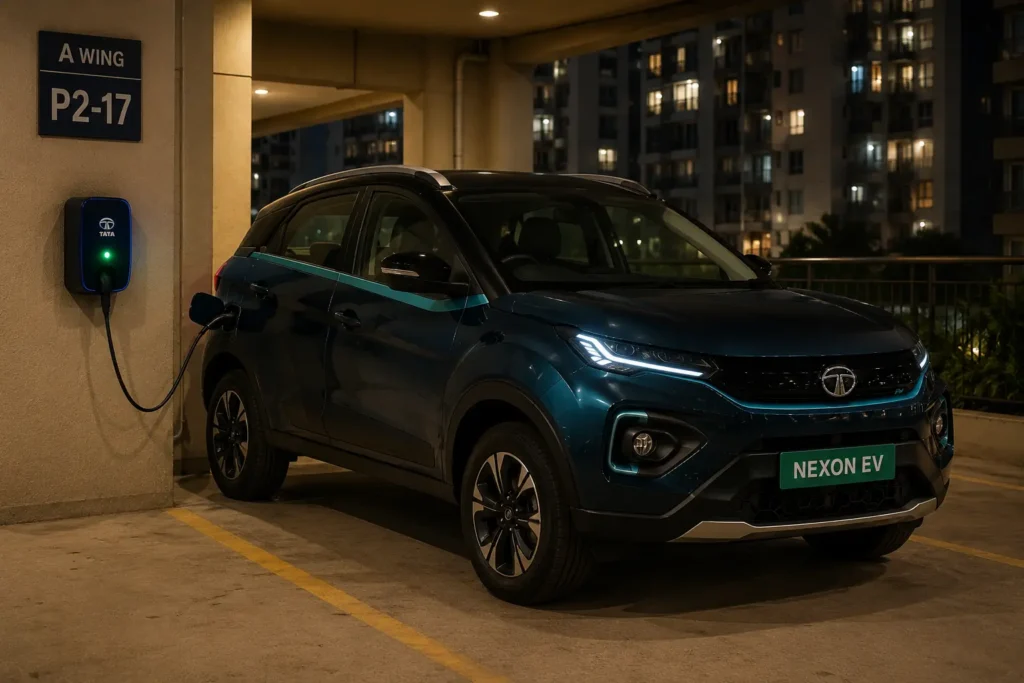
For home charging, the included wall box completes a full overnight top-up in 6 to 7 hours for the large battery. Public fast charging continues to improve, but network uptime and fluctuating charge speeds at third-party stations require drivers to plan highway travel carefully.
Tata Nexon EV Running Cost vs Petrol SUVs
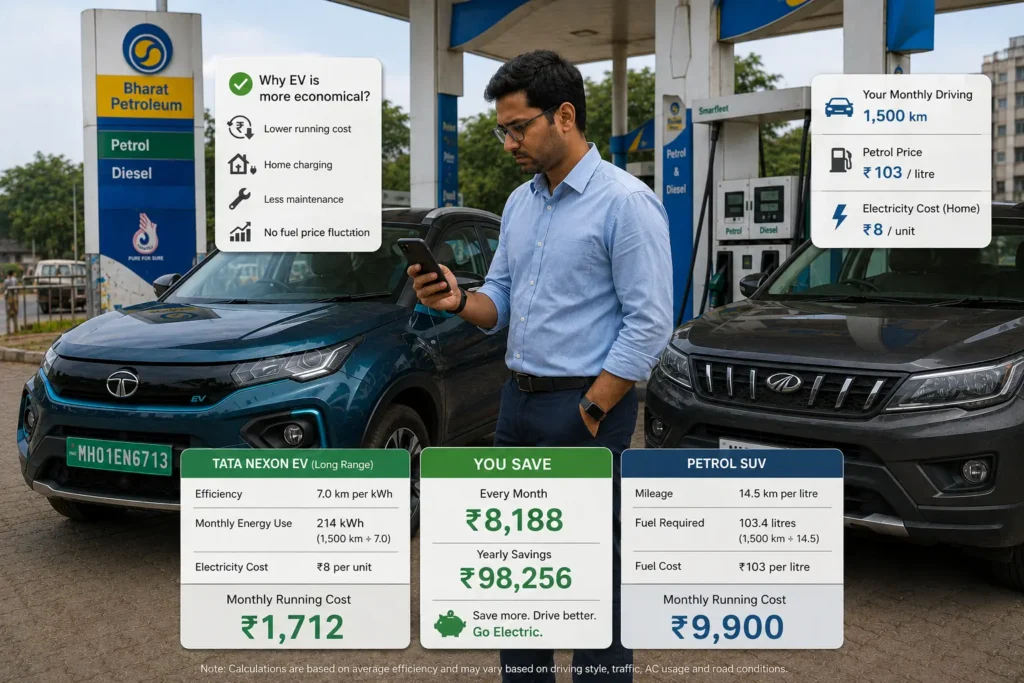
Let’s break down the operational math for a typical middle-class family covering 1,200 km per month.
The EV Charging Math
- Average urban electricity tariff: ₹8 per unit.
- A full charge of the 45 kWh pack requires roughly 50 units (including minor charging drops), costing ₹400.
- Covering 1,200 km requires 4 full charging cycles.
- Monthly Electricity Bill: ₹1,600 (Approx. ₹1.33 per km).
The Petrol SUV Comparison
- Average fuel price: ₹102 per liter.
- Real-world urban mileage for a compact petrol SUV: 12 km/l.
- Fuel needed for 1,200 km: 100 liters.
- Monthly Fuel Bill: ₹10,200 (Approx. ₹8.50 per km).
5-Year Cumulative Savings Outlook
[Petrol SUV Fuel Cost: ₹10,200/mo]
=======> 5-Year Total: ₹6.12 Lakh
[Nexon EV Power Cost:  ₹1,600/mo]
==> 5-Year Total: ₹0.96 Lakh
----------------------------------------------------------------------
Net Financial Outflow Savings: ₹5.16 Lakh
This structural operational gap allows high-mileage users to completely offset the higher upfront on-road price within the first 30 to 36 months of ownership.
Maintenance Cost & Long-Term Ownership
Electric vehicles drop thousands of moving parts found in traditional engines, such as fuel injectors, pistons, spark plugs, and complex multi-speed gearboxes.
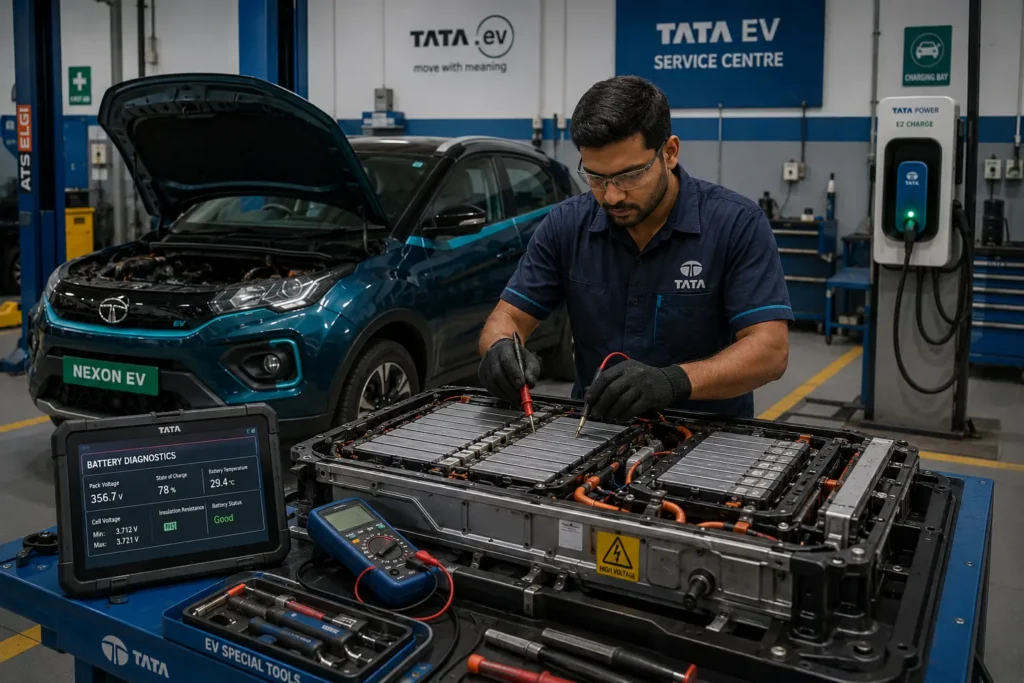
- Routine Servicing: Annual dealership visits involve software diagnostic scans, cabin filter updates, and basic suspension checks. Standard bills hover between ₹3,000 and ₹4,500.
- Brake and Component Lifespan: Because regenerative deceleration handles a lot of the initial braking force, physical brake pads often last past 50,000 km.
- Battery Degradation and Protection: Tata backs the battery assembly with an 8-year or 1,60,000 km warranty. Modern LFP (Lithium Iron Phosphate) cells handle high heat well and are designed to retain over 80% capacity even after a decade of regular use.
Related: True Total Cost of Car Ownership in India
Tata Nexon EV Pros & Cons
Advantages
- Very Low Running Costs: Drops monthly commuting expenses by nearly 80% compared to petrol options.
- Smooth Urban Performance: Immediate electric torque ensures seamless acceleration without transmission lag.
- Excellent Cabin Solitude: A quiet powertrain significantly reduces driver fatigue in noisy bumper-to-bumper traffic.
- High Safety Standard: Built on a reinforced structure that holds an established 5-star crash test validation.
Disadvantages
- Higher Entry Price: Requires a significant upfront budget compared to entry-level internal combustion vehicles.
- Highway Charging Pauses: Out-of-station highway charging stops add mandatory 40-50 minute breaks to long-distance road trips.
- Range Fluctuations: Driven speeds above 95 km/h reduce range quickly, demanding a conservative driving style on expressways.
Tata Nexon EV vs. Petrol SUVs: The Strategic Choice
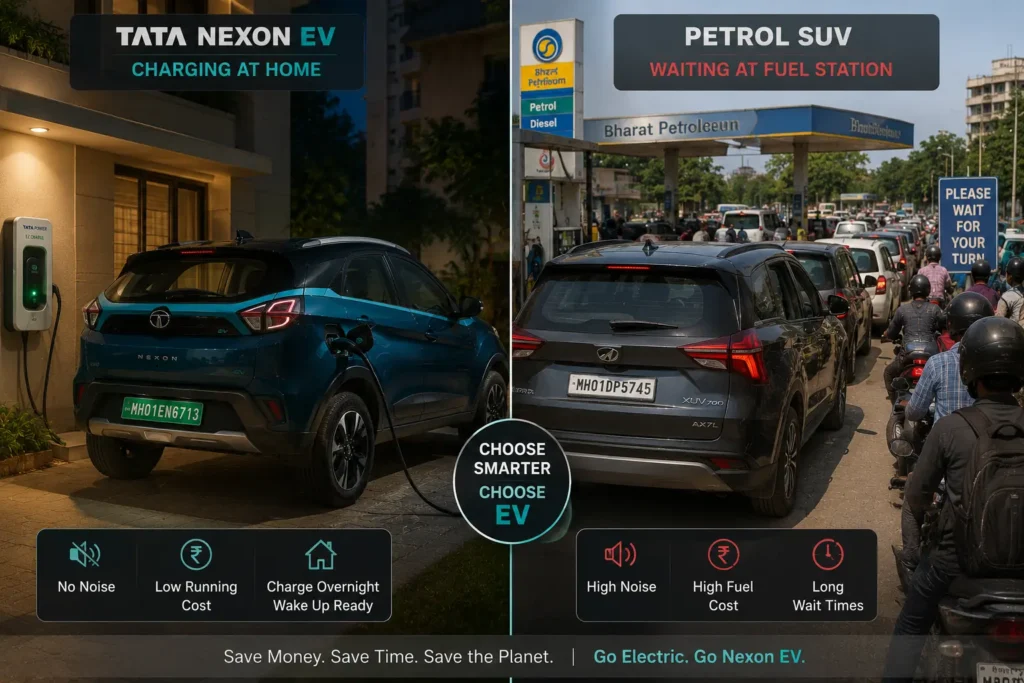
Your final decision should rest on your specific driving patterns rather than tech trend novelty.
- The Urban Case: If your routine consists of a 40–60 km daily office commute across busy city corridors, the EV is highly practical. It saves you money every day and offers a relaxed, automatic driving experience.
- The Long-Distance Case: If your garage relies on a single vehicle that frequently handles spontaneous 600 km highway runs into rural sectors with sparse charging availability, a petrol SUV remains more practical for now.
Who Should Buy the Tata Nexon EV?
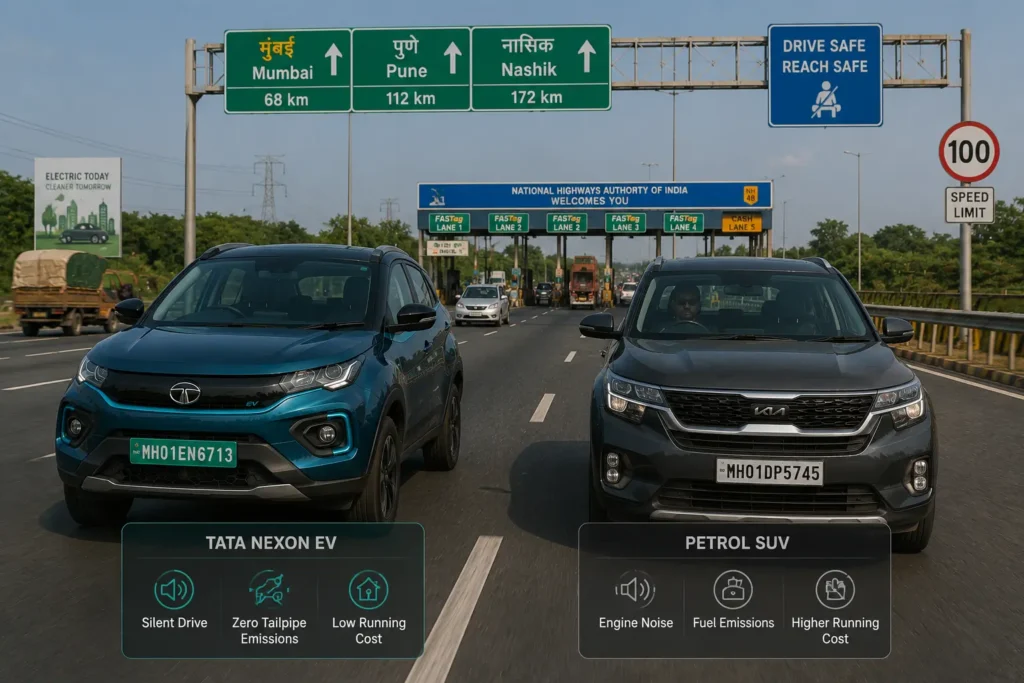
Recommended For:
- High-Mileage Commuters: Drivers covering more than 1,000 km monthly see immediate financial benefits.
- Urban Families: Perfect for daily school runs, local shopping trips, and general city use.
- Solo Corporate Drivers: Ideal for long cross-city workplace commutes through heavy traffic zones.
Not Recommended For:
- Apartment Residents Lacking Dedicated Power Access: Relying exclusively on commercial public fast chargers increases costs and reduces day-to-day convenience.
- Low-Utilization Drivers: If your car covers less than 500 km a month, the fuel savings won’t justify the initial upfront price premium.
Key Questions Buyers Commonly Ask
What is the starting Tata Nexon EV price in India?
The entry-level Creative Plus MR variant starts at ₹12.49 Lakh ex-showroom. On-road pricing varies by state due to differing local road tax structures and registration subsidies.
What is the realistic range of the Tata Nexon EV Long Range?
While the certified claim stands at 489 km, real-world highway driving delivers a reliable 250–260 km, while urban traffic stretches the range closer to 310 km.
Can I charge the Tata Nexon EV safely at home?
Yes. Every model can plug into a standard home wall box or a regular 15A three-pin power outlet. A full overnight charge takes roughly 9 to 12 hours depending on the battery capacity.
Is the vehicle expensive to insure compared to normal SUVs?
Because electric cars have higher upfront values and specialist high-voltage parts, initial insurance premiums run roughly 15% higher than standard petrol variants.
How long will the battery pack realistically survive?
Modern LFP chemistry packs are engineered to last between 1,500 and 2,000 charge cycles. For an average user, this translates to over 10–12 years of regular operational life before seeing noticeable range reduction.
Final Verdict: Is the Tata Nexon EV Worth Buying in 2026?
The Tata Nexon EV makes clear financial sense if your driving profile matches its strengths. If you have a dedicated parking space to set up a home charger and a daily cross-city commute, it is one of the smartest ways to insulate your household budget from fuel price hikes.
However, if you are buying it primarily as a status symbol or plan to take it on long highway trips without checking charging maps, the infrastructure limitations can be frustrating. Calculate your real monthly mileage first: if your odometer regularly clears 1,000 kilometers a month, the Nexon EV is a practical, comfortable, and highly rewarding investment for the long run.
Helpful Resources for Indian EV Car Buyers
- Bharat NCAP Official Website — India’s official crash-testing and vehicle safety rating platform. Includes adult and child occupant scores, crash-test protocols, and tested vehicle lists.
- Global NCAP – Safer Cars for India — Global crash-test program that pushed Indian manufacturers toward safer vehicle structures and occupant protection standards.
- Reserve Bank of India (RBI) — Official source for repo rates, lending rules, and banking regulations in India. (rbi.org.in)
- TransUnion CIBIL — Check your credit score and track your loan eligibility before applying for a car loan.
- SBI Car Loans — View latest interest rates, eligibility criteria, and loan offers from State Bank of India.
- HDFC Bank Car Loans — Explore car loan options, EMIs, and financing plans from HDFC Bank.
- ICICI Bank Car Loans — Compare new and used car loan offers along with repayment options.
- Policybazaar Car Insurance — Compare insurance plans, premiums, and add-on coverage options in one place.
- Acko Car Insurance — Get quick online quotes and renewal estimates for car insurance.
- AutomotiveZone Mileage Cost Calculator — Estimate real fuel costs based on your driving mileage.
- AutomotiveZone Monthly Car Expense Calculator — Calculate total monthly car ownership cost including EMI, fuel, and maintenance.
Disclaimer: Prices, mileage, safety ratings, loan rates, and ownership costs are approximate and may vary by location, variant, and market conditions in 2026. Some visuals may be AI-generated for illustration. Please verify final details with authorized dealers before purchase.