
Tesla Model 3 Quick Overview
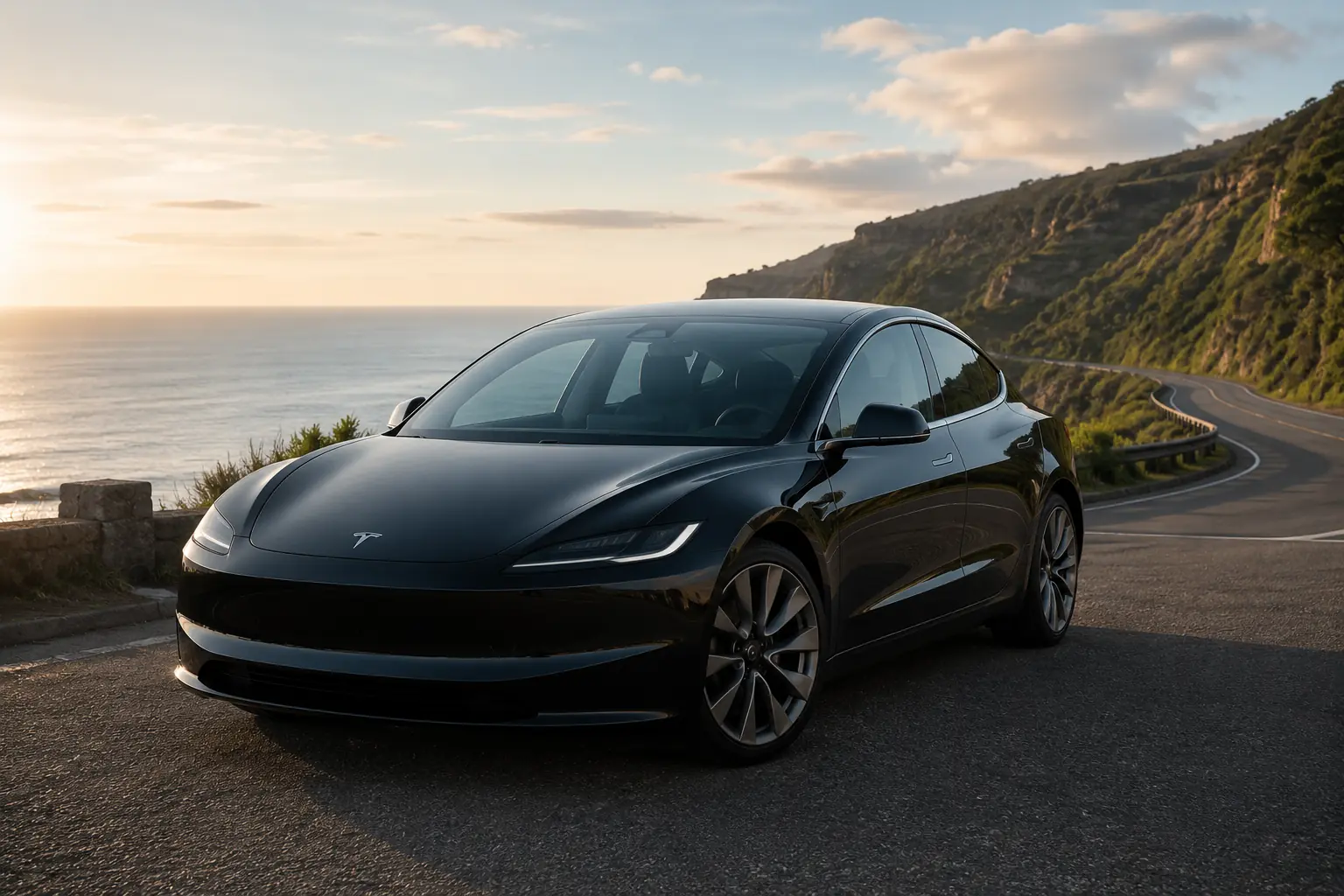
The 2026 Tesla Model 3 remains the global definitive benchmark for the all-electric sports sedan segment, priced from $38,990 to $54,990 (MSRP). Driven by highly advanced permanent-magnet synchronous AC motors, it is available in a hyper-frugal Rear-Wheel Drive (RWD) layout or a Dual-Motor All-Wheel Drive (AWD) configuration putting out up to 510 hp in the Performance flagship. It delivers a highly consistent real-world mixed range of 270 to 393 miles, unmatched for its slippery 0.219 drag coefficient, minimal charging overheads, and minimalist tech integration.
Tesla Model 3 Guide 2026: Real-World Range, Supercharger Access, MoveOS Minimalist Tech & Is It Worth Buying?
Most modern mass-market electric vehicles have transitioned heavily toward boxy, high-riding crossover shapes. While these compact SUVs offer extra headroom, their heavy visual profiles produce high wind resistance, penalize highway efficiency, and cause significant body roll through tight highway curves. Conversely, traditional legacy gasoline sedans offer a familiar three-box layout but plague daily commuters with laggy mechanical gearboxes, high engine heat idling signatures, and steep fossil fuel expenses.
The Tesla Model 3 is engineered to master this exact performance equation. Rather than treating an EV layout as an afterthought, the Model 3 was developed from a clean slate as an ultra-aerodynamic, low-slung electric sports sedan. Benefiting from continuous iterative engineering updates—including full 360-degree acoustic side glass partitioning and an ultra-stiff passenger cell—it blends sports car acceleration with an incredibly refined, whisper-quiet cabin infrastructure that sets the gold standard under a $45,000 budget.
Why the Tesla Model 3 Commands the Electric Sedan Space
The Model 3 dominates daily urban workplace commutes and interstate highway runs by prioritizing extreme thermodynamic efficiency and centralized electronic controls:
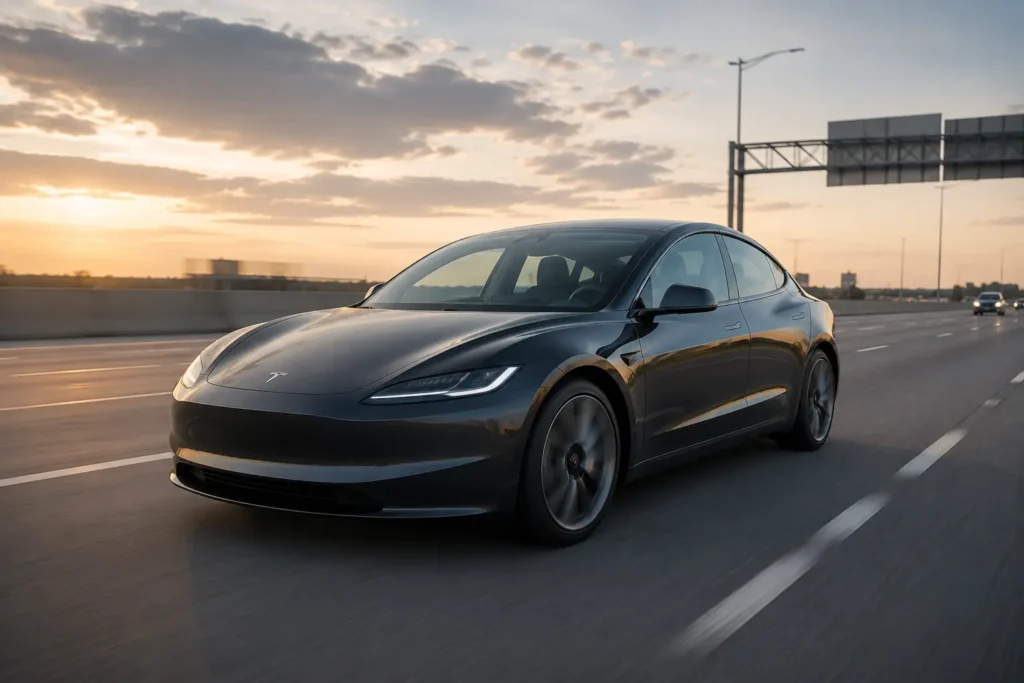
Aerodynamic Slipstream Profiling: Its low-slung, windswept nose cone and completely flat underbody drop its drag coefficient to a mere 0.219 Cd, keeping high-speed highway battery drain exceptionally low.
The Supercharger Ecosystem Edge: Gains native, plug-and-play access to the massive global Tesla Supercharger Network, removing charging network fragmentation and automatically routing pre-conditioned battery inputs on long journeys.
Unrivaled Thermal Efficiency: Its proprietary heat pump framework tightly manages battery packaging and cabin temperatures, conserving energy blocks that standard EVs lose during extreme winter freezes.
Tesla Model 3 Price List & Core Variants (2026)
The Model 3 structures its portfolio across four clean mechanical grades, scaling up cleanly based on battery cell volume and single-vs-dual motor configurations.
US Market Price Architecture (MSRP):
| Variant Grade & Drive Layout | Battery Packaging | EPA Estimated Range | Base MSRP Price | Core Variant Positioning Focus |
| Model 3 Standard RWD | 70 kWh LFP Pack | 321 Miles | $38,990 | Extreme Value / Daily Commutes |
| Model 3 Long Range RWD | 82 kWh NMC Pack | 363 Miles | $44,130 | The Ultimate Efficiency Sweet Spot |
| Model 3 Long Range AWD | 82 kWh NMC Pack | 346 Miles | $47,490 | All-Weather Traction / Dual Motor |
| Model 3 Performance AWD | 82 kWh Variant | 303 Miles | $54,990 | Track Mode / 510 hp Hyper-Sprint |
The Federal Incentives Advantage: Because select Long Range configurations utilize localized North American battery assembly chains, they qualify directly for the standard $7,500 Federal Clean Vehicle Tax Credit. This slashes the effective acquisition cost significantly at the point of sale.
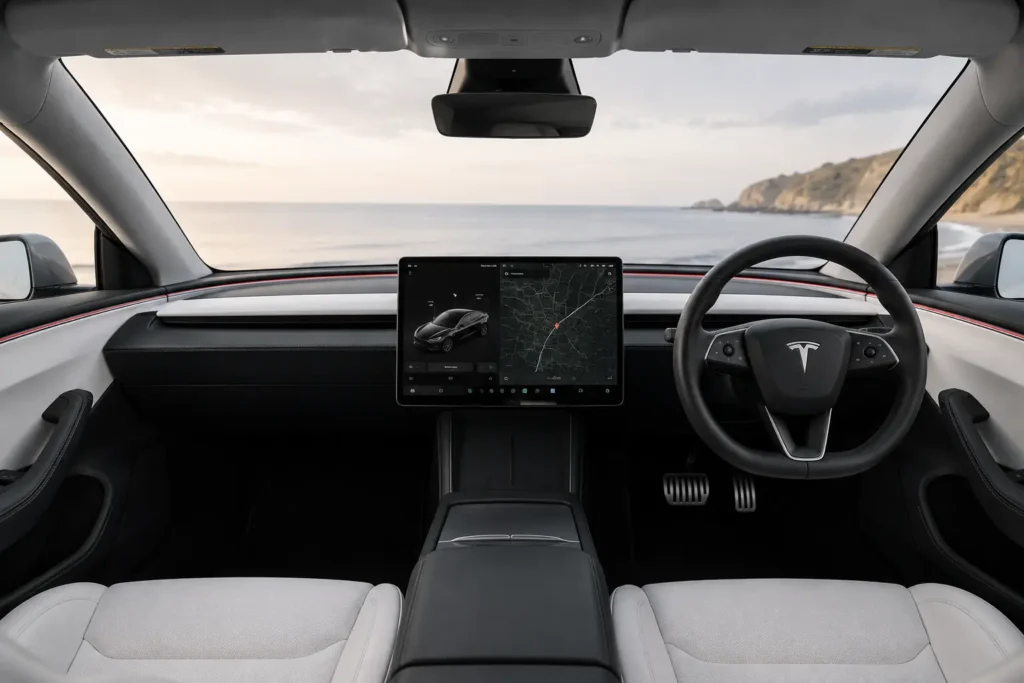
Interior Architecture: The Minimalist Glass Lounge
Step inside the cabin, and the Model 3 completely ditches traditional dials, buttons, and air vents to deliver a remarkably clean, airy ecosystem.
1. The 15.4-Inch Central Command Hub
The entire interior workspace revolves around a singular, high-resolution 15.4-inch floating central touchscreen display. This panel controls every element of the car—from adjusting the hidden electronic climate control vents and steering column mirrors to managing full navigation tracks. It integrates native streaming apps like Netflix and YouTube alongside high-end arcade gaming frameworks to pass the time seamlessly while charging.
2. Acoustic Isolation, Reclining Comfort & Rear Tech
The cabin steps straight into premium territory by wrapping all five adult seats in soft, stain-resistant vegan leather. The front perches feature 3-stage heating and cooling ventilation, working underneath a continuous premium UV-cut panoramic glass roof. Rear row occupants gain an individual 8-inch touch screen integrated behind the center console, letting them manage their own air tracks and media selections independently.

3. Dual Cargo Practicality (Trunk + Frunk)
Because the electric motors are packaged tightly between the wheel hubs, the Model 3 opens up unique storage opportunities. The electronic rear trunk lid opens to expose a deep cargo bay that easily swallows large vacation suitcases. This is paired with a unique 3-cubic-foot front trunk (“frunk”) under the hood, providing a secure, sealed space to stash charging cables or grocery items away from the main cabin.
Real-World Motor Performance & Charging Speeds
The Model 3 trades standard combustion delays for immediate, neck-snapping electric torque and precise handling dynamics.
Powertrain Character Matrix:
Standard RWD Launch Agility: Puts out an energetic 286 hp, hitting the 0-60 mph sprint in a highly respectable 5.4 seconds with clean, linear urban responsiveness.
The Flagship Performance AWD: A total mechanical monster deploying a combined 510 hp to all four wheels. It launches from 0-60 mph in a blinding 2.9 seconds, pulling relentlessly up to a track-capped top speed of 163 mph.
True Real-World Range Realities (Edmunds Testing Benchmark)
While high-speed 75 mph highway cruising drops overall distance figures, specialized independent urban mixed testing cycles prove Tesla’s software calibration reigns supreme.
| Selected Vehicle Variant | Official EPA Estimates | True Real-World Range Tracking | Energy Consumption |
| Model 3 Standard RWD | 321 Miles | 270 mi (Pure Highway) | 310 mi (City) | 26 kWh / 100 mi |
| Model 3 Long Range RWD | 363 Miles | 393 Miles (Edmunds Efficiency Test) | 21.7 kWh / 100 mi |
| Model 3 Performance AWD | 303 Miles | 285 km to 300 Miles | 30 kWh / 100 mi |
Ultra-Fast Charging Curves
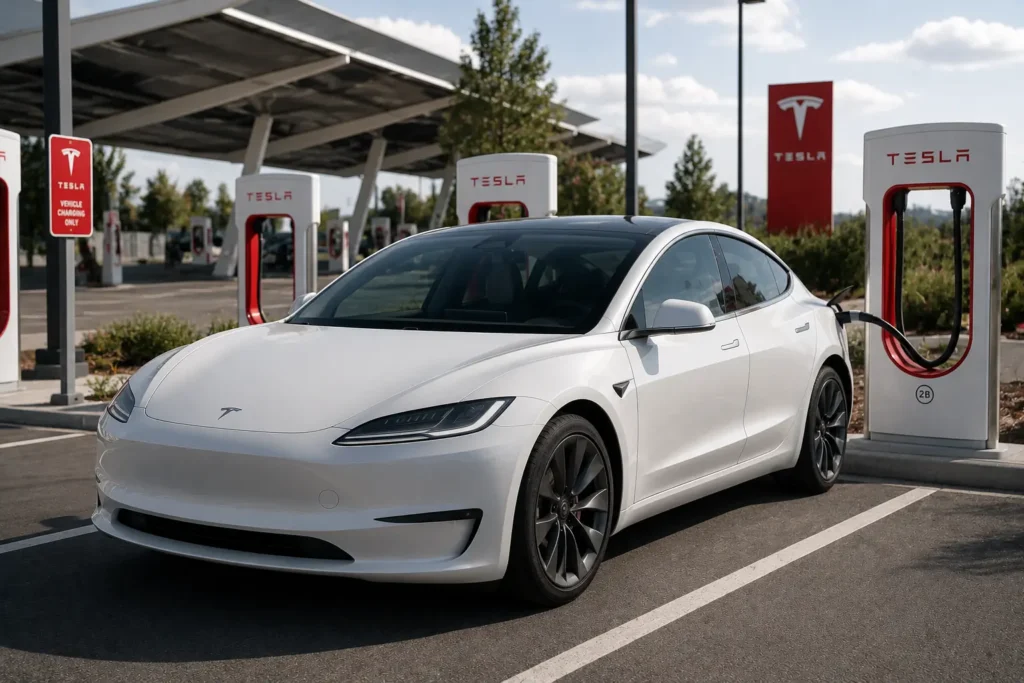
V3/V4 Supercharging Infrastructure: Connecting to a commercial 250 kW Tesla Supercharger terminal utilizes a highly aggressive charging curve, adding up to 175 to 195 miles of range in just 15 minutes.
Standard Level 2 Home Charger: Plugging into a standard 240V home charging outlet replenishes the battery pack overnight from empty to full in approximately 8 to 11 hours.
Tesla Model 3 Full Technical Specifications
| Technical Parameter | Standard RWD Specification | Long Range AWD Specification |
| Motor Configuration | Single Rear Ultra-Efficient Motor (RWD) | Dual Motors (Front Induction + Rear PMSM AWD) |
| Peak System Power | 286 hp | 498 hp System Total (510 hp Performance) |
| Battery Chemistry | Lithium Iron Phosphate (LFP) | Nickel Manganese Cobalt (NMC) |
| Chassis Braking Setup | 4-Wheel Vented Disc Brakes | 4-Wheel Vented Disc Brakes (Performance Calipers) |
| Suspension Architecture | Independent Multi-Link Front & Rear | Independent Multi-Link Front & Rear |
| Tyre & Wheel Setups | 18″ Photon Wheels w/ Aero Covers | 19″ Nova Wheels / 20″ Forged Performance |
| Dimensions (L x W x H) | 185.8″ x 76.1″ x 56.7″ | 185.8″ x 76.1″ x 56.7″ |
| Unladen Curb Weight | 3,759 lbs (Highly agile framework) | 4,080 lbs (Planted dual-motor weight) |
Fuel Running Cost Comparison: Model 3 vs Premium Petrol Sedans
Let’s calculate the real monthly budget math for a workplace commuter covering a standard distance of 1,200 miles per month using residential home charging lines.
Scenario A: Tesla Model 3 Long Range RWD (Home AC Power)
Average domestic power tariff: $0.16 per unit (kWh).
To travel 100 miles, the hyper-efficient Model 3 requires roughly 21.7 kWh of electricity, translating to $3.47 per 100 miles.
Covering a 1,200-mile monthly route demands roughly 260 kWh of energy input.
Monthly Power Bill: ~$41.60 (Approx. $0.03 per mile).
Scenario B: Traditional Premium Sports Sedan (BMW 330i Class – Premium Petrol)
Average cost of standard premium fuel: $4.10 per gallon.
Real-world mixed city fuel economy: 28 mpg.
Fuel required to clear 1,200 miles: 42.8 Gallons.
Monthly Fuel Bill: ~$175.48 (Approx. $0.14 per mile).
Compare EV vs Petrol Running Costs
Calculate fuel expenses, electricity costs, cost per mile, and long-term savings. Compare your EV against petrol, diesel, or hybrid vehicles to find the most economical option.
Compare EV vs MPG Costs →Tesla Model 3 Pros & Cons
Advantages
Industry-Leading Efficiency: Hits an outstanding 4.61 miles per kWh, maximizing every drop of battery juice.
Flawless Supercharger Access: Native plug-and-play network access eliminates public charging stress entirely.
Whisper-Quiet Cabin Isolation: 360-degree acoustic window glass keeps road and wind buffeting completely out.
Addictive Low-End Performance: Immediate torque response ensures effortless city filtering and highway pulls.
dual Trunk Layout Utility: Front and rear cargo hold configurations provide excellent daily hauling flexibility.
Disadvantages
Touchscreen-Heavy Vehicle Settings: Dropping mechanical stalks requires using the central screen for shifting gears and adjusting windshield wipers.
Firm Ride over Stiff Potholes: The sports-tuned multi-link suspension handles flat through curves but transfers sharp pavement breaks directly to the cabin.
No Native Apple CarPlay / Android Auto: Bypasses popular smartphone mirroring setups to force reliance on Tesla’s proprietary internal map ecosystem.
High Glass Roof Solars: Intense 100°F summer days can heat up the cabin glass area, requiring the air conditioner to draw extra power to cool down.
Who Should Buy the Tesla Model 3?
Recommended For:
High-Mileage Commuters: Ideal for drivers covering over 40 miles daily who want to slash fuel costs down to pennies via home charging.
Tech-First Connected Buyers: Perfect for tech lovers who appreciate seamless smartphone key proximity entry, live remote cameras, and overnight over-the-air updates.
Long-Distance EV Road Trippers: Excellent for anyone wanting to take cross-country trips completely tension-free, using integrated Supercharger route mapping.
Not Recommended For:
Riders Demanding Traditional Tactile Controls: If you require physical dashboard buttons, traditional instrument dials directly behind the wheel, or separate turn signal stalks.
Apartment Dwellers Lacking Night Chargers: If you do not have access to an institutional Level 2 overnight charger plug at your primary residence, relying purely on fast-chargers adds friction.
Questions Buyers Commonly Ask about Tesla Model 3
How do you shift gears without a physical transmission stalk?
The Model 3 utilizes smart screen shifting logic. When you step on the brake pedal from a stop, the central screen displays a vertical slider line on the driver’s edge. Swiping up selects Drive, while sliding down engages Reverse. The car also features an intelligent Auto Shift out of Park algorithm that automatically selects the correct direction based on surrounding obstacles.
What is the core structural difference between RWD and AWD models?
The standard RWD variant uses a single rear electric motor paired with an ultra-durable Lithium Iron Phosphate (LFP) battery chemistry that can comfortably be charged to 100% daily. The Long Range AWD variants add a secondary front induction motor for maximum winter traction paired with a larger, lightweight NMC battery pack optimized for raw distance.
How does Tesla Autopilot assist during daily driving?
Every Model 3 leaves the factory floor equipped standard with Autopilot safety systems. Using a highly sophisticated array of external cameras, the car automatically handles steering guidance, lane centring loops, adaptive acceleration tracking, and emergency preventative braking inside its lane.
Final Verdict: Is the Tesla Model 3 Worth Buying in 2026?
The Tesla Model 3 represents an exceptionally practical, premium, and performance-driven financial investment. It avoids bulky, aerodynamically heavy crossover frames and low-range conversion platforms; instead, it focuses on delivering a razor-sharp sports sedan profile, class-leading energy efficiency, the ultimate charging backup network, and a futuristic cabin lounge.
If you have a secure parking space at home to plug in an AC charger, value immediate throttle agility that transforms your daily workplace commute, and want an advanced machine that slashes your monthly operating footprint down to a mere fraction of a luxury petrol sedan, the Model 3 Long Range or Standard trims represent an extraordinary value investment. However, if your family layout requires a tall riding position or you prefer a traditional cockpit with physical buttons, alternative platforms might fit your garage better. Ultimately, let your daily route distances, charging network availability, and love for clean digital technology guide your final choice.
Helpful Resources for Indian EV Car Buyers
- Bharat NCAP Official Website — India’s official crash-testing and vehicle safety rating platform. Includes adult and child occupant scores, crash-test protocols, and tested vehicle lists.
- Global NCAP – Safer Cars for India — Global crash-test program that pushed Indian manufacturers toward safer vehicle structures and occupant protection standards.
- Reserve Bank of India (RBI) — Official source for repo rates, lending rules, and banking regulations in India. (rbi.org.in)
- TransUnion CIBIL — Check your credit score and track your loan eligibility before applying for a car loan.
- AutomotiveZone Mileage Cost Calculator — Estimate real fuel costs based on your driving mileage.
- AutomotiveZone Monthly Car Expense Calculator — Calculate total monthly car ownership cost including EMI, fuel, and maintenance.
- AutomotiveZone Fuel Cost Calculator — Instantly estimate petrol, diesel, or CNG expenses based on mileage, fuel price, and trip distance.
- AutomotiveZone EV vs Petrol Cost Calculator — Compare electric vehicle charging costs with petrol fuel expenses to see long-term savings.
- AutomotiveZone EV Charging Cost Calculator — Calculate home and fast-charging electricity costs for your EV using battery size and electricity tariff.
- AutomotiveZone Car Resale Value Estimator — Estimate your car’s current market resale value based on age, mileage, ownership, and condition.
Disclaimer: Prices, mileage, safety ratings, loan rates, and ownership costs are approximate and may vary by location, variant, and market conditions in 2026. Some visuals may be AI-generated for illustration. Please verify final details with authorized dealers before purchase.