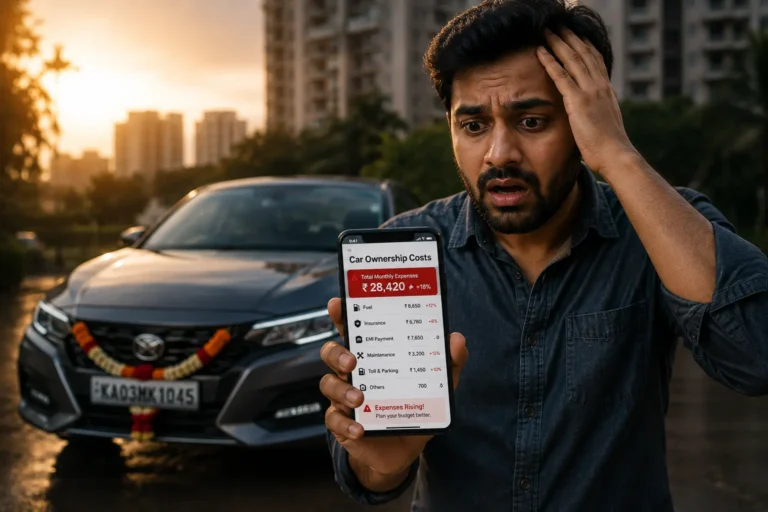


In 2026, the diesel vs petrol debate is no longer just about mileage. Rising vehicle prices, stricter BS6 Phase 2 emission rules, resale uncertainty, and the growth of hybrid cars have completely changed the financial equation.
For most Indian buyers driving under 15,000 km annually, petrol cars now make more financial sense. Diesel still works for high-mileage highway users—but the break-even point is much farther away than it used to be.
Diesel vs Petrol Cars: Which Makes Financial Sense in 2026?
A few years ago, the answer was simple: buy diesel if you drive a lot. But in 2026, things are different.
Modern diesel engines are more expensive, more complex, and increasingly affected by emission regulations. At the same time, petrol engines and strong hybrids have become far more fuel-efficient, especially in city traffic.
So the smarter choice now depends less on “fuel type” and more on:
- your yearly running,
- where you drive,
- how long you keep the car,
- and future resale risks.
Petrol vs Diesel Cars: What’s the Real Difference?
Petrol cars are smoother, quieter, and better suited for city driving. Diesel cars offer stronger torque and better highway fuel efficiency, especially for heavier vehicles.
Petrol Cars
Best known for:
- smoother engine refinement
- lower vibration
- quieter cabin
- lower maintenance complexity
Diesel Cars
Known for:
- higher torque
- stronger highway pulling power
- better mileage
- better long-distance efficiency
What Changed in 2026?
Modern diesel vehicles now require:
- DPF systems
- AdBlue technology
- stricter BS6 Phase 2 compliance systems
This increases:
- servicing complexity
- ownership cost
- repair expenses
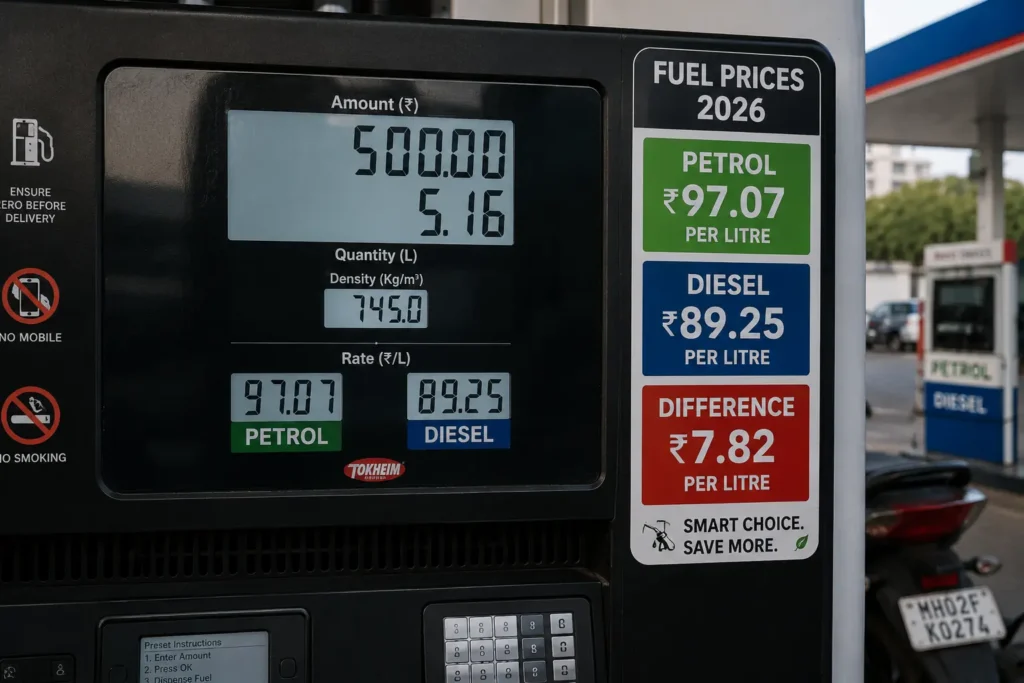
Fuel Prices in 2026: Is Diesel Still Much Cheaper?
The petrol-diesel price gap in India has narrowed significantly, reducing diesel’s traditional savings advantage.
| City | Petrol Price | Diesel Price |
|---|---|---|
| Delhi | ₹94–95/L | ₹87–88/L |
| Mumbai | ₹103–104/L | ₹90–91/L |
| Bengaluru | ₹102–103/L | ₹90–91/L |
Why This Matters
Earlier:
- diesel fuel was dramatically cheaper
Now:
- savings per liter are much smaller
- break-even periods are longer
- higher upfront diesel cost matters more
Mileage and Running Cost Comparison
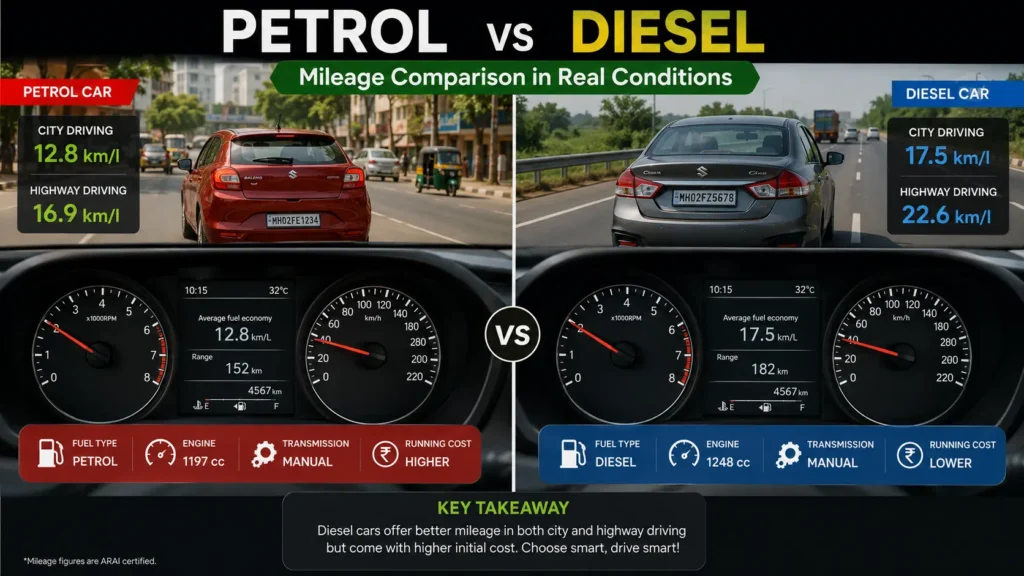
Diesel cars still offer better mileage, but modern petrol and hybrid cars have reduced the gap significantly.
Many buyers also forget that official mileage claims rarely match real-world Indian driving conditions. Understanding the gap between claimed and actual fuel economy can help you estimate realistic running expenses more accurately. Read our detailed guide on ARAI mileage vs real mileage in India.
| Factor | Petrol | Diesel |
|---|---|---|
| City Mileage | 12–15 km/l | 16–18 km/l |
| Highway Mileage | 17–20 km/l | 22–24 km/l |
| Maintenance Cost | Lower | Higher |
| Purchase Price | Lower | Higher |
| Refinement | Better | Moderate |
| Best Use Case | City driving | Highway driving |
The Hybrid Problem for Diesel
Strong hybrids now deliver:
- 25–28 km/l in city traffic
- lower maintenance than diesel
- smoother driving experience
This has weakened diesel’s biggest advantage.
Which Has Lower Maintenance Costs?
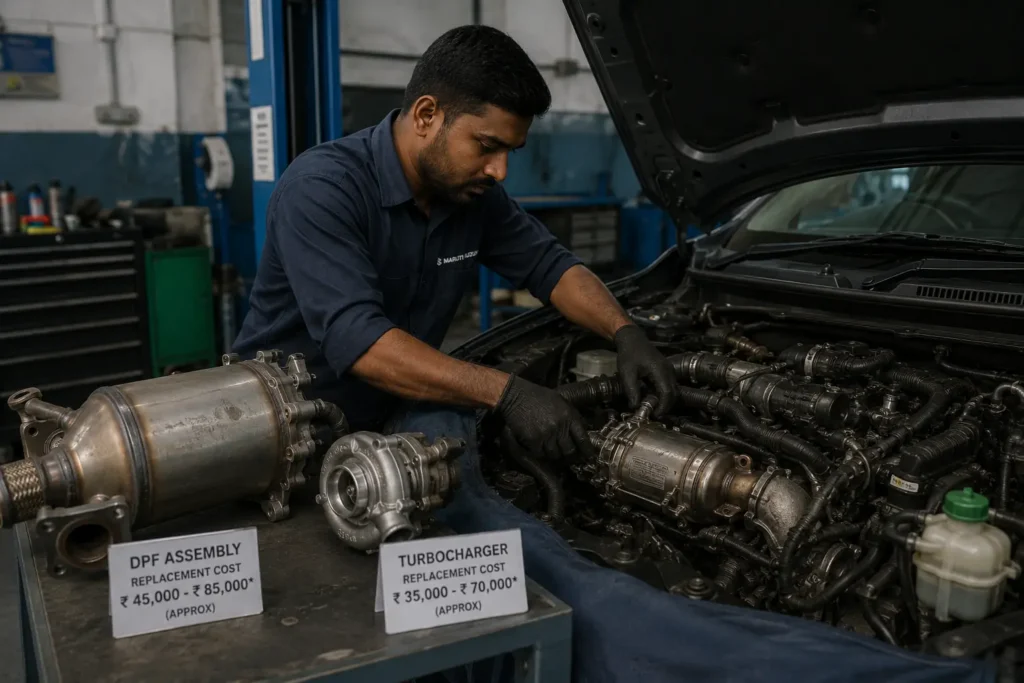
Petrol cars are significantly cheaper and simpler to maintain.
Why Diesel Costs More
Diesel engines require:
- larger oil capacity
- expensive fuel filters
- turbo systems
- DPF maintenance
- AdBlue refills
Expensive Diesel Risks in 2026
Potential high-cost repairs include:
- DPF replacement
- injector servicing
- turbocharger repairs
- emission system faults
City Driving Problem
Short city trips often prevent diesel engines from properly regenerating the DPF system.
What About Resale Value in 2026?
Diesel resale values are becoming uncertain in major metro cities due to age restrictions and future regulation fears.
Delhi-NCR Impact
Diesel vehicles face:
- 10-year usage restrictions
- resale pressure after 5–6 years
- declining buyer confidence
Petrol Advantage
Petrol cars generally:
- retain broader resale appeal
- avoid diesel-ban concerns
- offer longer legal usage periods
Are Petrol Cars Better for City Driving?
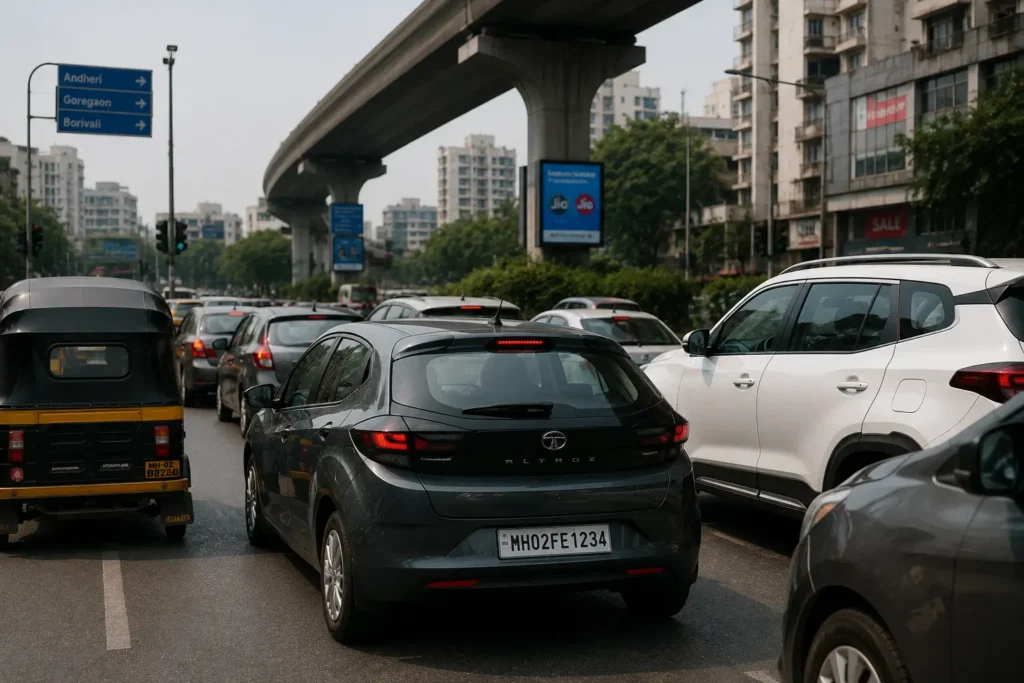
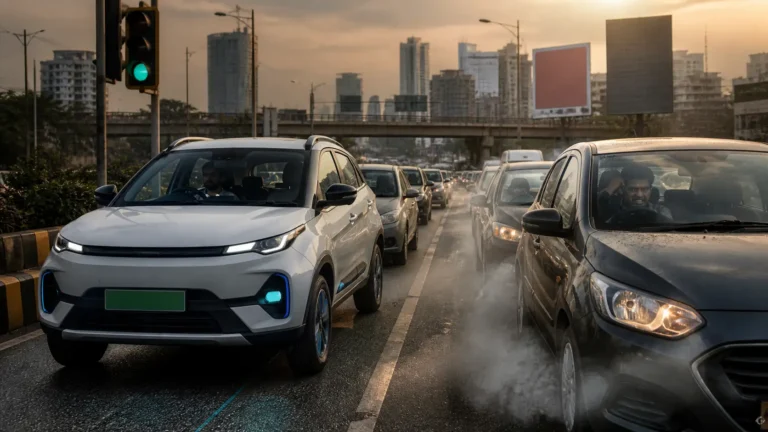
Yes. Petrol and hybrid cars are now the best options for urban driving conditions.
Why Petrol Wins in Cities
Petrol cars:
- warm up faster
- feel smoother in traffic
- handle short trips better
- avoid DPF clogging risks
Traffic Reality in India
In stop-go traffic:
- diesel efficiency advantage reduces
- refinement becomes more important
- maintenance issues increase
Does Diesel Still Make Sense for Highway Drivers?
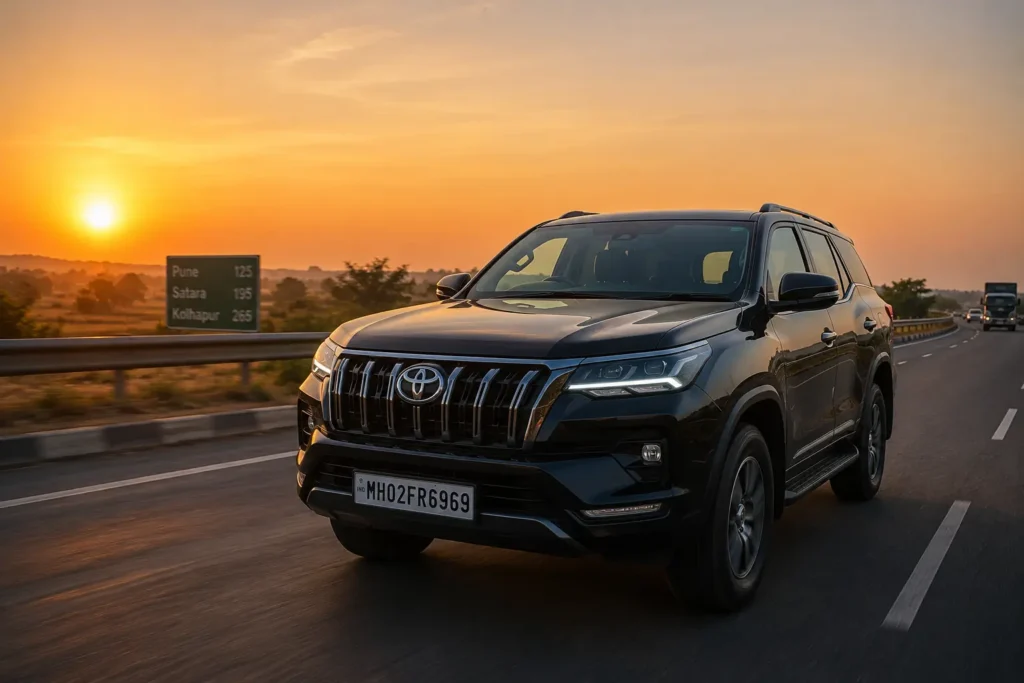
Yes. Diesel still performs exceptionally well for long-distance highway driving and heavy SUVs.
Where Diesel Still Wins
Best for:
- 1,500–2,000+ km monthly driving
- frequent highway travel
- heavy 7-seater SUVs
- towing or hill driving
Why Highway Users Prefer Diesel
Diesel engines provide:
- stronger torque
- relaxed cruising
- fewer fuel stops
- lower highway running cost
Break-Even Analysis: When Does Diesel Become Worth It?
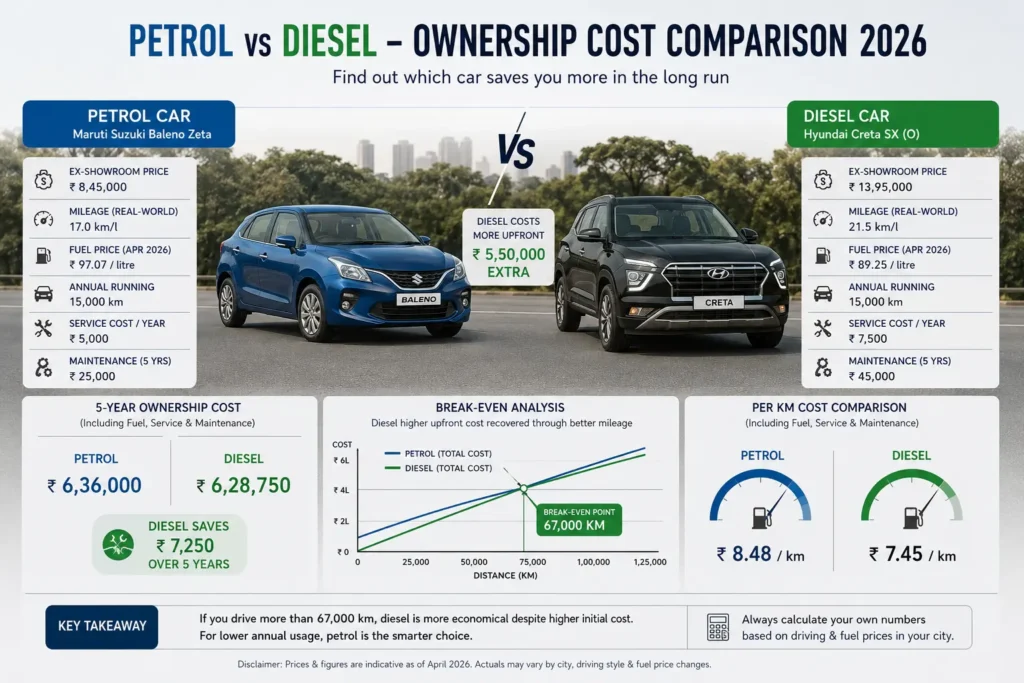
In 2026, most buyers need very high annual running to justify diesel financially.
| Factor | Petrol SUV | Diesel SUV |
|---|---|---|
| On-Road Price | ₹14 Lakh | ₹16.5 Lakh |
| Price Difference | — | ₹2.5 Lakh |
| Monthly Fuel Cost | ₹9,500 | ₹6,500 |
| Monthly Savings | — | ₹3,000 |
| Break-Even Time | — | Nearly 7 Years |
Important Reality Check
If you:
- drive under 15,000 km yearly,
- keep cars for only 5 years,
diesel often never fully recovers its higher purchase cost.
Want to lower your monthly running cost regardless of fuel type? Explore these tips to improve fuel economy and increase your real-world mileage in Indian traffic conditions.
Are Hybrids and EVs Replacing Diesel?
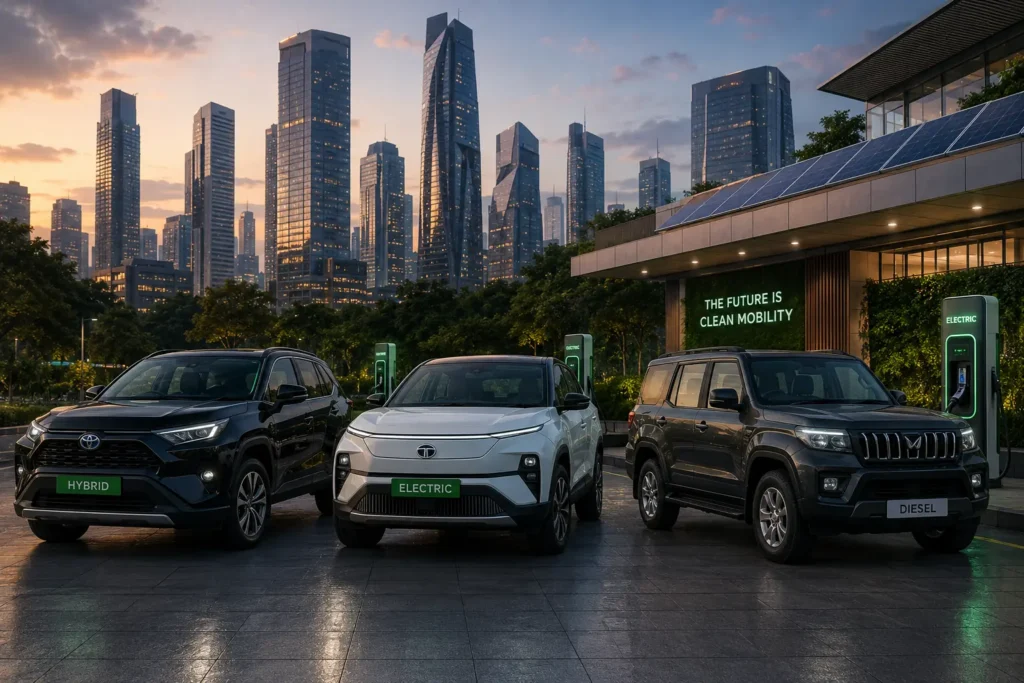
For many urban buyers, yes.
Why Hybrids Are Growing Fast
Strong hybrids now offer:
- diesel-like efficiency
- lower maintenance
- smoother city driving
- fewer regulation concerns
EV Competition
Electric vehicles now offer:
- extremely low running cost
- city-friendly ownership
- lower servicing expenses
Diesel’s dominance is shrinking rapidly in urban markets.
Who Should Buy a Petrol Car in 2026?
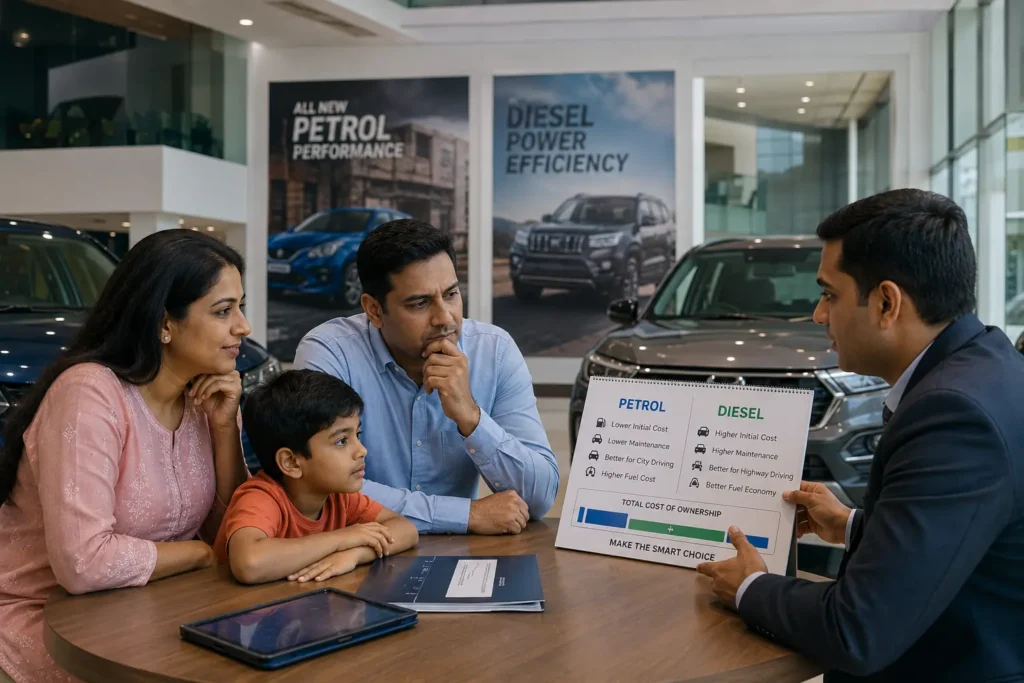
Petrol Makes Sense For:
- city commuters
- low annual running
- occasional drivers
- buyers keeping cars under 7 years
- people prioritizing comfort and refinement
Ideal Annual Usage
Under:
- 12,000–15,000 km yearly
Who Should Still Buy a Diesel Car?
Diesel Makes Sense For:
- frequent highway users
- high-mileage drivers
- large SUV buyers
- long-distance commuters
- heavy commercial usage
Ideal Annual Usage
Usually:
- above 18,000–20,000 km yearly
Mistakes Buyers Still Make
Common Financial Mistakes
- buying diesel only for mileage
- ignoring higher EMI burden
- underestimating maintenance
- ignoring resale uncertainty
- overlooking DPF problems in city usage
Biggest Misconception
Better mileage alone does not automatically make diesel cheaper overall.
Common Questions Buyers Ask
Are diesel cars worth buying in 2026?
Only for high-mileage users regularly driving long distances.
Which is cheaper to maintain?
Petrol cars are cheaper and mechanically simpler.
Is diesel banned in India?
No, but Delhi-NCR has a 10-year restriction for diesel vehicles.
What annual running justifies diesel?
Typically above 18,000 km annually.
Are petrol cars better for city traffic?
Yes. They are smoother, quieter, and better suited for short-distance driving.
What Most Buyers Should Focus On Instead
Before choosing fuel type, calculate:
- annual running
- fuel spending
- maintenance costs
- insurance premiums
- resale expectations
- ownership duration
Mileage alone no longer tells the full story.
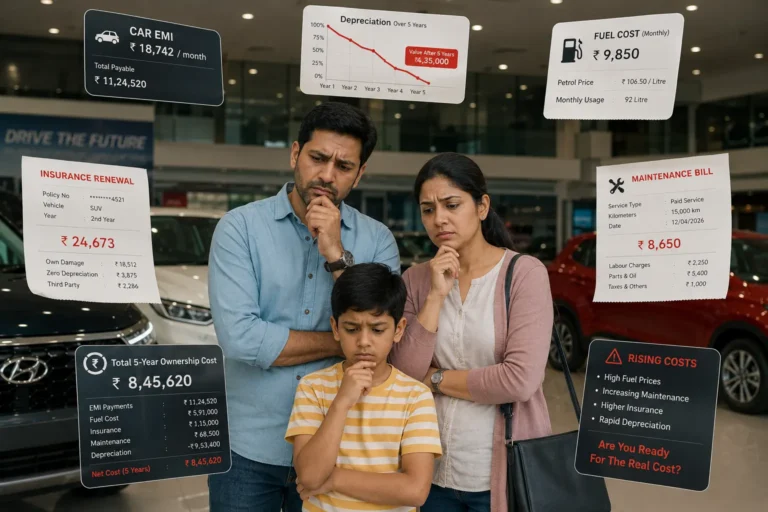
Smart buyers now evaluate the complete ownership picture including maintenance, depreciation, insurance renewals, and fuel expenses before choosing a fuel type. Here’s a detailed breakdown of the true cost of owning a car beyond EMI.
Also check: Petrol and Diesel fuel cost calculator
The Smarter Financial Choice in 2026
For most Indian buyers in 2026, petrol and hybrid cars are now the safer long-term financial decision. Diesel still works brilliantly for high-mileage highway drivers, but its traditional cost advantage has narrowed dramatically due to rising purchase prices, stricter emission systems, and uncertain resale value.
Many first-time buyers underestimate how quickly hidden ownership expenses add up after purchase. Beyond fuel savings, factors like servicing, depreciation, parking, and insurance renewals significantly impact long-term affordability. Learn more about the actual cost of car ownership in India before making your final decision.
Helpful Resources