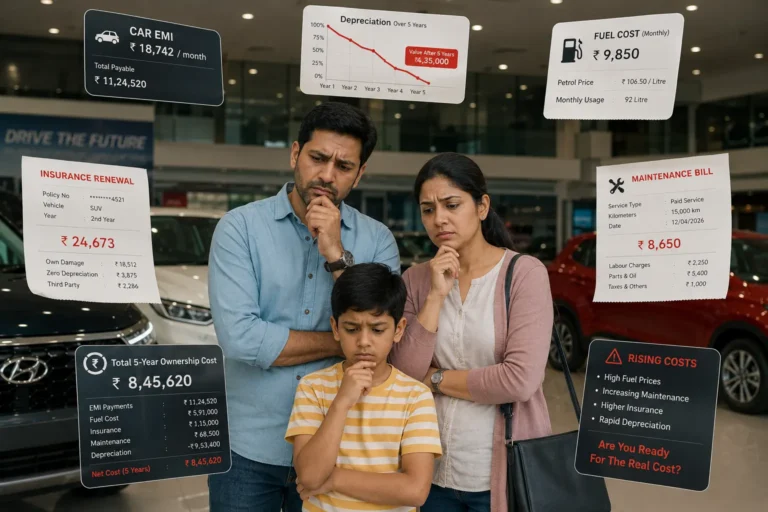

The Real Cost of Owning a Car (In Short)
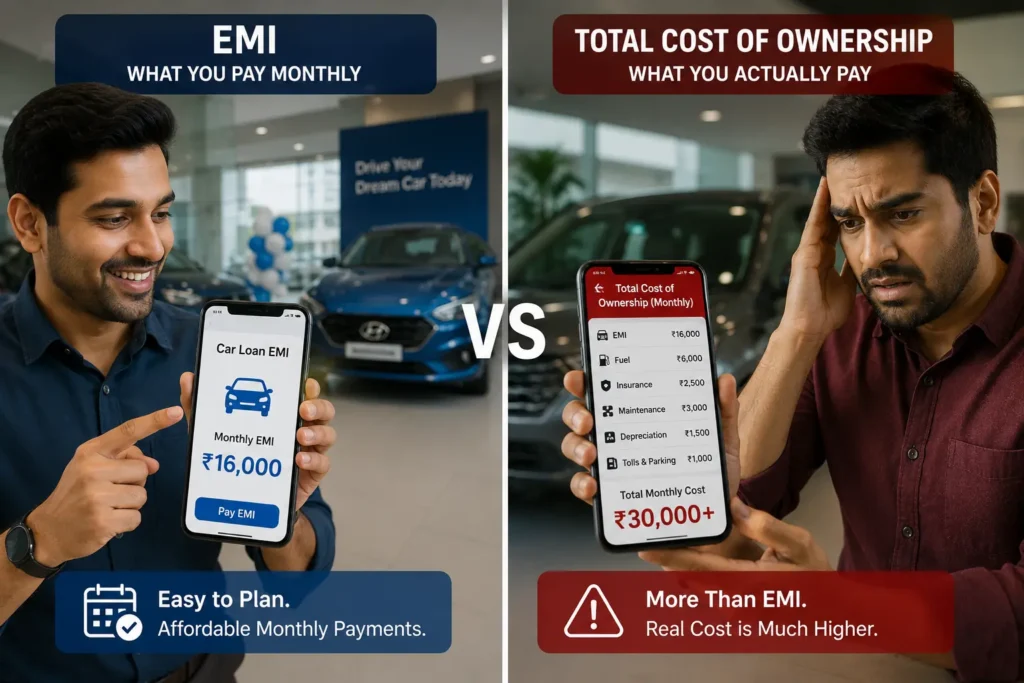
The true cost of car ownership includes the on-road price plus recurring expenses like fuel, insurance premiums, scheduled maintenance, and depreciation. In India, hidden costs typically add 25% to 40% to your initial monthly EMI budget. To calculate the real cost, you must look beyond the showroom price and account for the vehicle’s value loss over time.
The True Cost of Ownership: Hidden Expenses of Buying a Car
Most car buyers in India focus on one number: the EMI. We walk into a showroom, see a price tag of ₹8 Lakh, and if the monthly payment fits our salary, we sign the papers. But the “sticker price” is just the tip of the iceberg.
Owning a car is a long-term financial commitment. Between the moment you drive it off the lot and the day you sell it, you will likely spend thousands of rupees on things you never planned for—like surging insurance premiums, RTO charges, and the silent wealth-killer known as depreciation.
1. What Is the True Cost of Car Ownership?
The true cost of car ownership (Total Cost of Ownership or TCO) is the total amount of money spent to acquire, operate, and maintain a vehicle over its entire lifespan. It combines the purchase price, loan interest, and running expenses minus the final resale value.
Key Components of TCO:
- Fixed Costs: Loan interest, insurance, and road tax.
- Variable Costs: Fuel, service charges, tires, and parking.
- Economic Cost: Depreciation (the loss in the car’s market value).
2. On-Road Price vs. Actual Ownership Cost
The Ex-Showroom price is what the manufacturer charges for the car. The On-Road price includes mandatory costs like RTO registration, Road Tax, and Insurance. However, the Actual Ownership Cost is much higher because it includes 5–7 years of fuel and maintenance.
In cities like Bangalore or Mumbai, the gap between the showroom price and the on-road price can be as high as 15-20% due to high state road taxes. If you don’t factor in these “entry costs,” your initial budget will be blown before you even hit the highway.
3. Hidden Costs You Don’t Think About Before Buying a Car
When you buy a car, you aren’t just buying a machine; you are subscribing to a lifestyle of micro-transactions.
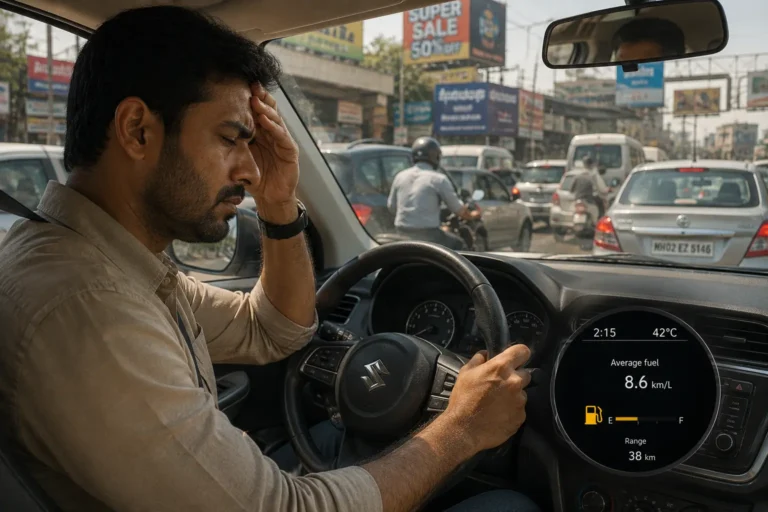
Many of these hidden expenses become even more unpredictable when fuel efficiency varies from what manufacturers claim. Real-world mileage in Indian conditions is often much lower than advertised figures. Understand this gap in detail with ARAI mileage vs real mileage in India.
The “Invisible” Expense List:
- Insurance Renewals: While the first year is often bundled, subsequent Year-on-Year premiums (especially for Zero-Depreciation covers) are a significant annual hit.
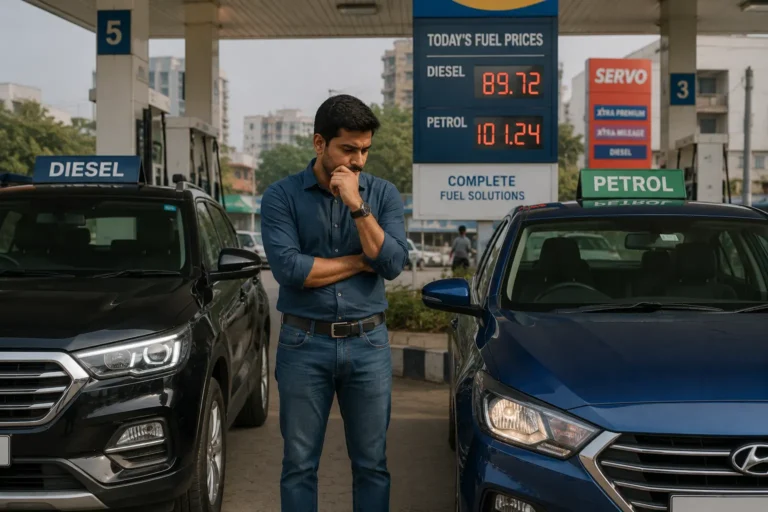
- Fuel Inflation: Petrol and Diesel prices fluctuate. A 10% hike in fuel can disrupt your monthly savings.
- Scheduled Maintenance: Beyond oil changes, cars need brake pad replacements, wheel alignment, and battery swaps every few years.
- Tolls and Parking: Frequent highway travel or paying for monthly parking in congested cities like Delhi or Pune adds up to a hidden annual fortune.
- Consumables: Windshield fluid, car wash services, and cabin air filters are small but constant leaks in your wallet.
4. Car Loan Interest: The Biggest Hidden Cost
Car loan interest is the “extra” money you pay the bank for the privilege of borrowing. Over a 5 to 7-year tenure, the interest can add ₹2 Lakh to ₹4 Lakh to the total cost of a mid-sized car.
Real-Life Financial Example:
If you take a loan of ₹8,00,000 at an interest rate of 9% for 5 years:
- Monthly EMI: ₹16,607
- Total Interest Paid: ₹1,96,420
- Total Repayment: ₹9,96,420
By the time you own the car fully, you’ve paid nearly ₹2 Lakh extra just to the bank. This is why choosing the right tenure is critical.
Once fuel and loan costs are combined, choosing the right fuel type becomes a major factor in long-term affordability. Diesel may look cheaper on paper, but real ownership costs depend heavily on usage patterns. Compare both options in our guide on diesel vs petrol cars in India 2026.
5. Depreciation: The Silent Money Loss
Depreciation is the rate at which your car loses its market value. In India, a new car loses about 10-15% of its value the moment it is registered and driven out of the showroom.
Why Depreciation Matters:
- The 50% Rule: By the end of year 5, most cars are worth only 50-60% of their original on-road price.
- Resale Impact: Brands like Maruti Suzuki and Toyota hold value better (slower depreciation), while luxury or less popular brands may depreciate much faster.
- Opportunity Cost: The money “lost” to depreciation could have earned interest if invested in a mutual fund or FD.
6. Insurance and Maintenance Costs Over Time
A car is cheapest to maintain in its first two years (under warranty). From the 3rd to 5th year, costs escalate as parts wear out and the manufacturer’s free services end.
- Insurance Renewal: As your car ages, its IDV (Insured Declared Value) drops, but the “Third Party” component of insurance often increases by government mandate.
- The Major Service: Typically, at the 40,000 km or 50,000 km mark, cars require “Major Services” involving timing belt checks, coolant flushes, and tire sets, which can cost ₹20,000–₹40,000 in one go.
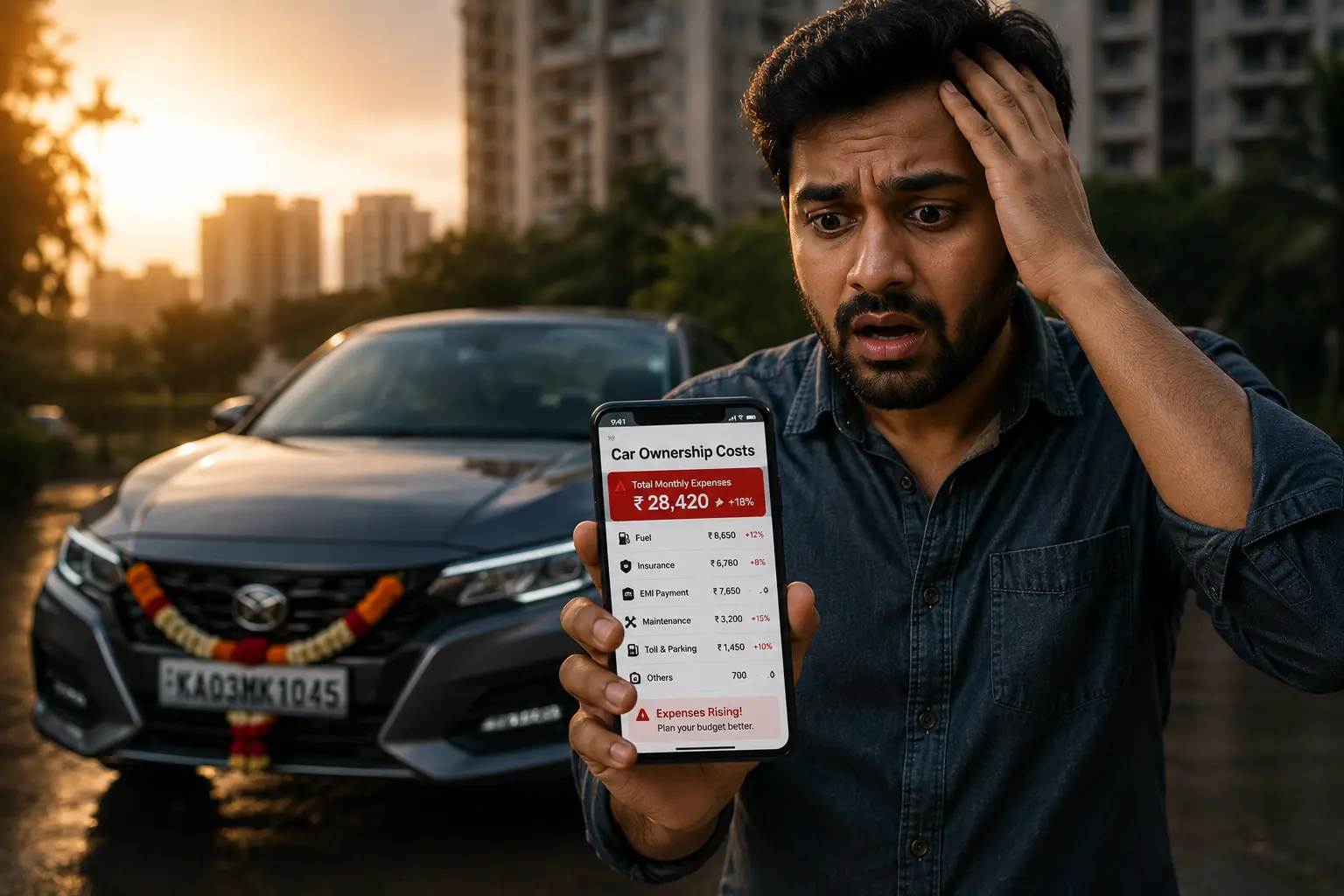
7. Monthly Cost of Owning a Car in India (Real Example)
Let’s look at the monthly burden of owning a ₹10 Lakh SUV (On-Road) in a typical Indian metro:
| Expense Category | Estimated Monthly Cost |
| Loan EMI (₹8L Loan) | ₹16,600 |
| Fuel (1,000 km/month) | ₹7,500 |
| Insurance (Annual spread) | ₹2,500 |
| Maintenance & Cleaning | ₹1,500 |
| Parking & Tolls | ₹1,000 |
| TOTAL MONTHLY COST | ₹29,100 |
The Reality Check: Even though your EMI is only ₹16.6k, the car actually “costs” you nearly ₹30,000 every month.
This monthly cost becomes even more accurate when you include hidden expenses like depreciation, insurance renewal, and servicing. Explore the full breakdown in cost of car ownership in India beyond EMI.
8. How to Reduce Car Ownership Costs
You don’t have to go broke to stay mobile. Here is how to keep the TCO low:
- Choose High Mileage: Opt for cars with high ARAI-certified mileage to cut fuel bills.
- Compare Insurance: Never renew with the dealer blindly. Use platforms like PolicyBazaar or Acko to save up to 40%.
- Timely Servicing: Skipping a ₹5,000 service today can lead to a ₹50,000 engine repair tomorrow.
- Drive Smoothly: Hard braking and rapid acceleration reduce tire life and fuel efficiency.
One of the easiest ways to reduce overall ownership cost is improving fuel efficiency through better driving habits and maintenance. You can apply these practical strategies from tips to increase car fuel efficiency in India.
9. Common Mistakes Car Buyers Make
- Focusing Only on EMI: If you can afford the EMI but not the fuel, the car will stay in the garage.
- Ignoring the Resale Value: Buying a “niche” car might be fun, but if no one wants to buy it second-hand, your cost of ownership skyrockets.
- Skipping the Insurance “Add-ons”: Not taking “Engine Protect” or “Return to Invoice” in flood-prone cities like Chennai or Mumbai can be a million-rupee mistake.
10. Is Buying a Car Financially Worth It?
Final Editorial Take: Financially, a car is a depreciating asset. It rarely “makes money.” However, it provides utility, safety, and freedom.
Buying a car makes sense if the monthly TCO is less than 15-20% of your take-home pay. If the “Hidden Costs” push you beyond that, you might be better off using ride-sharing apps or public transport for a few more years.
To calculate your exact monthly car expense before making a purchase decision, use our free tools like the mileage cost calculator and monthly car expense calculator.
What You Should Remember Before Buying a Car
- On-Road is just the start: Factor in at least 25% extra for monthly running costs.
- Interest adds up: A 5-year loan can cost you ₹2 Lakh+ in pure interest.
- Depreciation is real: Your car loses value every single day, even if it’s parked.
- Maintenance spikes: Budget for higher repairs after the 3rd year of ownership.
Common Questions About Car Ownership Costs
Q1. What is the real cost of owning a car in India?
The real cost includes the EMI, fuel, insurance, maintenance, and depreciation. For a mid-range car, this usually totals between ₹25,000 and ₹35,000 per month.
Q2. Is EMI the only cost of buying a car?
No. EMI only covers the loan. You must also account for fuel, annual insurance renewals, RTO taxes, and periodic servicing.
Q3. How much does a car cost per month in India?
On average, a small hatchback costs ₹15k–₹20k/month, a sedan/compact SUV costs ₹25k–₹35k/month, and luxury cars can exceed ₹70k/month.
Q4. What is the biggest hidden cost in car ownership?
Depreciation is the largest hidden cost, as it can quietly wipe out 50% of your car’s value in just 5 years.
Q5. How much does car maintenance cost yearly?
For most Indian cars, scheduled maintenance costs between ₹8,000 and ₹15,000 per year for the first 3-5 years.
What You Should Remember Before Buying a Car
The true cost of car ownership goes beyond the purchase price, including EMI interest, fuel, insurance, and maintenance. In India, a car’s value also depreciates by roughly 50% in five years. Understanding these hidden expenses helps buyers budget for the real monthly impact on their finances.
Want a full breakdown of all ownership costs before buying a car? Explore our complete automotive tools hub at car ownership cost calculators and tools.