
Mileage Claims vs Reality
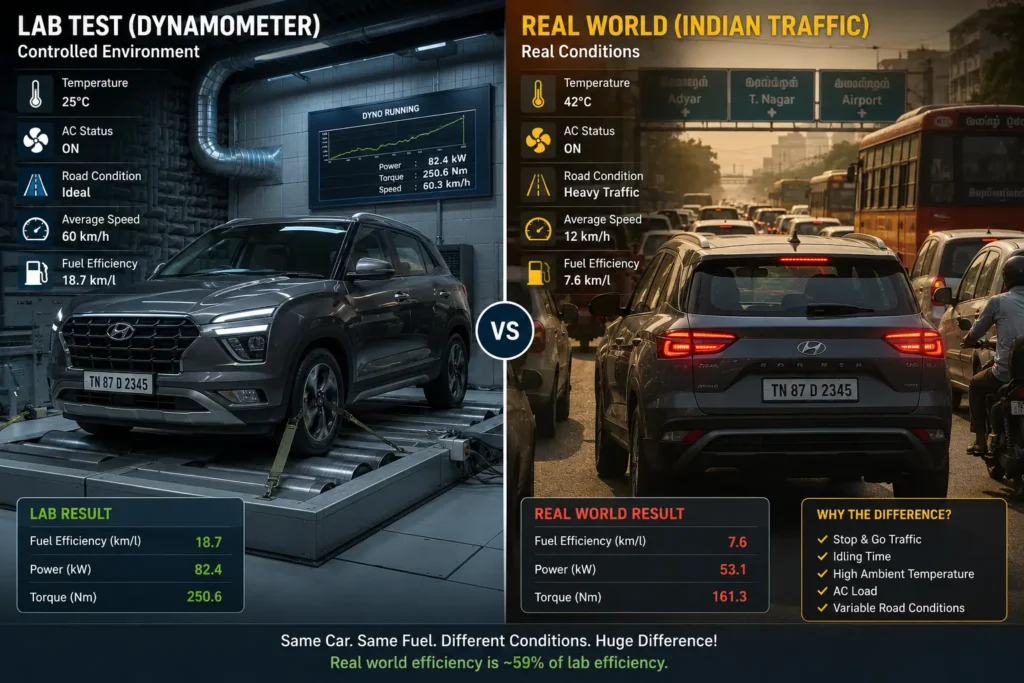
ARAI mileage numbers are rarely achievable because they are recorded in controlled laboratory conditions with no traffic, no wind resistance, and most importantly, the Air Conditioning (AC) turned off. In real-world Indian driving—marked by stop-and-go traffic and high temperatures—actual mileage is typically 20% to 40% lower than the certified figure.
Why ARAI Certified Mileage Numbers Are Rarely Achievable in Real Life
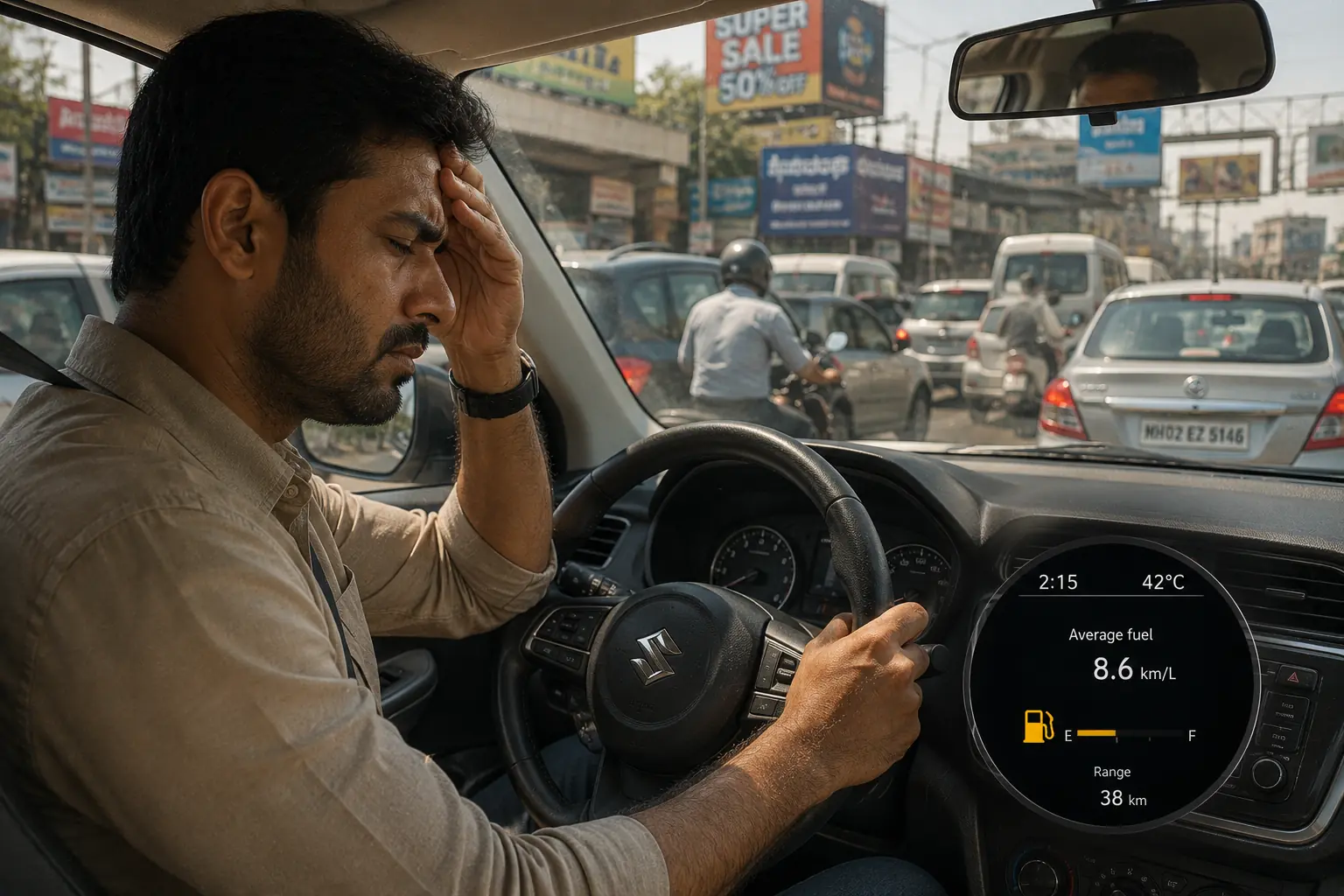
Fuel prices in India are painful enough. What frustrates buyers even more is realizing their “22 km/l mileage car” barely returns 14–15 km/l in daily driving. The problem usually isn’t the car—it’s the massive difference between laboratory-tested ARAI mileage and real Indian road conditions filled with traffic, heat, bad roads, and AC usage.
If you feel misled, you aren’t alone. Thousands of Indian car buyers feel “cheated” by these numbers every year. But the truth isn’t that the manufacturers are lying; it’s that the ARAI mileage vs real mileage gap is a byproduct of how we test cars in India versus how we actually drive them.
1. What is ARAI Mileage Testing?
ARAI (Automotive Research Association of India) is the government-affiliated body that certifies every vehicle sold in India. To keep things fair, they test every car using the same standardized method called the Modified Indian Driving Cycle (MIDC).
How it’s measured:
Instead of driving on the Mumbai-Pune Expressway, the car is placed on a chassis dynamometer—essentially a massive treadmill for cars—inside a laboratory. The car “drives” a predetermined sequence of speeds and stops to calculate fuel consumption based on exhaust emissions.
2. Why ARAI Mileage Looks Higher Than Real Driving
The laboratory is a perfect world. Real life is… not. Here is why the lab numbers are so inflated:
- No Air Conditioning: In ARAI tests, the AC is switched off. In a country like India where summers hit 45°C, the AC can sap 10% to 20% of your fuel efficiency.
- Zero Wind Resistance: Since the car is stationary on a treadmill, it doesn’t have to “cut” through the air. At highway speeds, aerodynamic drag is a major fuel killer.
- Ideal Temperature: Tests are conducted at a steady 25°C. In reality, engine efficiency changes drastically between a cold morning start and a scorching afternoon.
- No Passengers or Luggage: The car is tested at its “kerb weight” with minimal load. Adding four adults and a trunk full of luggage instantly drops your mileage.
- According to multiple independent automotive tests in India, most petrol cars deliver mileage that is roughly 20–35% lower than their ARAI-certified figures in city conditions.
3. Real-World Driving Conditions in India
The MIDC test cycle assumes a certain level of “ideal” traffic. Anyone who has spent an hour at Silk Board in Bengaluru or Dhaula Kuan in Delhi knows that Indian roads are anything but ideal.
The Real-World Killers:
- Stop-and-Go Traffic: Constant idling and moving in first gear burns massive amounts of fuel without covering much distance.
- Road Quality: Potholes and speed breakers force you to decelerate and accelerate constantly, breaking your momentum.
- Clutch Riding: In heavy congestion, drivers often “ride” the clutch, which leads to energy loss and poor fuel economy.
4. How Much Mileage Difference Is Normal?
If you are wondering what the “real” number should be, use this comparison table as a general rule of thumb for Indian conditions.
| Scenario | ARAI Mileage Claim | Real-World Expectation | Why? |
| City Driving | High (e.g., 20 km/l) | 25–40% lower | Heavy idling, AC load, low gears. |
| Highway Driving | High (e.g., 20 km/l) | 10–15% lower | Wind resistance and higher speeds. |
| Heavy Traffic | Not specifically tested | 50% lower | Fuel consumed while stationary. |
| Hybrid Cars | Very High (28 km/l) | Close match (City) | Electric motor handles stop-go traffic. |
5. Petrol vs Diesel Real Mileage Gap
Historically, diesel cars have shown a smaller gap between lab and real-world numbers. This is because diesel engines produce high torque at low RPMs, making them more efficient at pulling heavy loads or navigating traffic.
However, in 2026, the gap is shrinking. Strong Hybrids are now the kings of city mileage, But fuel efficiency is only one part of the equation. Maintenance costs, resale value, and annual running also determine whether petrol or diesel makes better financial sense in 2026. often delivering real-world numbers that are very close to their ARAI claims because they use electricity for the most inefficient parts of a city drive.
6. Why Manufacturers Still Use ARAI Numbers
If the numbers are “fake,” why use them?
- Legal Standard: Indian law requires manufacturers to display the ARAI-certified figure.
- The Level Playing Field: Since every car is tested in the same lab under the same conditions, it provides a benchmark. You can’t trust “real world” claims from brands because one person’s “real world” is a highway and another’s is a traffic jam.
- Marketing: “Best in class mileage” is the strongest selling point in the Indian car market.
7. How to Get Closer to Claimed Mileage
You might never hit that 22.5 km/l, but you can certainly get closer to it with these professional driving habits:
- The 60-80 Sweet Spot: Most Indian cars are most efficient when cruising at 60–80 km/h in top gear.
- Maintain Tire Pressure: Under-inflated tires increase friction. Check your PSI every time you refuel.
- Smooth Acceleration: Don’t “floor it” at green lights. Gradual acceleration saves a surprising amount of petrol.
- If you want practical ways to improve daily fuel economy, check out our detailed guide on mileage improvement tips
- Anticipate the Stop: If you see a red light ahead, lift your foot off the accelerator early and coast.
- Regular Servicing: A clogged air filter or old engine oil can drop your efficiency by 10% instantly.
8. Common Misconceptions About Mileage
- “Windows down is better than AC”: At low city speeds, yes. But on the highway, open windows create “drag” that actually uses more fuel than the AC does.
- “Neutral Gear on Downhills”: This is dangerous and unnecessary. Modern Fuel Injected (FI) engines are smart enough to cut fuel supply when coasting in gear.
- “High Octane Fuel = Better Mileage”: Unless your car’s engine is specifically tuned for high-octane (usually luxury or performance cars), regular fuel will give you the same mileage.
9. Should Buyers Trust ARAI Figures?
The Balanced Verdict: Treat ARAI figures as a comparative tool, not a literal promise.
If Car A is rated at 25 km/l and Car B at 18 km/l, Car A will almost certainly be more efficient in the real world—but neither will hit their sticker price. For a realistic budget, always subtract 25% from the ARAI number to estimate your monthly fuel bill.
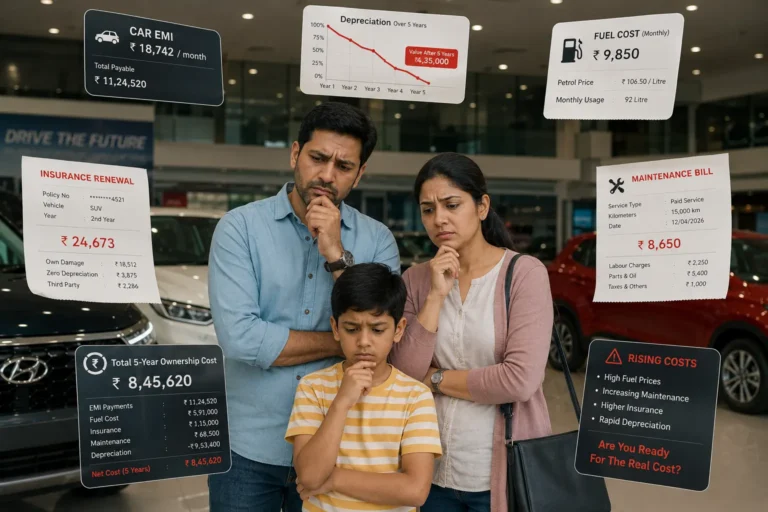
In reality, fuel is only one part of true cost of car ownership. Insurance, maintenance, depreciation, and loan interest often cost more over time than buyers expect.
Frequently Asked Questions (FAQ)
Q1. Is ARAI mileage accurate?
It is accurate for a laboratory setting, but it does not account for the variables of real-world Indian roads, such as heat, traffic, and driver behavior.
Q2. Why is real mileage lower than company claims?
Mainly because companies test with the AC off, no traffic, and at constant speeds in a wind-free environment.
Q3. Which car gives the closest real mileage to ARAI?
Strong Hybrids and Diesel cars usually stay closer to their claims compared to small naturally aspirated petrol engines, which struggle more under heavy load.
Q4. How is mileage tested in India?
It is tested on a chassis dynamometer using the Modified Indian Driving Cycle (MIDC), which simulates both city and highway driving patterns in a lab.
Q5. Can driving style improve mileage?
Absolutely. Smooth acceleration, keeping the RPM low, and avoiding excessive idling can improve your mileage by up to 15–20%.
What Smart Car Buyers Should Actually Focus On
Next time you see a staggering mileage claim, don’t roll your eyes—just do the math. Understand that the lab test is the “best-case scenario.” By adjusting your expectations and your driving style, you can bridge the gap between the lab and the road, keeping both your car and your wallet happy.
The Real Lesson
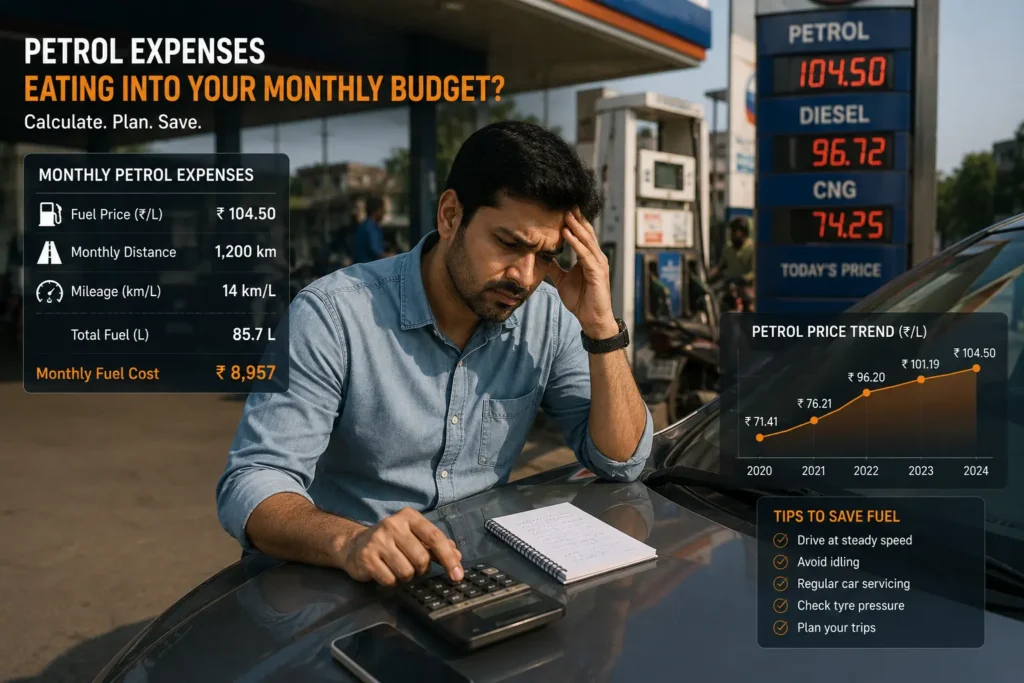
Stop chasing the sticker number. Focus on your fuel cost per month. You can also use our fuel cost calculator to estimate your real monthly petrol or diesel spending based on your mileage and driving habits. If you’re spending ₹5,000 on petrol, a 2 km/l improvement in driving habit saves you ₹500. That’s a few free coffees every month just for being gentle with the pedal!
Disclaimer: Mileage figures mentioned in this article are estimated averages based on Indian driving conditions. Actual fuel efficiency may vary depending on traffic, driving habits, terrain, vehicle condition, fuel quality, and weather.
🔗 Helpful Resources
- Reserve Bank of India – Understand lending regulations, repo rate trends, and banking guidelines in India. (Reserve Bank of India Official Website)
- TransUnion CIBIL – Check your credit score, monitor your credit profile, and learn how CIBIL impacts loan eligibility. (TransUnion CIBIL Official Website (CIBIL)
- State Bank of India – Explore SBI car loan interest rates, EMI calculators, and eligibility criteria.
(SBI Auto Loans) - HDFC Bank – Compare financing options for new and used cars, including flexible repayment plans.
(HDFC Bank Car Loans) - ICICI Bank – Learn about vehicle finance plans, down payment requirements, and online EMI tools.
(ICICI Bank Vehicle Finance)