
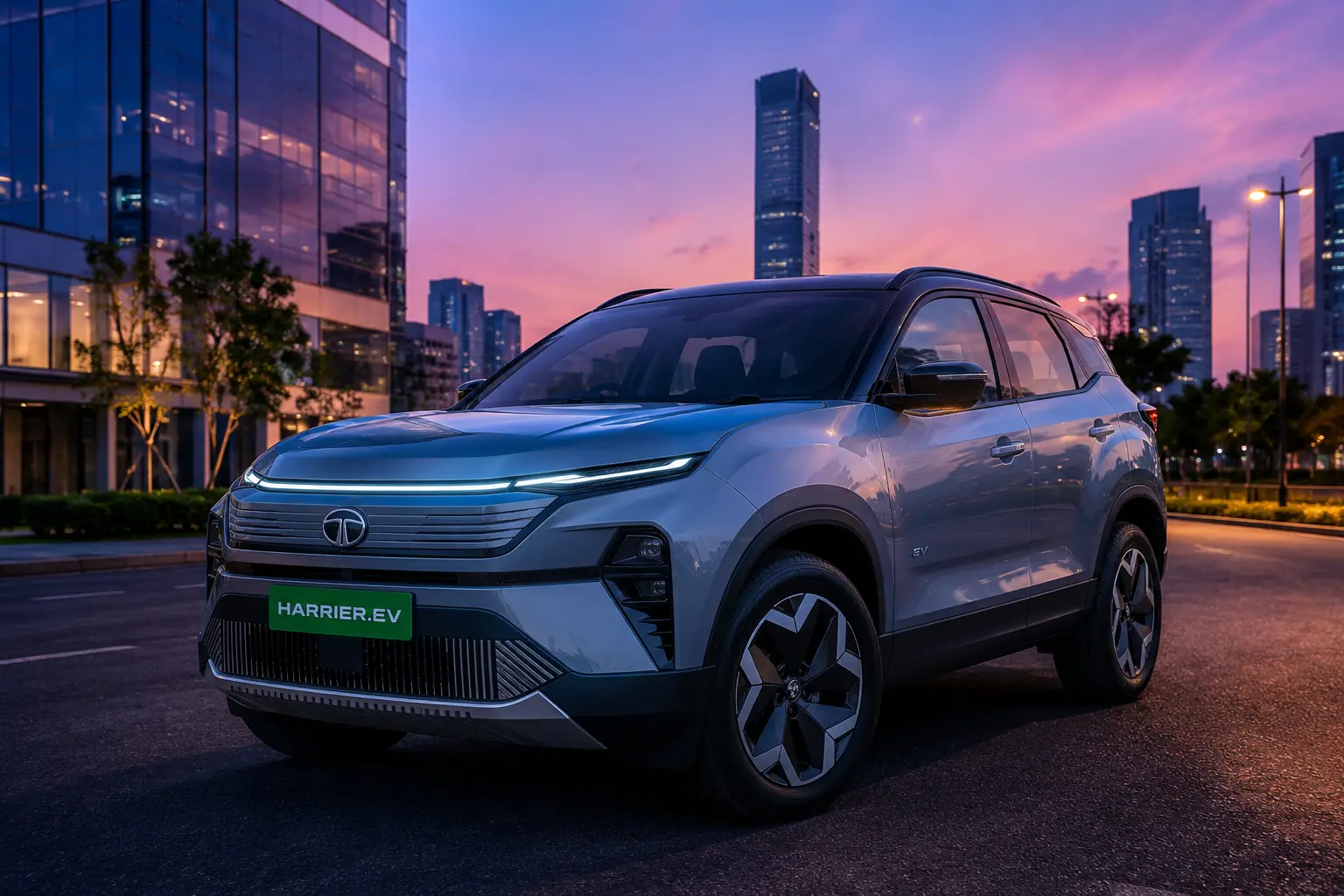

Tata Harrier EV Quick Overview
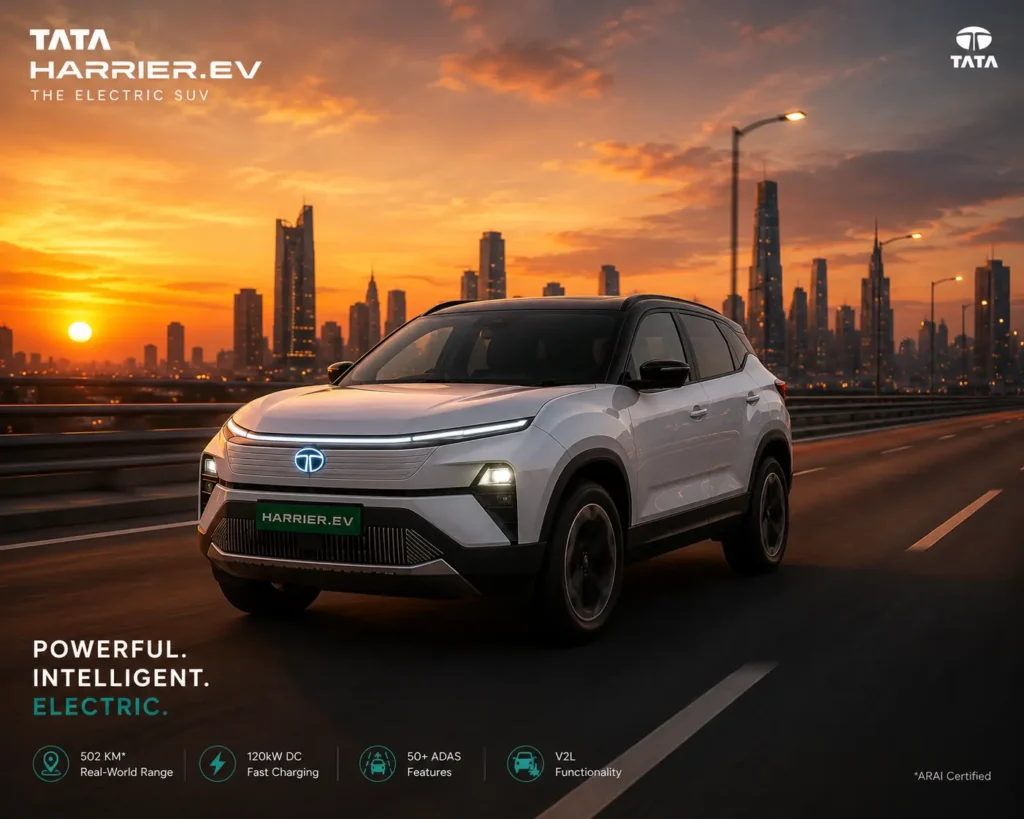
The 2026 Tata Harrier EV is a premium mid-size electric SUV priced between ₹21.49 Lakh and ₹30.23 Lakh (ex-showroom). Built on the advanced acti.ev platform, it offers 65 kWh and 75 kWh battery options, delivering a real-world city range of 410 km to 505 km. Featuring an available high-performance dual-motor All-Wheel Drive (AWD) configuration, it blends genuine off-road capability with a spacious, high-tech interior.
Tata Harrier EV Price Guide 2026: Real-World Range, Interior, Running Cost & Is It Worth Buying?
For years, Tata Motors dominated the Indian electric passenger car space using converted, front-wheel-drive internal combustion platforms. While highly efficient for city hatchbacks and compact crossovers, premium buyers demanded a purpose-built electric SUV capable of true highway touring and all-weather traction.
The Tata Harrier EV addresses this demand. It represents Tata’s premier electric vehicle option, migrating the bold, muscular stance of the standard Harrier onto the dedicated acti.ev skateboard architecture. In 2026, it offers high-mileage families a combination of real off-road capability, an expensive interior layout, and exceptionally low running costs.
Why the Tata Harrier EV Is the New Flagship Standard
The transition to a dedicated electric skateboard architecture changes the driving characteristics of a mid-size SUV fundamentally.
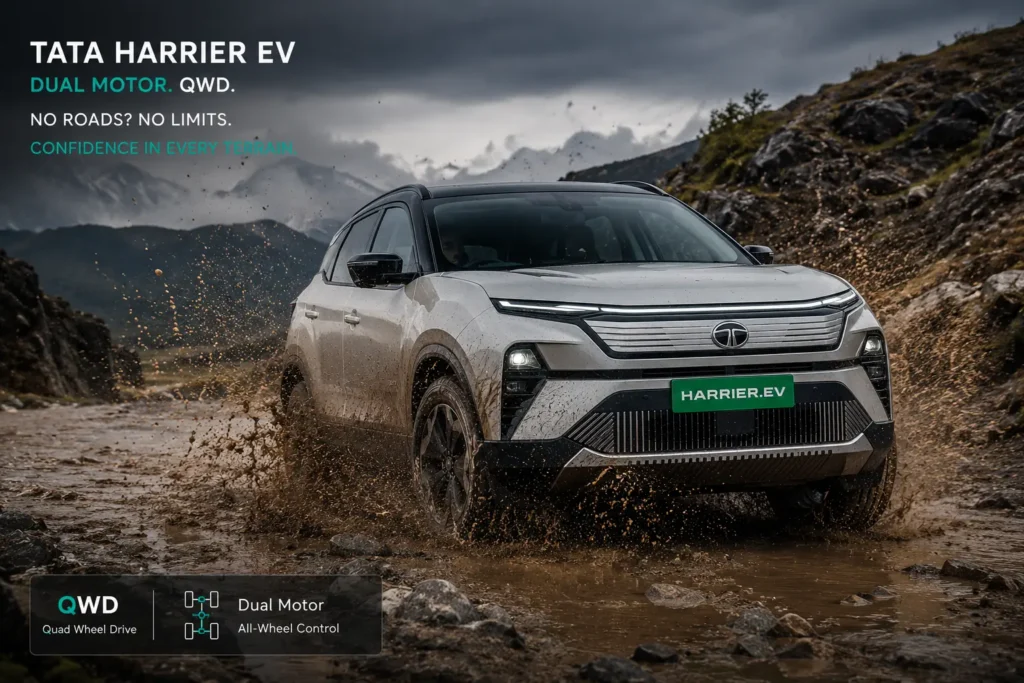
First Modern Tata AWD: By placing an independent electric motor on each axle, the top trims introduce Quad Wheel Drive (QWD)—Tata’s branding for its electronic All-Wheel Drive setup. This delivers excellent traction over challenging surfaces.
Insulation From Fuel Costs: Large diesel or petrol SUVs frequently see low single-digit efficiency in dense urban gridlock. The Harrier EV delivers a refined, quiet commuter experience while cutting running costs dramatically.
Lifestyle Capabilities: Equipped with standard Vehicle-to-Load (V2L) and Vehicle-to-Vehicle (V2V) charging pipelines, the car can power standard camping appliances or emergency-charge another stranded electric vehicle directly from its charging port.

Tata Harrier EV Price List & Variants (2026)
The portfolio is structured across specialized feature packages and two high-capacity Lithium-Iron-Phosphate (LFP) cell configurations: 65 kWh and 75 kWh.
| Variant Name | Battery Pack | Drivetrain Layout | Ex-Showroom Price | Primary Variant Focus |
| Adventure 65 | 65 kWh | Rear-Wheel Drive | ₹21.49 Lakh | Entry Premium / Urban Commuters |
| Adventure S 65 | 651 kWh | Rear-Wheel Drive | ₹21.99 Lakh | Core Functionality + Sunroof |
| Fearless Plus 65 | 65 kWh | Rear-Wheel Drive | ₹23.99 Lakh | Tech-Conscious City Families |
| Fearless Plus 75 | 75 kWh | Rear-Wheel Drive | ₹24.99 Lakh | Extended Range Sweet Spot |
| Fearless Plus QWD 75 | 75 kWh | All-Wheel Drive | ₹26.49 Lakh | Value AWD / Off-Road Enthusiasts |
| Empowered 75 | 75 kWh | Rear-Wheel Drive | ₹27.49 Lakh | Luxury Features / Chauffeur Focus |
| Empowered QWD 75 | 75 kWh | All-Wheel Drive | ₹28.99 Lakh | Top-Tier Performance & Capability |
| Empowered QWD Stealth | 75 kWh | All-Wheel Drive | ₹29.74 Lakh | Dark Aesthetics / Lifestyle Statement |
Note: Trims appended with “ACFC” come bundled with an upgraded 11.2 kW AC home fast charger instead of the standard 7.2 kW unit for a premium of roughly ₹49,000.
Interior Architecture, Technology & Space
The interior of the Harrier EV is easily the most premium cabin Tata has engineered to date. It balances soft-touch materials with a clean layout.
1. The Digital Workspace
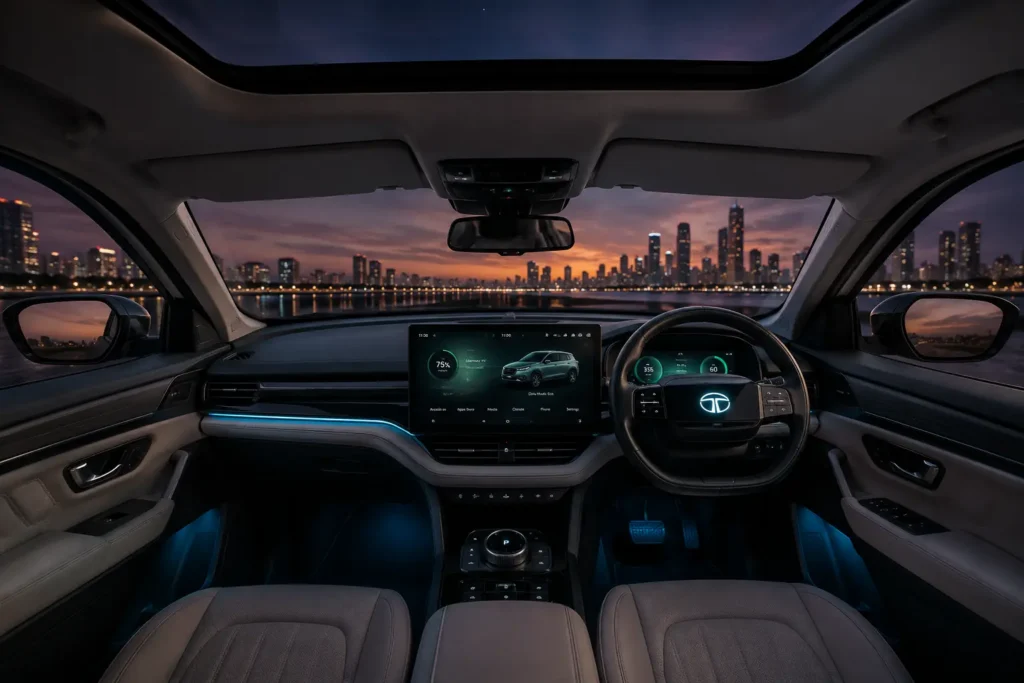
The dashboard is dominated by a massive 14.5-inch touchscreen infotainment display sourced from Samsung, featuring crisp graphics and wireless Apple CarPlay and Android Auto. This is paired with a 12.25-inch fully digital driver’s instrument console that can display full-screen navigation maps. The steering wheel features a glowing Tata logo, and the traditional gear lever is replaced by a jeweled rotary drive selector.
2. Cabin Comfort & Material Trim
On the mid to upper-spec trims, the interior gets rich leatherette wrapping across the door pads and dashboard mid-section. The front seats are widely bolstered, offering ventilation and memory settings.
The top-end Stealth edition updates the entire cabin to an all-black theme with subtle contrast stitching. A large panoramic sunroof floods the interior with natural light, and the JBL Black sound system provides deep audio performance.
3. Rear Seat Legroom & Cargo Packaging

Because the skateboard platform removes the traditional transmission tunnel hump, the rear floor is completely flat. Three adults can sit abreast across the rear bench comfortably. Legroom and headroom are excellent.
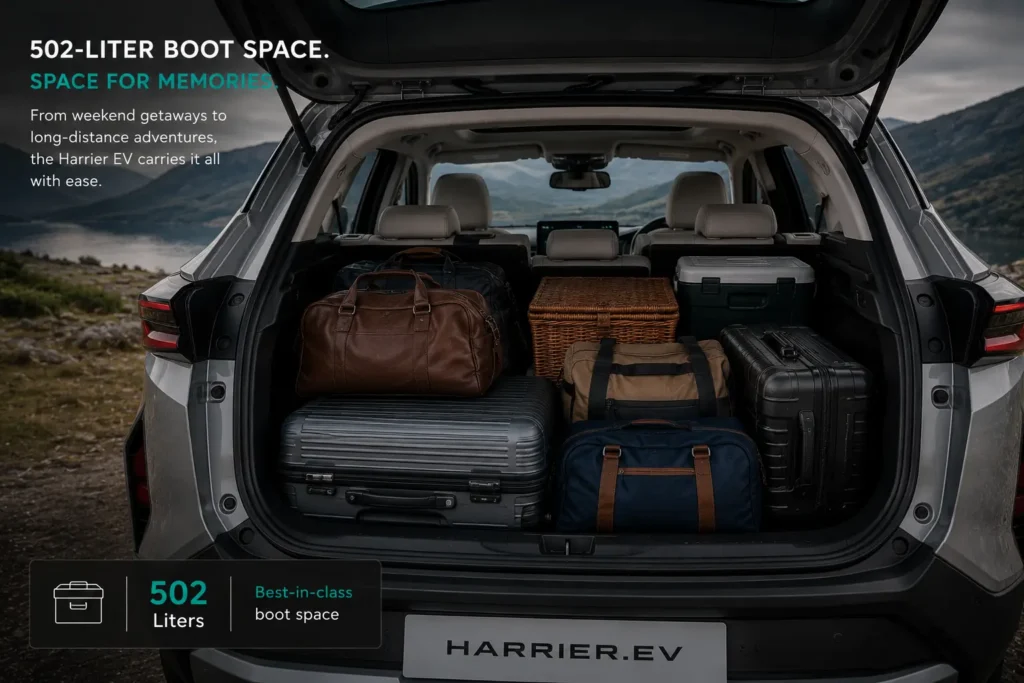
The rear seats also feature comfortable window sunshades and dedicated Type-C charging ports. The boot volume measures a cavernous 502 liters, which can easily handle a family’s vacation suitcases.
Real-World Range & Charging Experience
Laboratory estimates provide a useful benchmark, but real-world range is determined by traffic, speed, and climate.
Real Urban Range Expectations
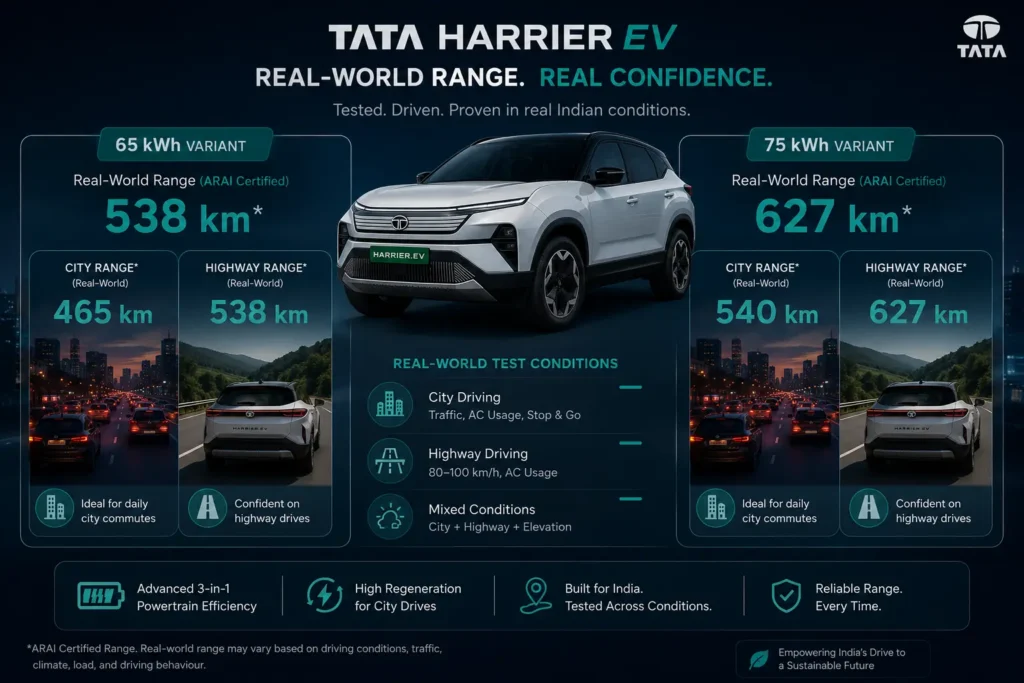
The 65 kWh Battery (RWD): Delivers a realistic city range of 410 km to 425 km on a full charge.
The 75 kWh Battery (RWD): Delivers a dependable city range of 490 km to 505 km.
The 75 kWh Battery (QWD / AWD): Due to the weight of the dual motors, the real-world range settles closer to 460 km to 475 km.
The car features 4 levels of regenerative braking. In dense traffic, Level 3 regeneration handles a large portion of daily deceleration while sending energy smoothly back into the battery cells. However, maintaining high highway cruising speeds past 100 km/h pushes wind resistance higher and drops the 75 kWh pack’s range to around 380 km. Running the dual-zone AC in hot summers drops overall system range by roughly 12%.
The Charging Infrastructure Setup
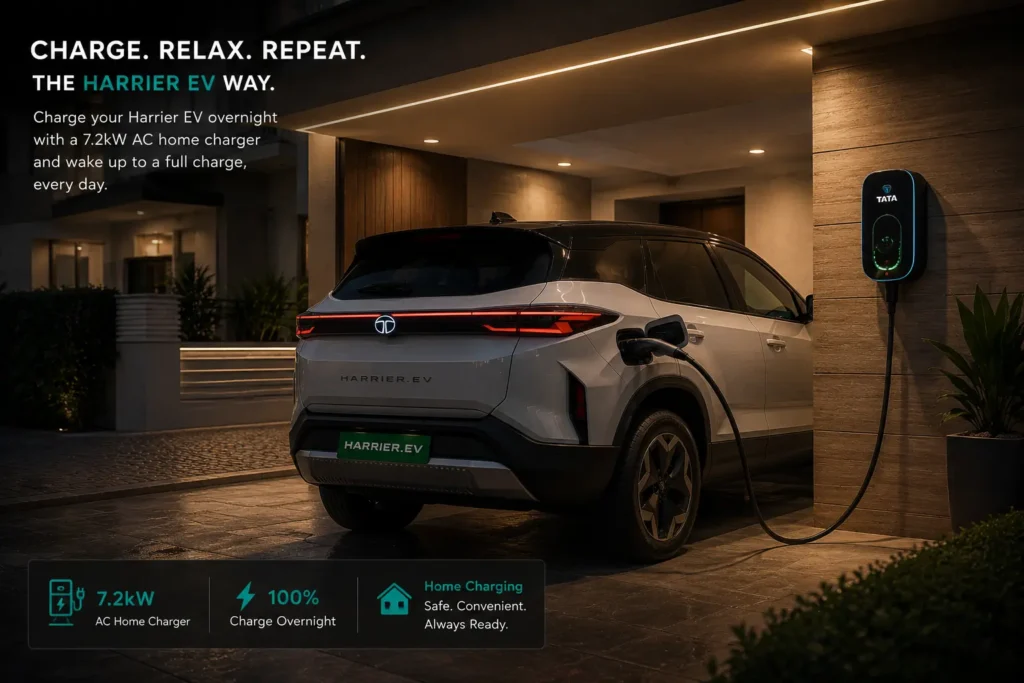
7.2 kW AC Home Wall Box: Completely charges the 75 kWh pack overnight in approximately 10.7 hours.
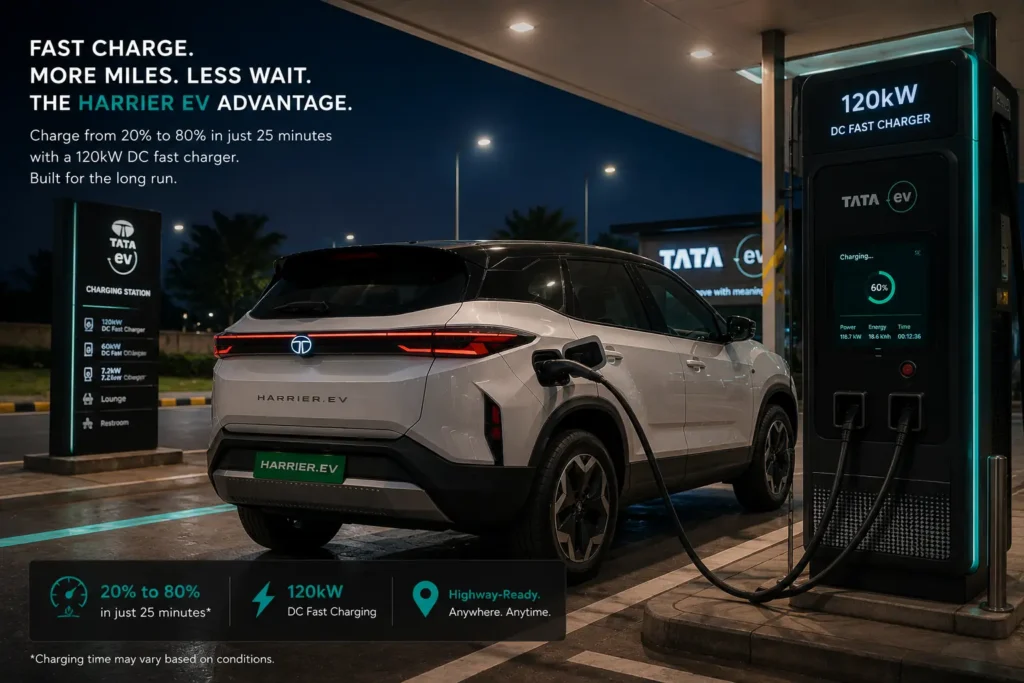
Commercial DC Fast Chargers: Hooked up to a 120 kW public fast charger, the battery can replenish from 20% to 80% in 25 minutes, or add roughly 250 km of range with a quick 15-minute top-up.
Tata Harrier EV Technical Specifications Table
| Technical Parameter | 65 kWh Battery Variant | 75 kWh Battery Variant (QWD) |
| Motor Layout | Single Motor (Rear-Wheel Drive) | Dual Motors (All-Wheel Drive) |
| Peak Power Output | 235 bhp | 390 bhp (Combined) |
| Peak Torque Output | 315 Nm | 504 Nm (Combined) |
| ARAI Claimed Range | 538 km | 622 km |
| C75 Real-World Range | ~410 – 425 km | ~460 – 475 km |
| Acceleration (0-100 km/h) | ~8.2 Seconds | 6.3 Seconds |
| Ground Clearance (Unladen) | 205 mm | 205 mm |
| Turning Circle Radius | 5.75 Meters | 5.75 Meters |
| Tyre & Wheel Size | 245/55 R19 Radial Tubeless | 245/55 R19 Radial Tubeless |
Harrier EV Running Cost vs Diesel SUVs
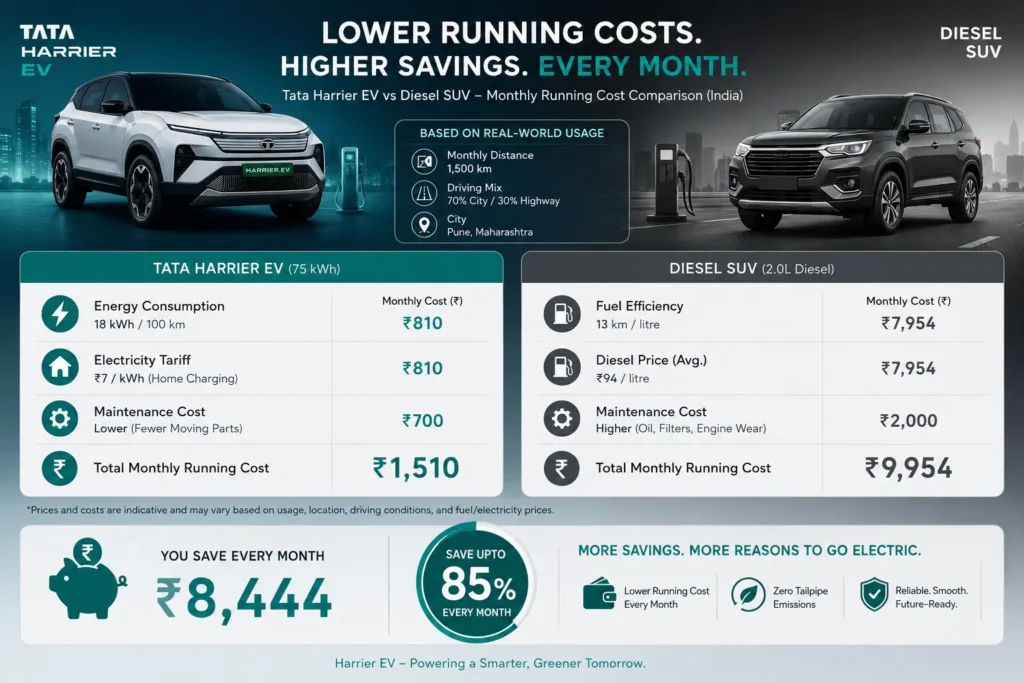
Let’s calculate the operational math for a typical mid-size SUV owner covering 1,200 km per month over a 5-year ownership period.
Scenario A: The Harrier EV (75 kWh Pack via Home Charging)
Average domestic power tariff: ₹8 per unit (kWh).
Fully topping up the 75 kWh battery uses roughly 80 units (including minor charging drops), costing ₹640.
Covering 1,200 km requires roughly 2.5 full charging cycles.
Monthly Power Bill: ~₹1,600 (Approx. ₹1.33 per km).
Scenario B: Conventional Mid-Size Diesel SUV (Automatic)
Average cost of diesel: ₹90 per liter.
Real-world urban fuel efficiency in city gridlock: 11 km/l.
Fuel needed for 1,200 km: 109 Liters.
Monthly Fuel Bill: ₹9,810 (Approx. ₹8.17 per km).
5-Year Cumulative Savings Outlook
[Diesel Mid-Size SUV: ₹9,810/mo]
=======> 5-Year Total: ₹5.88 Lakh
[Harrier EV Charging: ₹1,600/mo]
==> 5-Year Total: ₹0.96 Lakh
-----------------------------------------------------------------------
Net Operational Savings over 5 Years: ₹4.92 Lakh
Maintenance Cost & Long-Term Ownership
By dropping complex mechanical components like turbos, fuel injectors, diesel particulate filters (DPF), and automatic torque converters, long-term maintenance is heavily simplified.
Routine Garage Visits: Scheduled annual services involve basic cabin air filter replacements, suspension lubrication checkups, and diagnostic software scans. Standard bills generally stay between ₹4,500 and ₹6,500.
Battery Durability and Warranty: Tata backs the liquid-cooled, IP67-rated structural battery architecture with a standard 8-year or 1,60,000 km warranty, ensuring long-term peace of mind and protecting its future resale value.
Tata Harrier EV Pros & Cons
Advantages
Imposing Stance: Retains the bold, commanding road presence of the standard Harrier.
Very Low Running Costs: Home electricity keeps your driving expenses under ₹1.40 per km.
True AWD Capability: Dual motors provide strong traction across sand, mud, and wet weather.
Luxurious Cabin Environment: The 14.5-inch screen, flat rear floor, and ventilated seats offer excellent comfort.
Useful V2L / V2V Tech: Can power external equipment or charge another EV in an emergency.
Disadvantages
High Initial Premium: Upfront on-road pricing demands a noticeable budget over standard versions.
Highway Driving Pauses: Long journeys require planning your route around working public DC fast chargers.
Firm Ride at Low Speeds: The large 19-inch alloy wheels can feel slightly firm over sharp, broken city patches.
Digital-Heavy Layout: Some simple functions are nested inside the touchscreen menus.
Who Should Buy the Tata Harrier EV?

Recommended For:
High-Mileage Luxury Buyers: Commuters covering over 1,000 km monthly who want a premium cabin experience and substantial fuel savings.
All-Weather Tourers: Drivers who frequently travel into mountainous or muddy terrain and require the security of All-Wheel Drive.
Families Upgrading to an EV: Perfect for households looking for a spacious, safe, and highly reliable five-seater family car.
Not Recommended For:
Apartment Dwellers Without Private Power Points: If your residential complex cannot support a dedicated, metered home charging station.
Infrequent, Low-Mileage Drivers: If your car covers less than 500 km a month, the fuel savings won’t easily justify the initial upfront purchase premium.
Compare the Tata Harrier EV Before You Buy
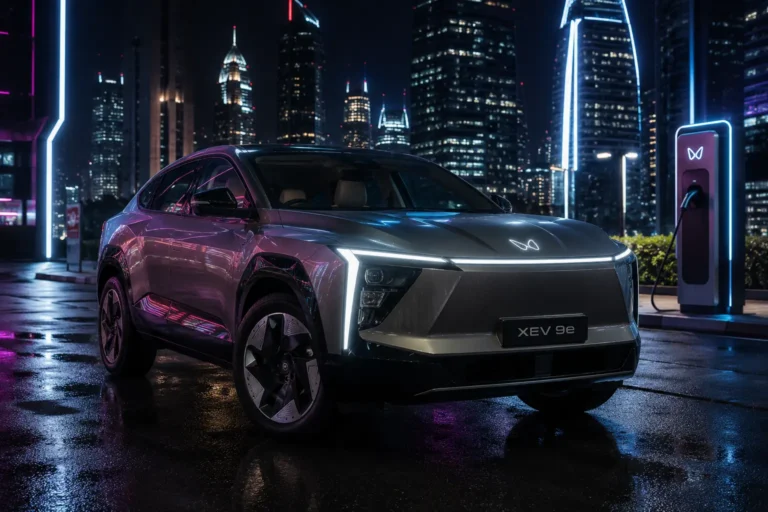
Confused between the Tata Harrier EV, Tata Nexon EV, Mahindra XUV 9e, or BYD Atto 3? Compare real-world range, charging time, running cost, boot space, features, performance, and pricing side-by-side before making your decision.
Compare Electric SUVs →Questions Buyers Commonly Ask about Tata Harrier EV
What is the real on-road price of the Tata Harrier EV?
While ex-showroom figures start at ₹21.49 Lakh, local road taxes, registration fees, insurance, and home charger installation bring final on-road metro prices to between ₹22.8 Lakh and ₹32.4 Lakh depending on the variant and your state.
What is the true real-world range of the Tata Harrier EV 75 kWh?
In normal city traffic with the air conditioning running, you can expect a highly dependable 480 km to 505 km of range on a single charge.
Can the Harrier EV perform true off-roading?
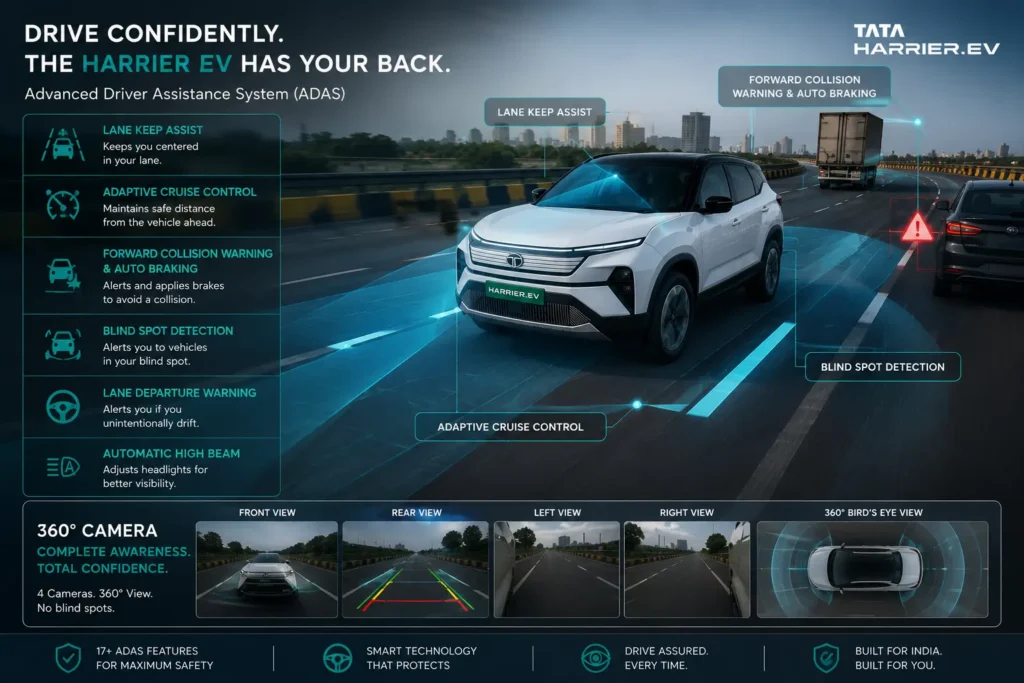
Yes. The dual-motor QWD variants feature specific terrain modes (Sand, Mud, Snow) and a specialized “Transparent Bonnet View” via the 360-degree camera system to help you see the exact terrain beneath the front wheels.
Is the vehicle safe for family travel?
Yes. It comes equipped with 7 standard airbags, advanced Level 2 ADAS radar safety features, electronic stability control, and a structural battery frame engineered for high impact safety.
How long does it take to charge at public stations?
Using a standard public 120 kW DC fast charger, you can juice the battery from 20% to 80% in 25 minutes, making long-distance interstate travel highly practical with planned breaks.
Final Verdict: Is the Tata Harrier EV Worth Buying in 2026?
The Tata Harrier EV is a purpose-built electric SUV that successfully transitions Tata into the premium lifestyle space. By utilizing a dedicated EV architecture rather than converting an old ICE framework, it delivers excellent cabin space, strong battery safety, and impressive high-speed stability.
If you have a dedicated parking space to charge overnight and your daily routine involves a clear cross-city commute or regular weekend travel, it stands out as an excellent option to lower your monthly transportation bills while offering a luxurious driving experience. However, if your family rarely drives or focuses strictly on short local runs, a smaller electric crossover or a standard petrol vehicle might suit you better. Ultimately, let your real-world daily mileage and travel needs guide your final choice.
Helpful Resources for Indian EV Car Buyers
- Bharat NCAP Official Website — India’s official crash-testing and vehicle safety rating platform. Includes adult and child occupant scores, crash-test protocols, and tested vehicle lists.
- Global NCAP – Safer Cars for India — Global crash-test program that pushed Indian manufacturers toward safer vehicle structures and occupant protection standards.
- Reserve Bank of India (RBI) — Official source for repo rates, lending rules, and banking regulations in India. (rbi.org.in)
- TransUnion CIBIL — Check your credit score and track your loan eligibility before applying for a car loan.
- SBI Car Loans — View latest interest rates, eligibility criteria, and loan offers from State Bank of India.
- HDFC Bank Car Loans — Explore car loan options, EMIs, and financing plans from HDFC Bank.
- ICICI Bank Car Loans — Compare new and used car loan offers along with repayment options.
- Policybazaar Car Insurance — Compare insurance plans, premiums, and add-on coverage options in one place.
- Acko Car Insurance — Get quick online quotes and renewal estimates for car insurance.
- AutomotiveZone Mileage Cost Calculator — Estimate real fuel costs based on your driving mileage.
- AutomotiveZone Monthly Car Expense Calculator — Calculate total monthly car ownership cost including EMI, fuel, and maintenance.
- AutomotiveZone Fuel Cost Calculator — Instantly estimate petrol, diesel, or CNG expenses based on mileage, fuel price, and trip distance.
- AutomotiveZone EV vs Petrol Cost Calculator — Compare electric vehicle charging costs with petrol fuel expenses to see long-term savings.
- AutomotiveZone EV Charging Cost Calculator — Calculate home and fast-charging electricity costs for your EV using battery size and electricity tariff.
- AutomotiveZone Car Resale Value Estimator — Estimate your car’s current market resale value based on age, mileage, ownership, and condition.
Disclaimer: Prices, mileage, safety ratings, loan rates, and ownership costs are approximate and may vary by location, variant, and market conditions in 2026. Some visuals may be AI-generated for illustration. Please verify final details with authorized dealers before purchase.
Calculate Tata Harrier EV Charging Cost
Want to know how much the Tata Harrier EV really costs to charge every month? Estimate home charging expenses, electricity cost per kilometer, and real-world EV savings based on your driving usage and local electricity tariff.
Compare the Harrier EV’s charging cost against diesel SUVs and discover how much you can save annually on daily driving and long-distance travel.
Calculate Harrier EV Charging Cost →