
2026 City Commuter’s Dilemma: EV or Petrol?
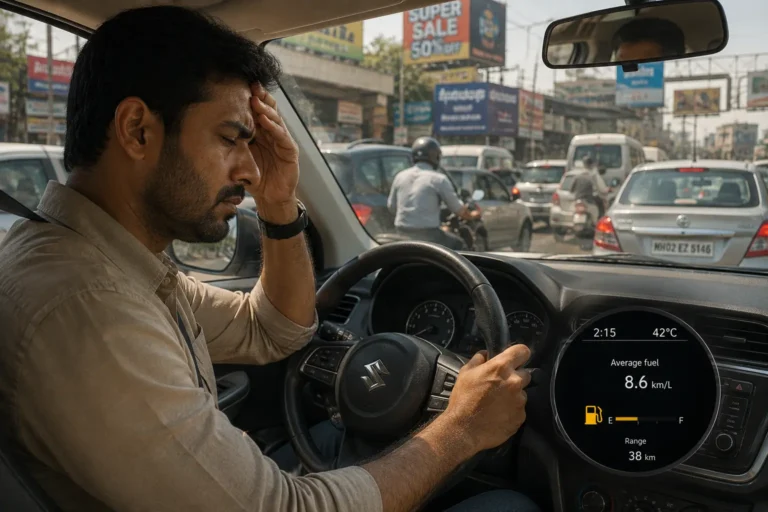
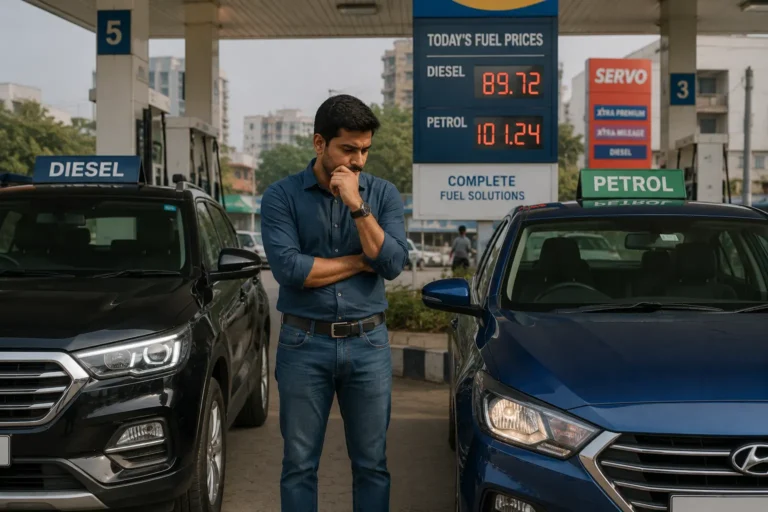
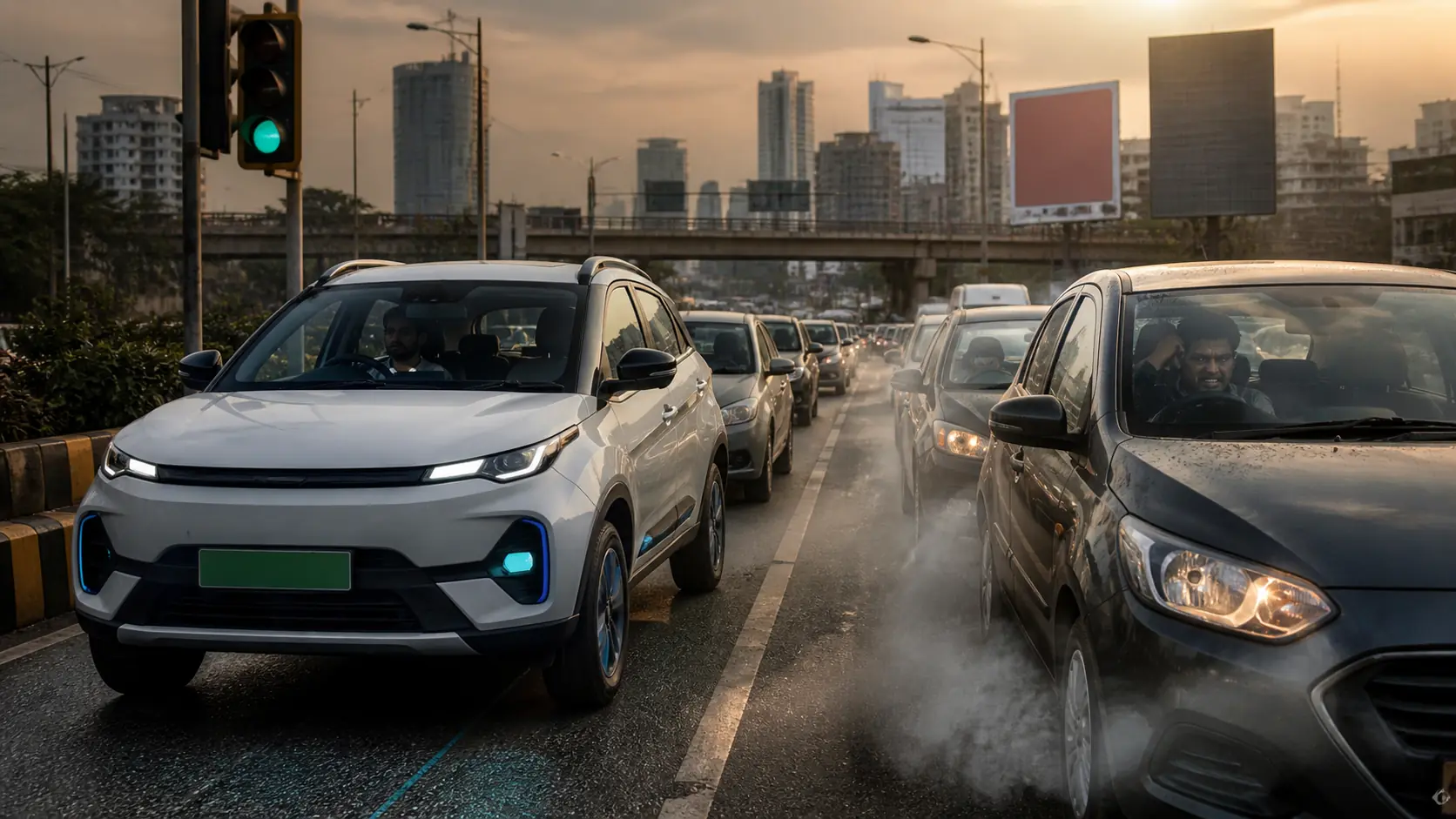
You’re sitting in bumper-to-bumper traffic. The AC is humming, and you’re watching the fuel needle on your dashboard slowly dip while petrol prices hover stubbornly above ₹110. In the lane next to you, a Tata Nexon.ev glides ahead in total silence, no tailpipe smoke, and seemingly no stress.
By 2026, the question isn’t just about “going green”—it’s about your wallet. Choosing a car today is a math problem mixed with a lifestyle choice. If your daily life involves a 30-to-50 km crawl through city arteries like Mumbai, Delhi, or Bangalore, the “EV vs Petrol” debate is likely the biggest financial decision you’ll face this year.
⚡ Key Takeaways for 2026
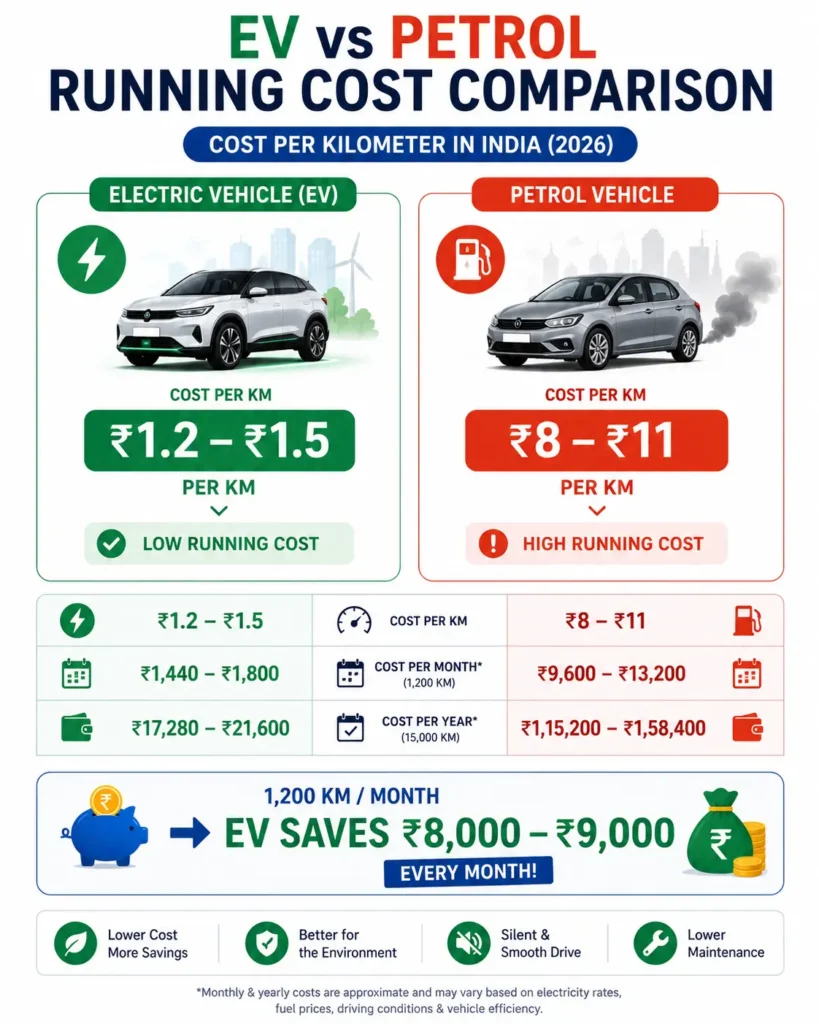
- The Savings King: EVs cost ₹1.2–₹1.5 per km, while petrol cars cost ₹8.5–₹11 per km.
- The Magic Number: The financial break-even point now happens at approximately 35,000 to 40,000 km.
- Hidden Reality: EVs save on fuel but cost more in tyres and insurance.
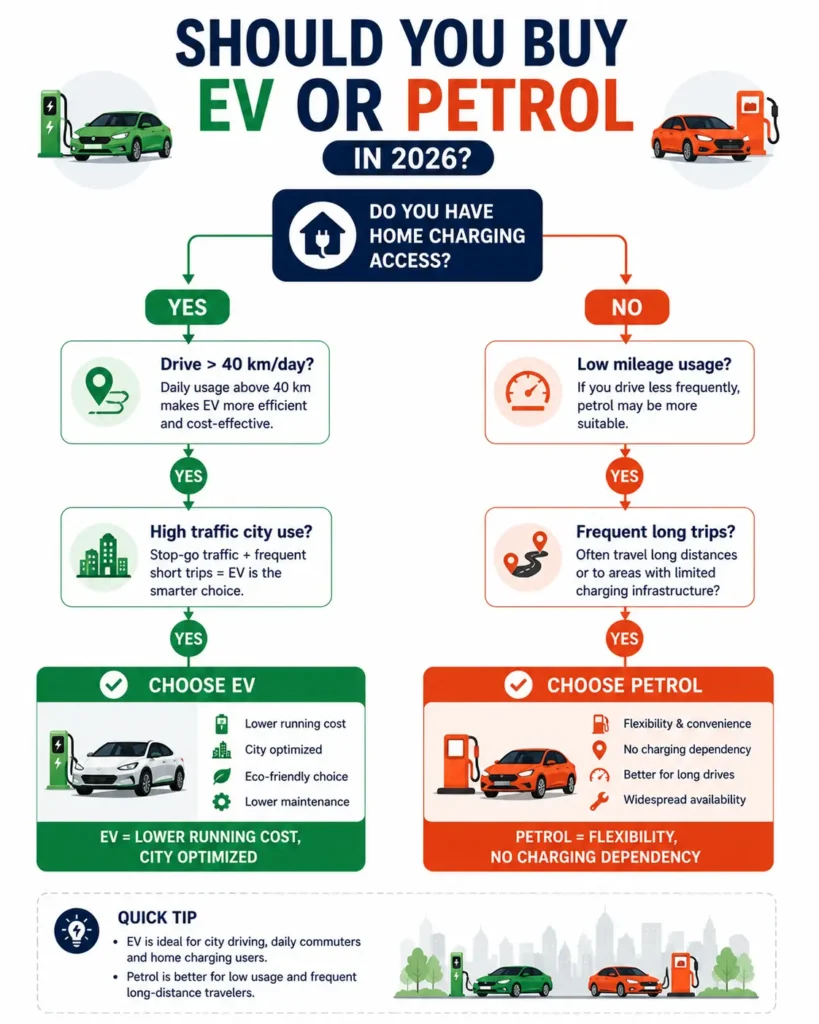
- The Verdict: High-mileage city drivers with home charging should go Electric; low-mileage drivers without plug access should stick to Petrol.
1. EV vs Petrol: The 2026 Core Comparison
In 2026, the Indian market is no longer in its “early adopter” phase. Giants like Tata Motors, MG Motor India, and Maruti Suzuki have flooded the streets with reliable options. But how do they stack up in the gritty reality of city traffic?
Performance in Stop-and-Go Traffic
A petrol engine is at its most inefficient when idling. Every minute you spend at a red light, you are burning money. In contrast, EVs like the MG ZS EV or the Tata Tiago.ev use almost zero energy when stationary.
Entity Spotlight: Why 2026 is Different
- Tata Motors: With the Nexon.ev and Punch.ev, they have mastered the “city-sized” SUV.
- MG Motor India: The Comet EV and Windsor EV have redefined what a compact urban runabout looks like.
- Maruti Suzuki: The launch of the eVX has finally brought the reliability and service network of Maruti into the electric era.
Refueling vs. Charging Convenience
Petrol still wins on pure speed (5 minutes at a pump). However, EV owners with a home charger—like the 7.2kW AC units provided by MG or Tata—experience “smartphone-like” convenience. You wake up every morning with a full battery, completely bypassing the petrol station queue.
2. The Break-Even Point: When Does an EV Become Cheaper?
The EV break-even point in 2026 is approximately 35,000–40,000 km of driving. Because EVs carry a “Green Premium” (higher upfront cost), you need to know exactly when your fuel savings will pay back that difference.
Before making a final decision, it’s also important to understand how financing costs impact your overall ownership budget. Smart buyers often reduce interest burden using strategies explained in tips to get the lowest car loan, which can significantly improve long-term affordability.
The Math of the Threshold
In 2026, the average price gap between a petrol car and its EV counterpart (e.g., a top-end petrol SUV vs. a Tata Nexon.ev) is roughly ₹3,50,000 to ₹4,00,000.
- Average Savings per KM: ₹7.50 (Petrol @ ₹9/km vs EV @ ₹1.5/km).
- Break-Even Calculation: ₹3,75,000 (Price Gap) ÷ ₹7.50 (Savings) = 50,000 km.
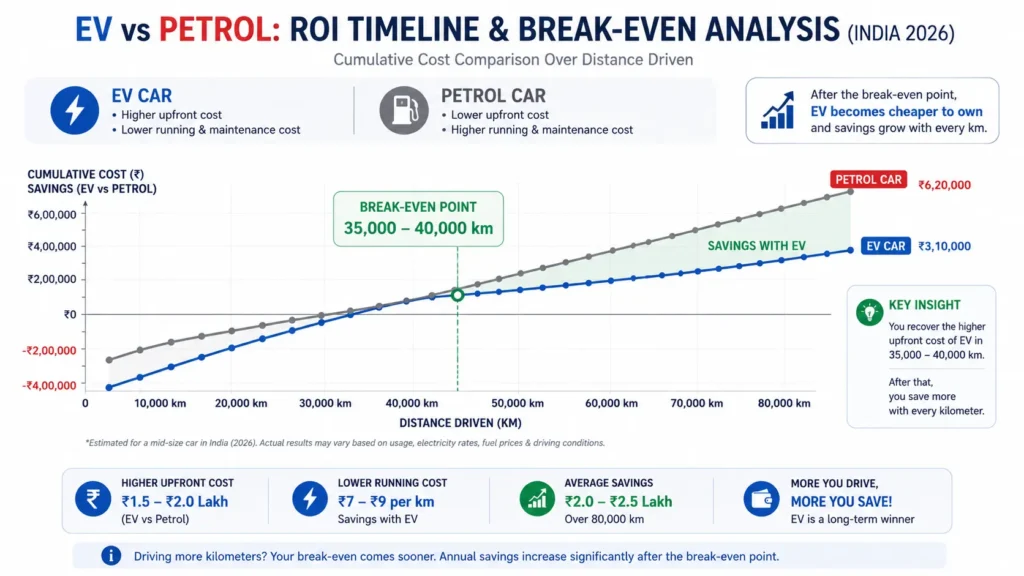
However, when you factor in the lower maintenance costs and government subsidies (state-specific road tax waivers), that magic number drops to 35,000–40,000 km.
The Mileage Rule of Thumb
- Under 800 km/month: It may take you 6+ years to break even. Petrol or a Maruti Suzuki hybrid is much more logical here.
- Over 1,200 km/month: You will hit the break-even point in less than 3 years. From Year 4 onwards, you are effectively “earning” ₹10,000 every month in fuel savings.
3. EV vs Petrol: Hidden Costs Nobody Talks About
Everyone talks about fuel savings, but to make an informed decision, you need to look at the hidden costs that impact long-term ownership.
- The “Torque Tax” on Tyres: EVs are heavier due to battery packs and deliver 100% of their torque instantly. This is great for overtakes, but it means EV tyres wear out about 15–20% faster than petrol car tyres.
- Insurance Differences in 2026: Because EVs have a higher starting price (IDV) and specialized battery packs, comprehensive insurance premiums are generally 15–25% higher than their petrol equivalents.
- Battery Replacement Psychology: It’s rare for a modern battery to fail completely. However, the fear of battery degradation affects the used car market. As an EV approaches the end of its 8-year warranty, buyers become hesitant, which can steepen depreciation.
- Resale Timing Strategy:
- For EVs: The smart move is to sell around Year 5 or 6, while the battery still has solid warranty coverage left, guaranteeing a higher resale value.
- For Petrol: Sell before the 10-year mark (crucial in places like Delhi/NCR) or right before a major milestone service (like 80,000 km) to avoid hefty maintenance bills.
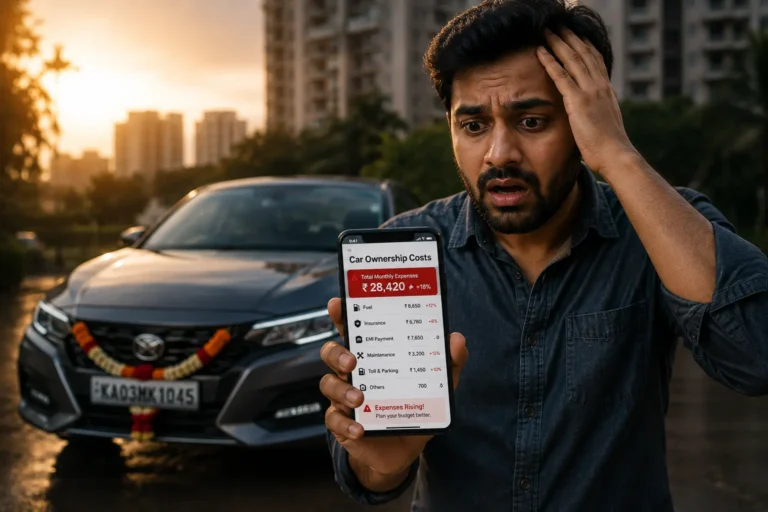
- These hidden ownership expenses become even more important when you compare them with the full financial picture of a car, not just EMI or fuel savings. You can understand the complete breakdown in cost of car ownership in India beyond EMI, which explains real monthly cost pressure for Indian buyers.
4. 5-Year Total Cost Comparison (Real-World Estimate)
To help you visualize the long-term impact, here is a comparison between a standard mid-segment petrol car and a mid-range EV over 5 years and 60,000 km.
| Cost Component | Petrol Car (Mid-SUV) | Electric Vehicle (EV) |
| Purchase Price (On-Road) | ₹13,50,000 | ₹17,50,000 |
| Fuel / Electricity (5 Yrs) | ₹5,40,000 | ₹84,000 |
| Maintenance & Service | ₹65,000 | ₹18,000 |
| Insurance (5 Years) | ₹1,10,000 | ₹1,35,000 |
| Estimated Resale (Yr 5) | – ₹7,00,000 | – ₹8,50,000 |
| TOTAL NET COST | ₹13,65,000 | ₹11,37,000 |
| Cost per km (Final Avg) | ₹9.00 / km | ₹1.40 / km |
Cost differences also vary significantly depending on fuel type, driving patterns, and maintenance needs. For a deeper comparison of long-term fuel economics, check diesel vs petrol cars India 2026, which breaks down real-world efficiency and ownership cost differences.
EVs are best for high-mileage urban users with home charging. Petrol remains better for low-mileage or infrastructure-limited users.
The Result: Even with a much higher starting price and slightly higher insurance, the EV saves you approximately ₹2.28 Lakh over five years.
Financing and ownership costs are closely connected, especially when EMI planning affects your monthly budget. You can explore practical ways to optimize loan structure in tips to get the lowest car loan.
5. Final Verdict: Which is Better for Your City?
The “Better” car depends entirely on your usage profile. To make it simple, we’ve broken it down into a decision matrix based on real 2026 data.
EV vs Petrol Decision Matrix (2026)
| User Profile | Best Choice | Why? |
|---|---|---|
| Heavy city commuter (40+ km/day) | EV | Maximum savings, fast break-even |
| Low mileage driver (<20 km/day) | Petrol | EV premium not justified |
| Apartment without charging access | Petrol / Hybrid | Charging dependency issue |
| Tech-forward early adopter | EV | Better driving experience |
| Frequent unpredictable road-tripper | Petrol | No charging constraints |
| Budget-sensitive buyer | Petrol | Lower upfront cost, easier entry point |
6. Who Should NEVER Buy an EV in 2026
While EVs are an excellent choice for many city drivers, they are not suitable for everyone. In 2026, the biggest mistake buyers make is choosing an EV without evaluating their charging access and driving pattern.
1. No Home or Dedicated Charging Access
If you live in an apartment where installing a charger is not allowed or practical, owning an EV becomes inconvenient. Relying only on public charging increases cost and reduces usability.
2. Extremely Low Mileage Users
If you drive less than 400–500 km per month, the fuel savings from an EV will not justify the higher upfront cost. In such cases, a petrol car or hybrid is financially more sensible.
3. Frequent Rural or Long-Distance Travelers
If your driving involves unpredictable long routes or rural areas with weak charging infrastructure, EVs can create planning stress and dependency on charging availability.
EVs are optimized for predictable, city-based commuting with charging access. Without that ecosystem, a petrol or hybrid vehicle remains the more practical choice in 2026.
Frequently Asked Questions About EV vs Petrol in 2026
Is EV better than petrol for city driving in India?
👉 Yes. EVs are better because they cost ₹1.2–₹1.8/km vs ₹8–₹11/km for petrol, and they perform much more efficiently in stop-and-go traffic without idling losses.
What is the real cost difference between EV and petrol cars?
👉 While EVs cost ₹2.5–₹4 Lakh more upfront, the lower fuel and maintenance costs mean you break even after driving about 35,000 to 40,000 km.
Do EVs save money in traffic-heavy cities?
👉 Yes. Petrol engines burn fuel while idling. EVs use almost zero energy when stopped and actually recover battery power via regenerative braking when slowing down.
What are the hidden costs of EVs in city use?
👉 The main hidden costs are faster tyre wear due to instant torque, and insurance premiums that run 15–25% higher than petrol equivalents.
Is charging infrastructure enough in Indian cities in 2026?
👉 Yes. Tier-1 cities now have fast chargers at most malls and offices. However, having a dedicated home charger remains the most practical and cheapest way to own an EV.
Also Read: 5 Tips to Get the Lowest Car Loan Interest Rate in 2026