
Quick Summary for Busy Readers
The 2026 Tata Punch EV is positioned as a highly practical electric vehicle for daily city commuting. With an ex-showroom price starting at ₹9.69 Lakh (or ₹6.49 Lakh under the Battery-as-a-Service model), it offers a realistic urban range of 200 km to 270 km depending on the battery size. It significantly lowers running expenses compared to petrol alternatives, though upfront costs and public charging infrastructure remain key factors for buyers to weigh.
Tata EV Price Guide 2026: Tata Punch EV Price, Running Cost & Is It Worth Buying?
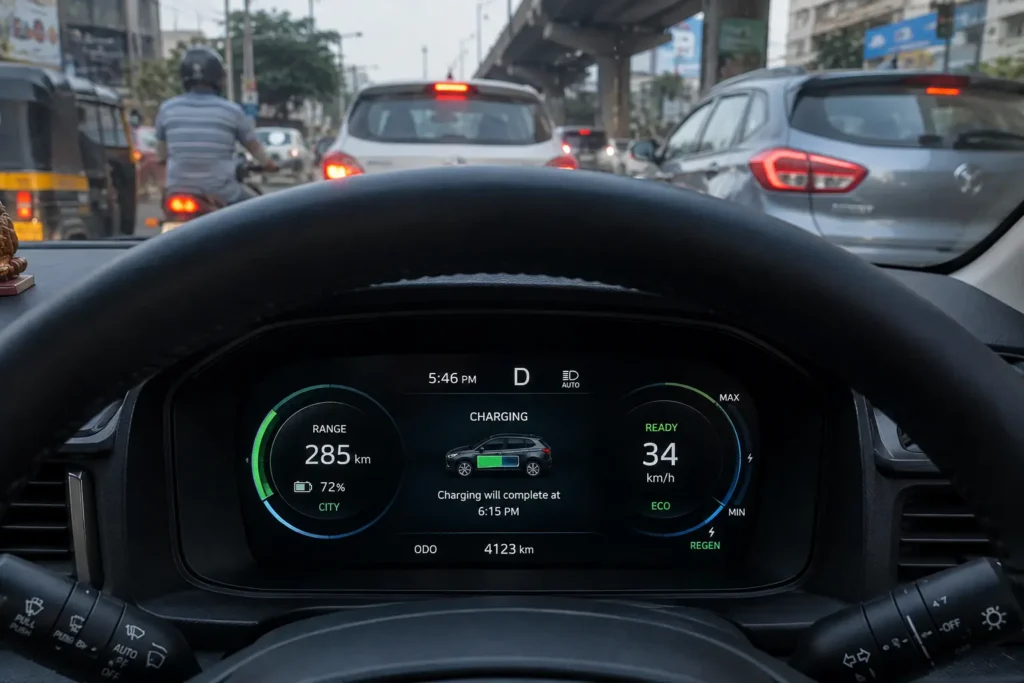
The Tata Punch EV features an entry-level price of ₹9.69 Lakh, maximizing value via two distinct battery options (30 kWh and 40 kWh). It targets middle-class buyers trying to shield themselves from unpredictable petrol prices. While its real-world city range of 200–270 km handles regular commutes effortlessly, cross-country travel requires careful scheduling due to regional highway charging gaps.
Why Tata EVs Are Becoming Popular in India
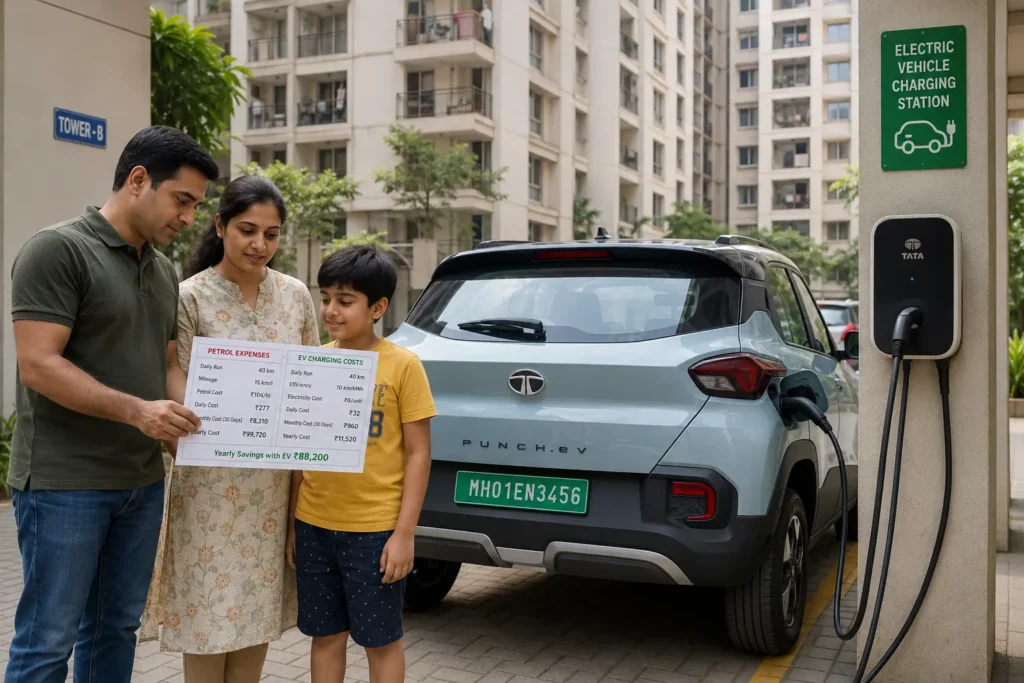
Tata Motors controls a massive share of the Indian electric car passenger market. This dominance is driven by a clear multi-powertrain strategy, converting established, high-safety internal combustion engine (ICE) platforms into electric vehicles.
- Fuel Price Shifts: With city fuel bills scaling past ₹7,000 monthly for average users, a low per-kilometer cost drives the economic push toward battery power.
- Targeted Infrastructure: Tata’s collaboration with power distribution firms has steadily expanded dedicated public charging plazas along main interstate routes.
- Government Fiscal Benefits: Lowered GST rates (5% on EVs versus up to 48% on internal combustion cars) and state-specific road tax waivers make the transaction viable.
Tata EV Price List in India (2026)
The brand’s electric lineup stretches from budget-conscious hatchbacks to long-range options. Below are the standard ex-showroom price configurations across the portfolio:
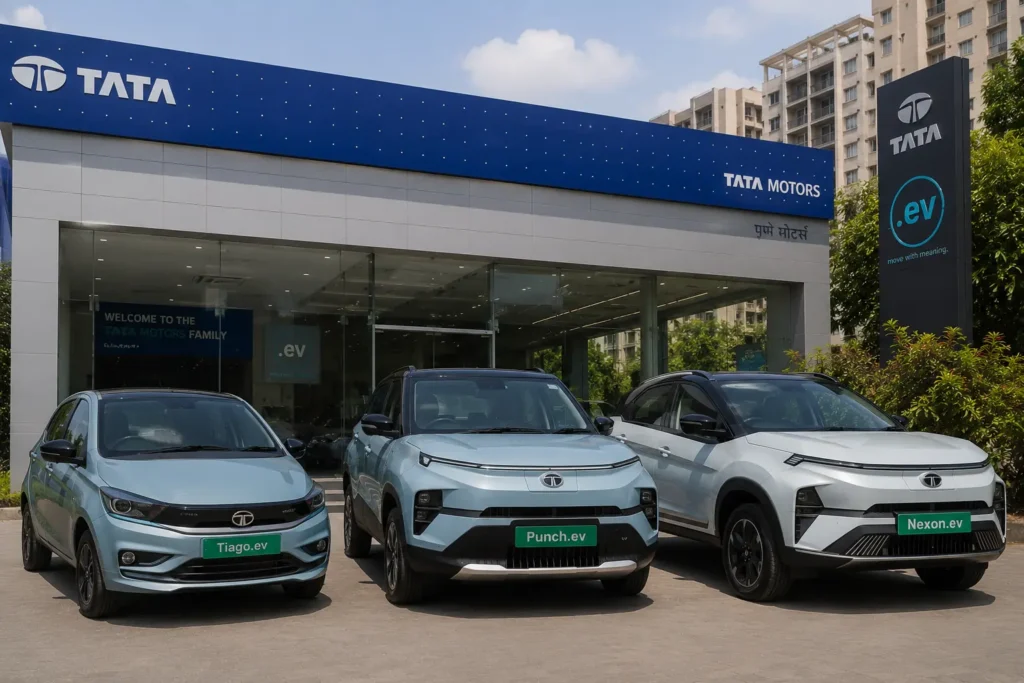
| Model | Variant Range (Ex-Showroom) | Battery Capacities Available | Target Buyer Persona |
| Tata Tiago EV | ₹7.99 Lakh – ₹11.14 Lakh | 19.2 kWh / 24 kWh | Purely City Commuters / First-Time Buyers |
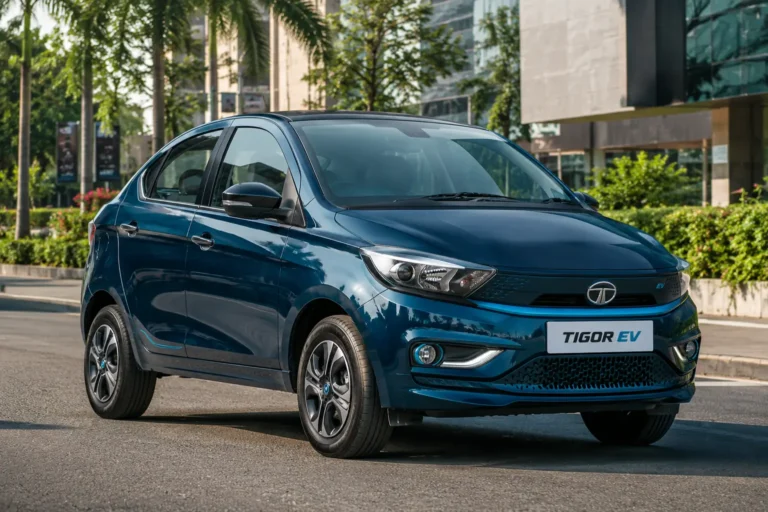
| Tata Tigor EV | ₹12.49 Lakh – ₹13.75 Lakh | 26 kWh | Fleet Operators / Small Families |
| Tata Punch EV | ₹9.69 Lakh – ₹12.59 Lakh | 30 kWh / 40 kWh | Urban SUV Intenders / Tech-Focused Households |
| Tata Nexon EV | ₹12.49 Lakh – ₹17.49 Lakh | 30 kWh / 45 kWh | Highway Tourers / Feature-First Buyers |
| Tata Curvv EV | ₹16.99 Lakh – ₹19.49 Lakh | 45 kWh / 55 kWh | Lifestyle Expresses / Long-Distance Commuters |
Tata Punch EV Price & Variant Breakdown
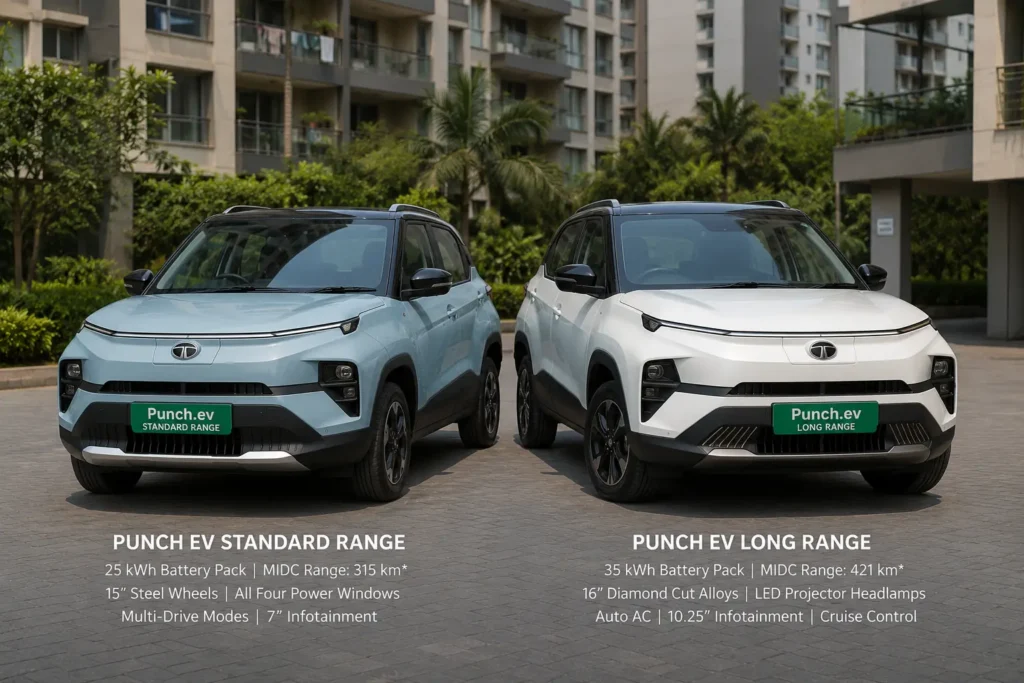
The variant matrix divides cleanly into two battery sub-architectures: the Standard Range (30 kWh) and the Long Range (400 kWh).
1. Smart & Smart Plus (30 kWh Battery)
- Pricing Setup: Starting from ₹9.69 Lakh.
- Core Delivery: Focused on core functionality. Includes 6 standard airbags, Electronic Stability Program (ESP), and LED headlamps.
- Best Suited For: Fleet daily drivers or strictly hyper-local city errands where home charging handles the routine.
2. Adventure & Empowered (Available in 30 kWh & 40 kWh)
- Pricing Setup: Ranging between ₹10.89 Lakh and ₹12.29 Lakh.
- Core Delivery: Balances tech with value. Adds a larger 10.25-inch infotainment deck, regenerative braking adjustments via paddle shifters, and cruise control options.
- Best Suited For: Balanced city-highway driving. The 40 kWh configuration provides extra headroom for spontaneous weekend weekend road trips.
3. Empowered Plus S (40 kWh Battery Flagship)
- Pricing Setup: Topping off at ₹12.59 Lakh.
- Core Delivery: Packs a voice-assisted sunroof, ventilated front leatherette seats, and a 360-degree camera setup.
- Best Suited For: Buyers prioritizing a high-tech cabin environment along with maximum battery range.
The 2026 BaaS (Battery-as-a-Service) Component
Tata also introduces the option to buy the vehicle chassis at an upfront deduction (starting at ₹6.49 Lakh), where the battery pack is rented separately via a structured ₹2.60 per km platform charge. This shifts a portion of the initial financial burden to operational expenses.
Tata Punch EV Specifications Table
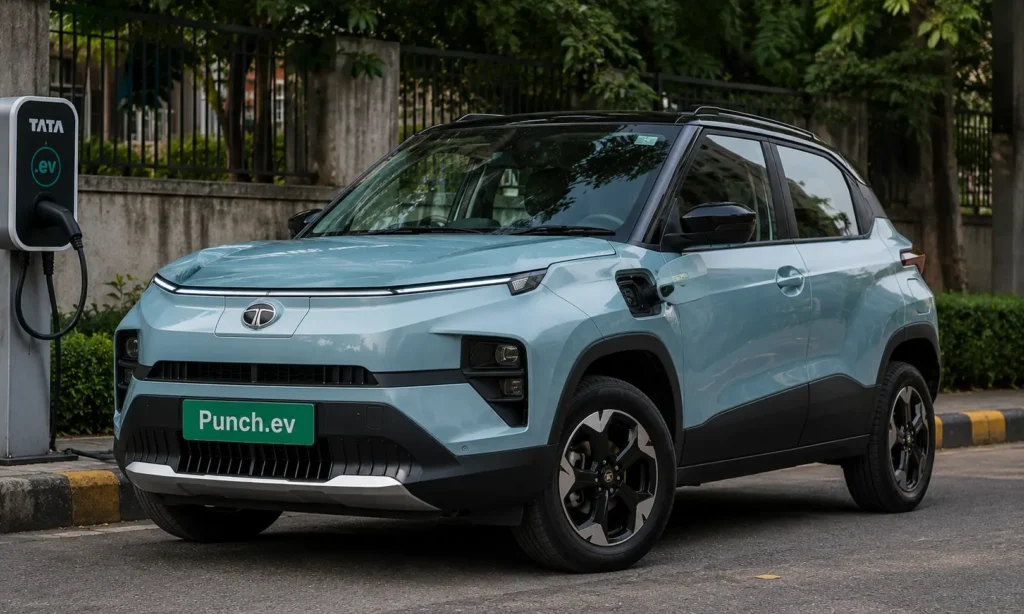
| Specification Parameters | Standard Range Variant | Long Range Variant |
| Battery Pack Size | 30 kWh (Liquid Cooled) | 40 kWh (Liquid Cooled) |
| MIDC Claimed Range | 365 km | 468 km |
| C75 Real-World Range | 210 – 225 km | 290 – 315 km |
| Peak Power Output | 88 bhp | 129 bhp |
| Peak Torque Output | 114 Nm | 154 Nm |
| DC Fast Charging Time | 10% to 80% in 26 minutes | 10% to 80% in 26 minutes |
| Standard AC Charging | 9.4 Hours (15A Point) | 12.1 Hours (15A Point) |
| Boot Space Volume | 366 Liters | 366 Liters |
Real-World Range & Charging Experience
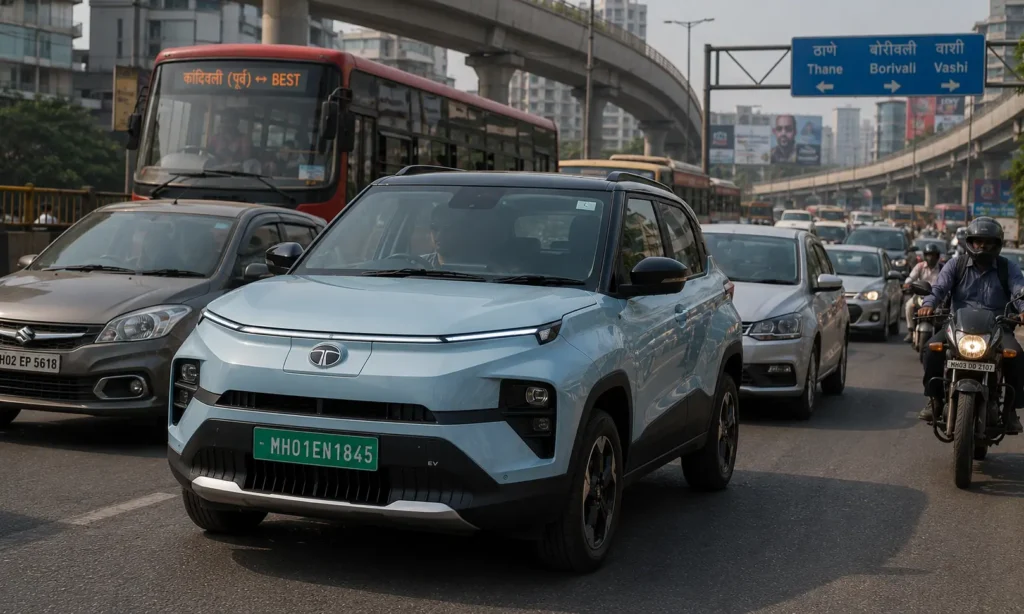
Brochure claims are generated under sterile laboratory environments. The operational parameters drop linearly when exposed to real-world Indian road challenges.
Everyday Traffic Consumption
The Standard Range delivers 215 km inside congested metro loops like Bengaluru or Mumbai. High cabin air-conditioning demands during peak summer months drop efficiency by up to 15%. Unlike ICE vehicles, continuous stop-and-go gridlock works efficiently for EVs due to energy harvesting from active regeneration modes.
The Home Charging Workflow
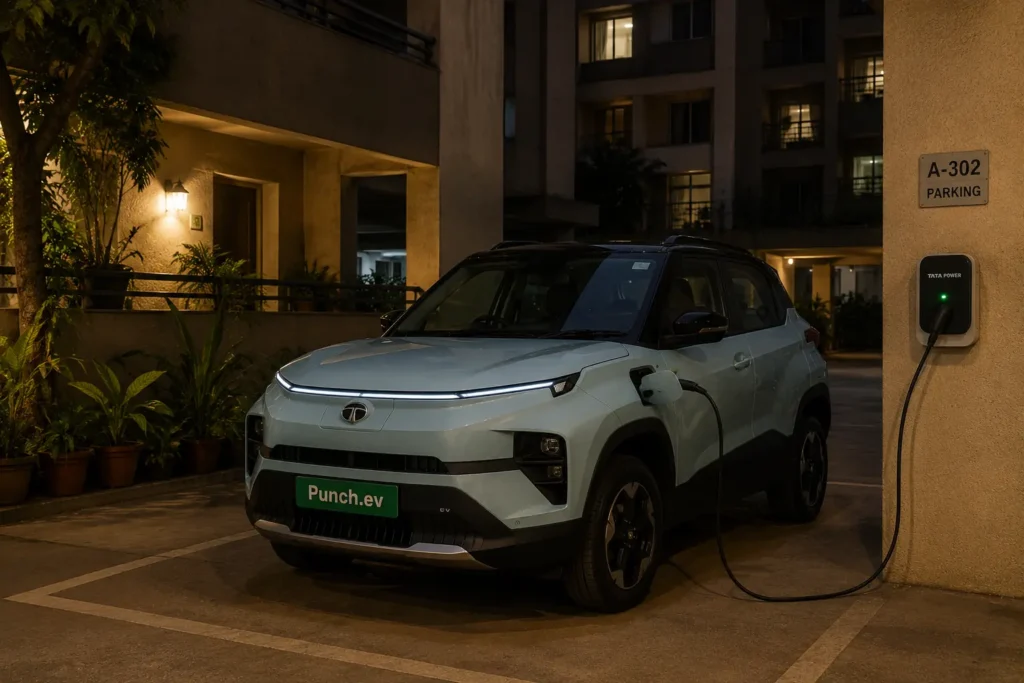
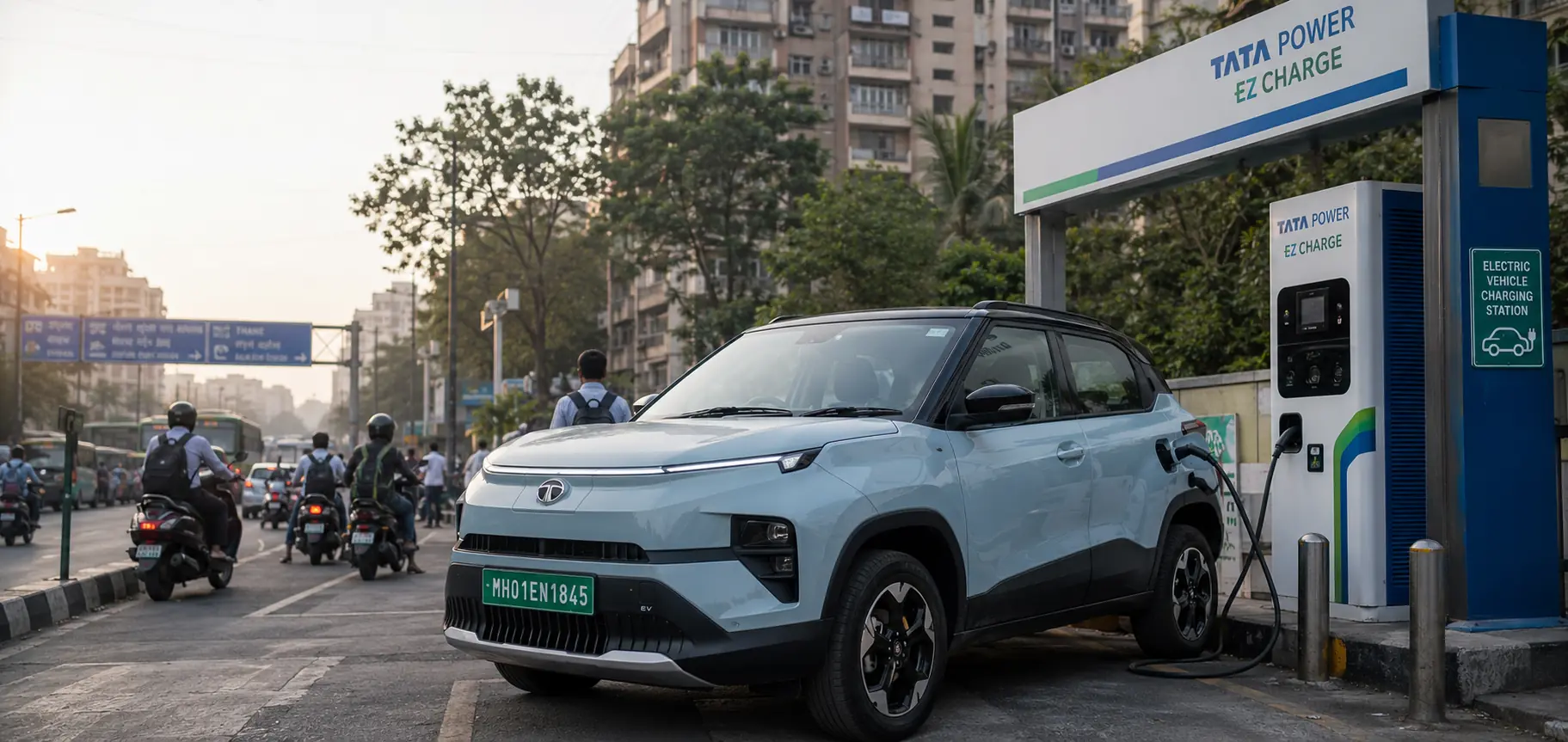
Over 90% of EV charging occurs overnight at residential parking bays. Running a standard 15A three-pin outlet will fully top up the 30 kWh pack in about 9.5 hours. It requires consistent planning but removes the typical ritual of visiting public fuel stations.
Tata Punch EV Running Cost vs Petrol Cars
Let’s analyze the financial numbers for a driver covering 1,200 km per month over a 5-year period.
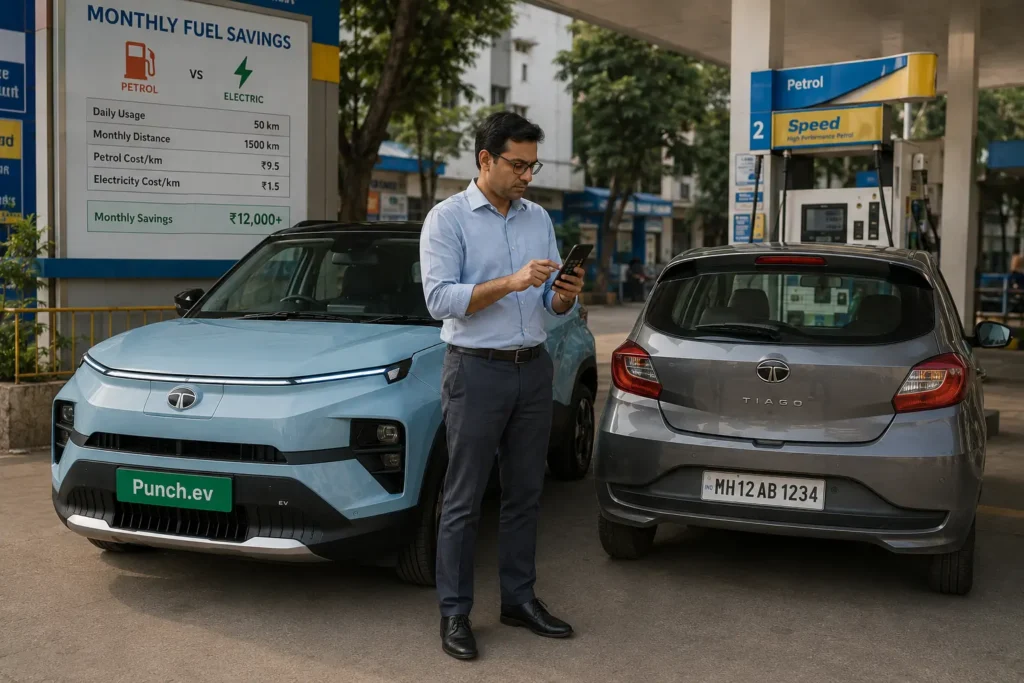
Scenario A: The Electric Vehicle Setup
- Average domestic electricity tariff: ₹8 per unit (kWh).
- Energy needed for 1,200 km: Approximately 6 full charges of the 30 kWh pack (180 units total).
- Monthly Outgo: ₹1,440 (Translates to ₹1.20 per km).
Scenario B: The Traditional Petrol Setup
- Average cost of fuel: ₹102 per Liter.
- Real-world urban fuel economy: 14 km/l.
- Monthly Outgo: ₹8,742 (Translates to ₹7.28 per km).
Cumulative Total Financial Gap
[Petrol Car Monthly Cost: ₹8,742]
==============> Total 5-Year Cost: ₹5.24 Lakh
[Punch EV Monthly Cost:  ₹1,440]
===> Total 5-Year Cost: ₹0.86 Lakh
-------------------------------------------------------------------------------
Net Operational Fuel Savings over 5 Years: ₹4.38 Lakh
This structural saving helps bridge the ₹2.50 Lakh price gap paid over a similarly specified petrol sub-compact variant within approximately 30 to 36 months of operation.
Tata Punch EV Maintenance Cost & Ownership
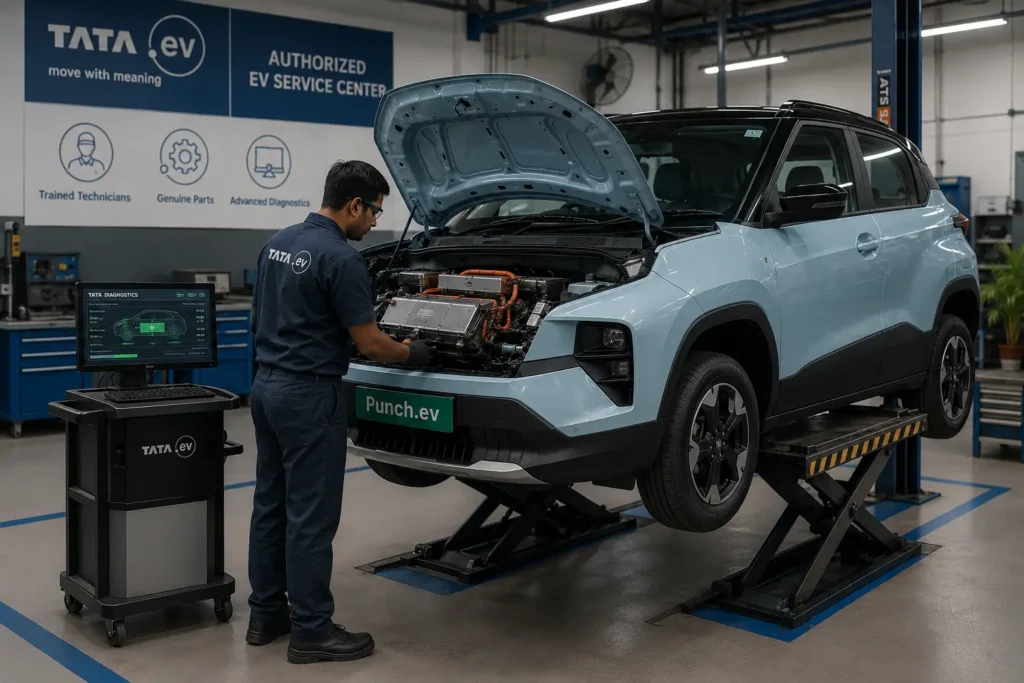
Electric drivetrains drop complex engine components like gearboxes, catalytic converters, pistons, and timing chains, reducing mechanical maintenance points.
- Scheduled Service Expenses: Annual physical evaluation involves cabin filter swaps, brake fluid check-ups, and suspension diagnostic routines. Expect bills ranging between ₹2,500 and ₹4,000.
- The Component Wear Pattern: Regenerative braking minimizes physical pressure on mechanical brake assemblies, extending the life of brake pads up to 60,000 km. Tyres wear slightly faster due to immediate electric torque delivery.
- Battery Degradation and Warranty Safety: Tata bundles a standard 8-year or 1,60,000 km warranty on the 30 kWh architecture. Long Range models get an optional unlimited-kilometer lifetime package. Modern Lithium-Iron-Phosphate (LFP) cells are designed to retain over 80% structural state-of-health even after 8 years of standard use.
Tata Punch EV Pros & Cons
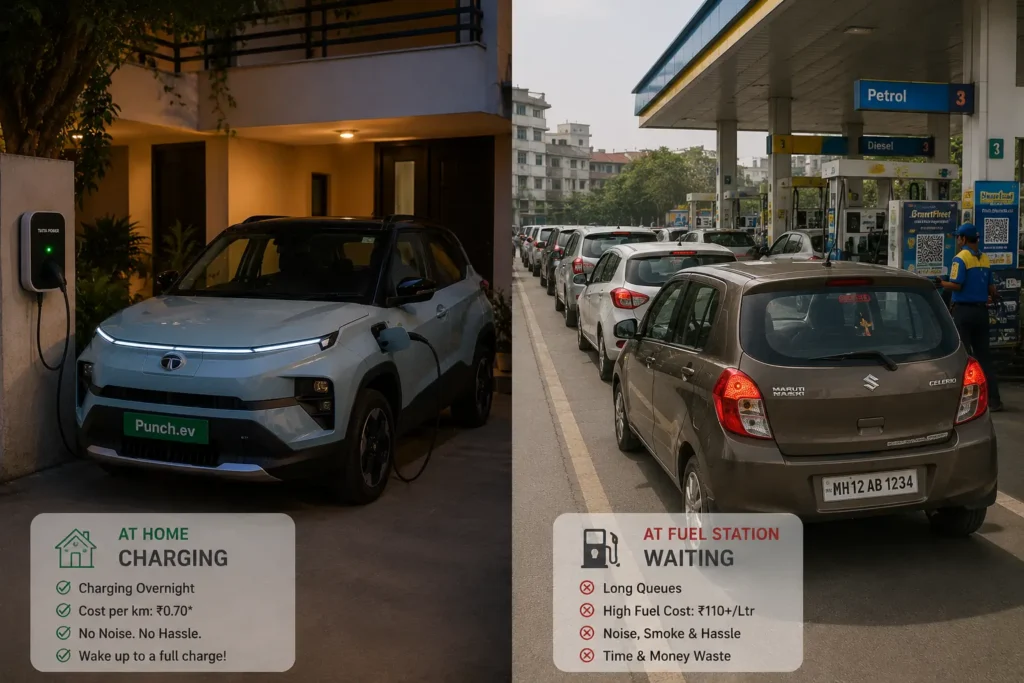
Advantages
- Low Operational Costs: Per-kilometer cost drops to nearly ₹1.20 when using home electricity sources.
- Urban Drivability: The single-speed automatic transmission delivers immediate power without shifting delays.
- High Crash Rating: It scores a full 5-star safety rating built on a high-tensile, reinforced floor architecture.
- Spacious Boot Configuration: It retains a functional 366-liter luggage room since the battery cells fit neatly below the floor.
Disadvantages
- Higher Entry Barriers: Upfront on-road pricing demands a noticeable premium over entry ICE hatchbacks.
- Interstate Highway Charging Delays: Fast chargers are often occupied or experience power drops during peak holiday travel periods.
- Real-World Drop-Off: Aggressive driving speeds past 95 km/h increase battery consumption quickly, reducing range.
Tata Punch EV vs Petrol Cars: Which Makes More Sense?
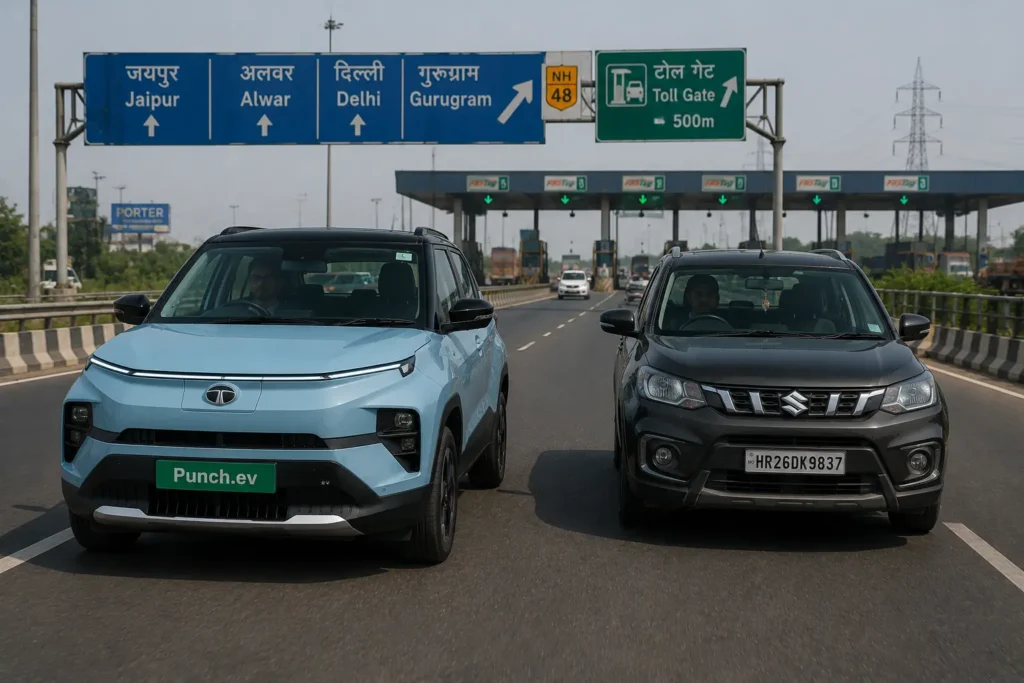
Your choice depends strictly on your driving patterns, not brand loyalty.
- Choose the Punch EV if: Your driving is focused within city limits, your monthly running clears 1,000 km, and you have a dedicated, secure parking spot with an accessible electrical outlet.
- Choose a Petrol Car if: You have a one-car garage for unpredictable highway touring, live in rented apartments lacking designated charging setups, or drive less than 600 km a month.
Who Should Buy the Tata Punch EV?
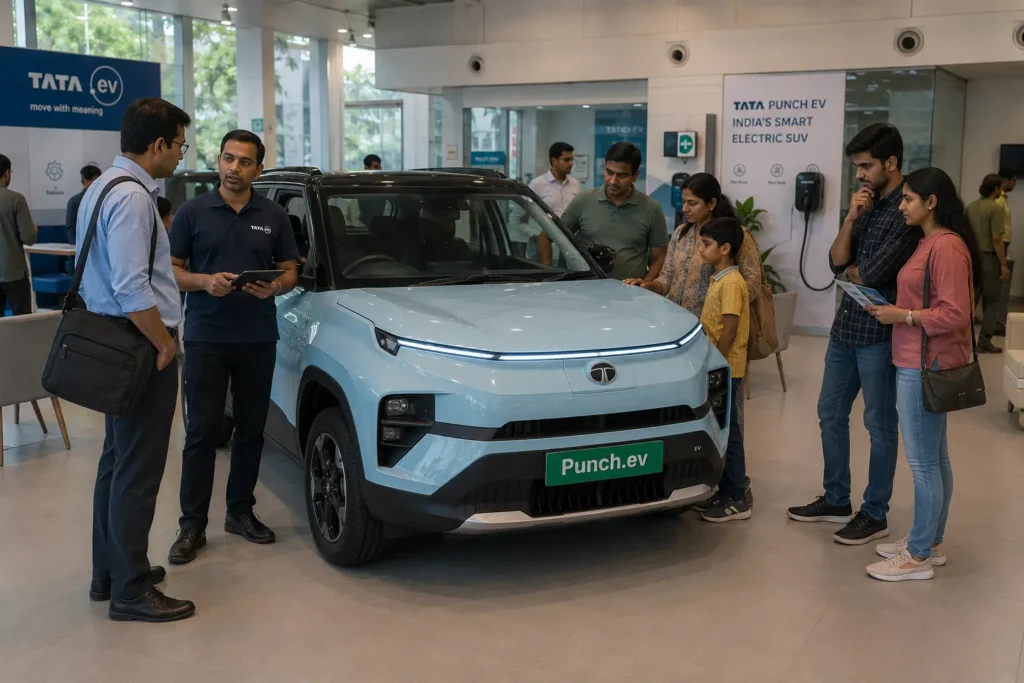
Recommended For:
- Daily Office Commuters: Delivers optimal cost insulation for high-frequency, long-distance cross-city trips.
- Nuclear Urban Families: Fits perfectly as a secondary vehicle for local grocery runs, school drops, and general city errands.
- Tech-First Buyers: Appealed by silent drivetrains, cabin pre-cooling smartphone integrations, and digital instrumentation.
Not Recommended For:
- High-Frequency Inter-State Travelers: Long highway charging pauses add noticeable time to tight itineraries.
- On-Street Public Parking Users: Relying solely on third-party commercial charging points increases costs and affects daily convenience.
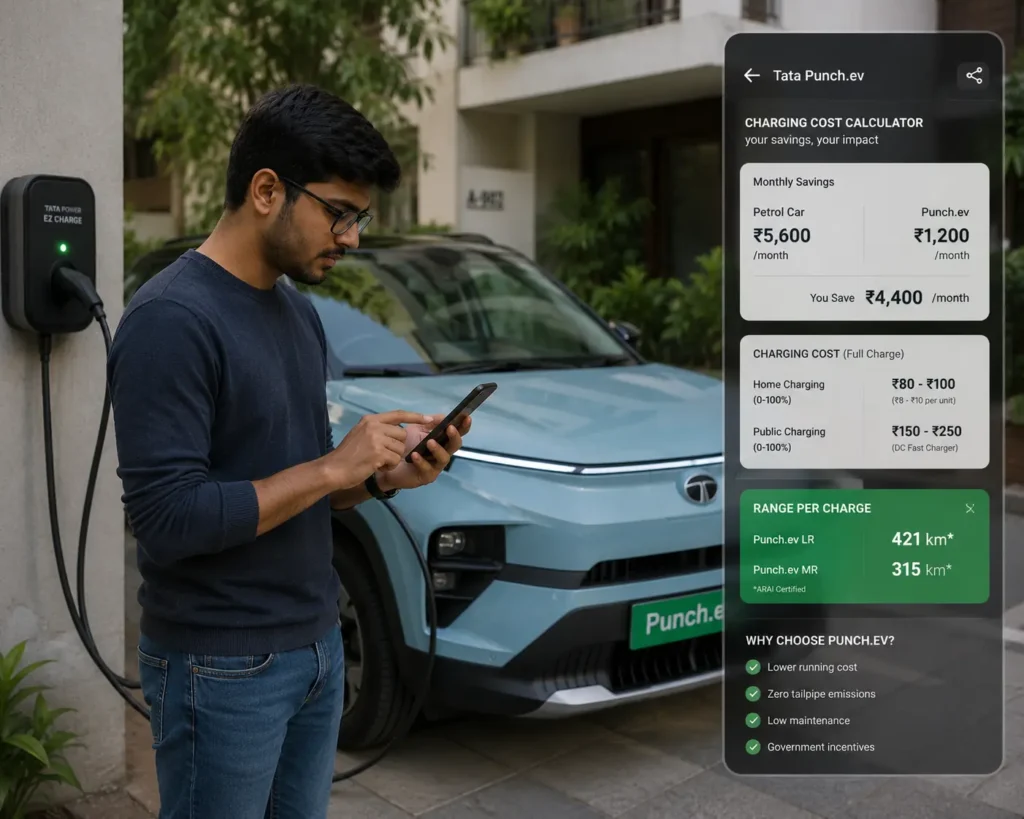
Check out: EV Charging cost calculator
Key Questions Buyers Commonly Ask
Q1. What is the actual Tata Punch EV price on-road in India?
While ex-showroom numbers look uniform from ₹9.69 Lakh, local state road taxes and insurance parameters bring final metro on-road numbers between ₹10.3 Lakh and ₹13.4 Lakh depending on state subsidies.
Q2. What is the real-world range of the Tata Punch EV?
The Standard Range delivers 200–215 km under continuous city use with the air conditioning running. The Long Range model pushes to a realistic 290–305 km.
Q3. How much money does it cost to charge a Tata Punch EV at home?
A full charge on the 30 kWh setup consumes roughly 32 units of electricity (accounting for minor transmission losses). At an average rate of ₹8 per unit, it costs roughly ₹256 for a full charge.
Q4. Does the vehicle have heating issues in slow traffic?
No. Since there is no internal combustion thermal cycle, the car stays completely cool at structural standstills. The liquid-cooled thermal management system stabilizes cell temperatures efficiently.
Q5. Can the Punch EV charge safely in the rain?
Yes. Both the charging receiver and the battery management assemblies carry strict IP67 weatherproof ratings, isolating electrical components from wet weather.
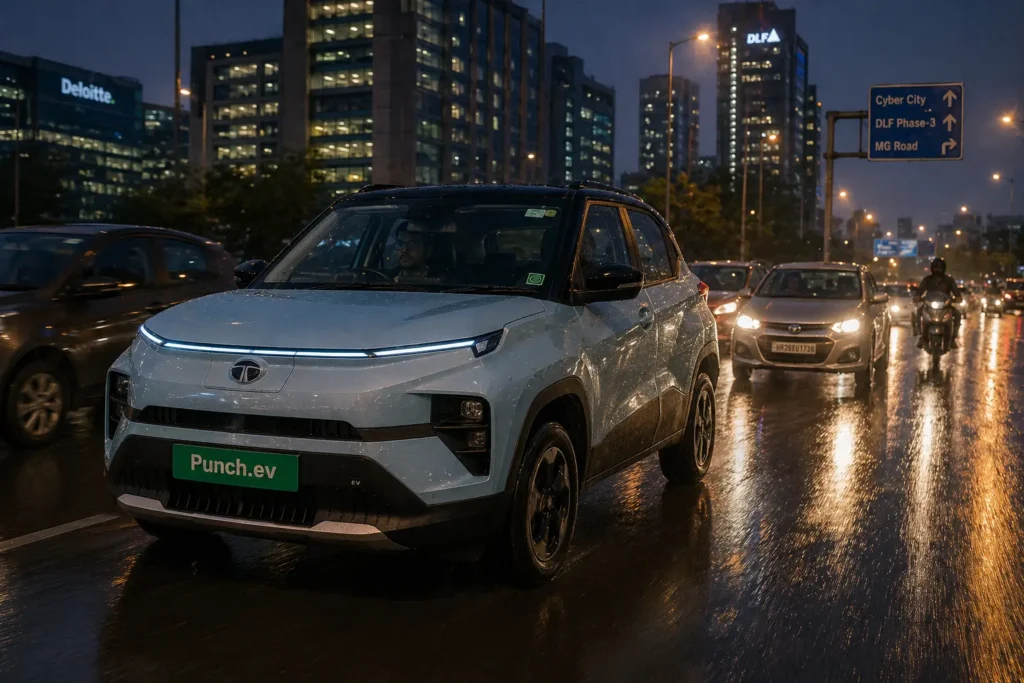
Is the Tata Punch EV Worth Buying in 2026?
The Tata Punch EV makes clear financial sense if you use it as a high-utilization urban vehicle. It offers excellent safety, instant acceleration, and minimal maintenance costs.
However, if you are stretching your budget on a long-tenure loan just for the novelty of owning an electric vehicle, the math won’t add up. An EV is an operational investment. Calculate your real monthly mileage: if it crosses 1,000 kilometers, buy the Punch EV without hesitation. For lower usage, a simple petrol hatchback or a CNG alternative remains the more future-proof financial option.
- Target Target 250km: Real-world tracking shows the 40 kWh model is the safer choice for weekend suburban travel.
- Home Infrastructure First: Do not finalize your purchase until your residential society confirms permission for an active meter connection.
- BaaS Check: Evaluate the subscription model if upfront capital limits your initial purchase capacity.
Running Cost Snapshot
The Tata Punch EV (priced from ₹9.69 Lakh ex-showroom) is an efficient city cruiser with a real-world range of 200–300 km. Running costs drop to ₹1.20 per km, offering clear 5-year savings over petrol models for drivers covering more than 1,000 km monthly.
Helpful Resources for Indian EV Car Buyers
- Bharat NCAP Official Website — India’s official crash-testing and vehicle safety rating platform. Includes adult and child occupant scores, crash-test protocols, and tested vehicle lists.
- Global NCAP – Safer Cars for India — Global crash-test program that pushed Indian manufacturers toward safer vehicle structures and occupant protection standards.
- Reserve Bank of India (RBI) — Official source for repo rates, lending rules, and banking regulations in India. (rbi.org.in)
- TransUnion CIBIL — Check your credit score and track your loan eligibility before applying for a car loan.
- SBI Car Loans — View latest interest rates, eligibility criteria, and loan offers from State Bank of India.
- HDFC Bank Car Loans — Explore car loan options, EMIs, and financing plans from HDFC Bank.
- ICICI Bank Car Loans — Compare new and used car loan offers along with repayment options.
- Policybazaar Car Insurance — Compare insurance plans, premiums, and add-on coverage options in one place.
- Acko Car Insurance — Get quick online quotes and renewal estimates for car insurance.
- AutomotiveZone Mileage Cost Calculator — Estimate real fuel costs based on your driving mileage.
- AutomotiveZone Monthly Car Expense Calculator — Calculate total monthly car ownership cost including EMI, fuel, and maintenance.
Disclaimer: Prices, mileage, safety ratings, loan rates, and ownership costs are approximate and may vary by location, variant, and market conditions in 2026. Some visuals may be AI-generated for illustration. Please verify final details with authorized dealers before purchase.